
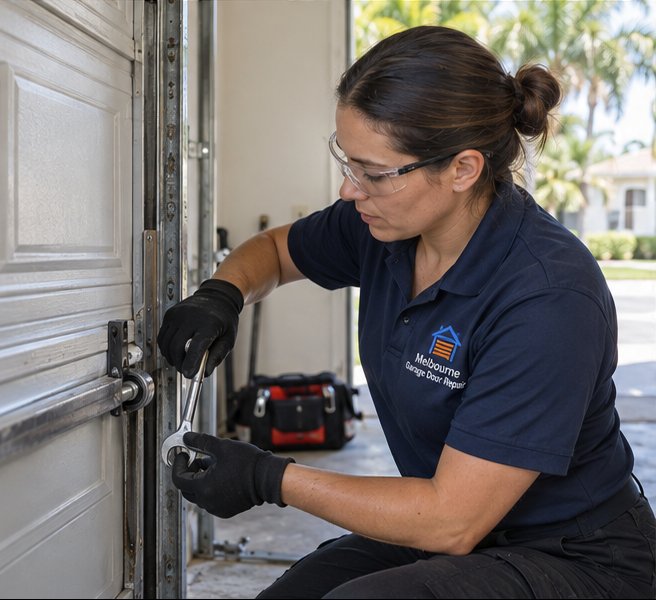
Why grinding is worth listening to
Most garage door noises are annoying but harmless. Grinding is different, because it describes friction, and friction removes material. Every second a worn part scrapes, a little more of it turns into dust. That dust is often the fine gray or black powder you find on the floor under the opener or along the bottom of the track.
The good news is that grinding is also one of the easier sounds to trace. It almost always comes from one of three places: the opener, the rollers and track, or the hinges and pivots. Once you know which of those three areas the sound belongs to, the list of causes shrinks a lot.
Take a minute before you try anything. Stand in the garage with the door closed, run it through one full cycle with the wall control, and listen without touching it. Notice when the grinding starts, whether it follows the door or stays in one spot, and whether it changes between opening and closing. Those three observations are worth more than any tool.
Start by deciding where the sound lives
Sound travels well in a garage, and the metal tracks carry it along the whole wall. That makes it easy to guess wrong. A grinding noise that seems to come from the side of the door may really come from the opener on the ceiling, and the other way around.
Try to separate the sources with a simple process of elimination. If it is safe and the door is moving normally, listen from three places: directly under the opener, beside each vertical track, and outside the garage near the door. If you can, ask someone else to run the door while you listen with your attention fixed on one area at a time.
- Loudest under the opener head: suspect the gear, the drive, or the carriage
- Loudest beside a vertical track: suspect a roller, a dirty track, or a misaligned track
- Loudest at the top where the door curves: suspect the horizontal track bend or a stiff roller
- Loudest at a hinge between panels: suspect a dry or worn hinge pin
- Loudest only when the door is almost closed: suspect the bottom roller or a floor-side track problem
- Loudest only on one direction of travel: suspect the drive direction in the opener or a binding point
Does it happen with the opener disconnected?
A useful test is to see whether the sound exists when the opener is not pulling the door. This is done with the door fully closed, by pulling the red emergency release cord to disengage the carriage. Then lift the door by hand only a short way, no higher than waist height, and lower it again. Do this only if the door feels light and balanced. If it is heavy, drops, or will not stay where you leave it, stop and leave it alone, because that points to a spring problem.
Opener gear wear: the plastic and nylon story
Many chain and belt openers use a small drive gear made of nylon or hard plastic. That gear meshes with a steel worm gear on the motor shaft. Over thousands of cycles the plastic teeth wear, flatten and sometimes strip. The result is a harsh grinding or whirring sound from the motor housing, and in later stages the motor runs while the door barely moves.
The signs are consistent. The noise comes from the unit on the ceiling and not from the door. It may be worse when the door starts to lift, since that is when the gear carries the highest load. You may see fine plastic shavings in the opener housing or on the floor below. Sometimes the grinding is followed by a clicking sound as the worn teeth skip.
A worn gear is a repair we handle regularly, and it is often a sensible one for an opener that is otherwise sound. On a very old opener, the cost of parts and labor is weighed against the age of the whole unit. Our page on garage door opener repair describes how that decision is made. If you hear the same sound together with the symptom described in an opener that hums but does not lift, the gear is a strong suspect.
Rollers that have worn out
Rollers are small wheels that carry the door up and down inside the tracks. A door usually has at least ten of them, one at each end of every panel, and a few more on larger doors. When they work, they turn quietly. When they fail, they produce some of the harshest grinding sounds in the whole system.
Nylon rollers can develop flat spots and cracks. Steel rollers with exposed ball bearings can rust, dry out or lose bearings, and the failing bearings sound like gravel inside a can. Rollers with no bearings at all, often the plainest kind fitted at the factory, simply drag in the track and grind as the stem wears.
A telltale clue is a sound that tracks the roller as it moves. If the grinding appears to travel down the track, panel by panel, one roller after another is likely worn. If it appears at a single height in the same place each cycle, one bad roller is the more likely story.
There is more detail on the types in the types of garage door rollers. When a full set is worn, garage door roller replacement is the usual remedy, done one roller at a time in a controlled way so the door stays supported.
Dirt, grit and sand in the track
Tracks are channels, and channels collect things. Dust, pollen, sand blown in from the coast, spider webs, old lubricant that has hardened, and tiny fragments of rust all settle in the track and form a gritty paste. Rollers then crush that paste as they roll, and the result is a sandy scraping sound.
This is common in homes near the water, in garages with sandy floors, and in doors that have been heavily oiled with the wrong product. Oil attracts dust, and dust mixed with oil makes a sticky grinding compound.
A gentle clean often changes the sound noticeably. Wipe the inside of each vertical track with a dry or slightly damp cloth, working only where you can reach from the floor, and then dry it. Do not spray the track with grease. A clean, dry track lets nylon rollers glide, and steel rollers need only a light film on the bearings, not on the track surface itself.
Please stop and call for help if you find a dent, a bend or a crease in the track, or if the track has pulled away from the wall. Those are alignment problems, not dirt.
Hinges, pins and pivot points
Hinges join one panel to the next, and as the door passes through the curve of the track each hinge flexes. A hinge that has dried out or worn through its pin makes a rasping, grinding sound, often loudest as the door passes the curve at the top.
Wear shows up in simple ways. Look for bright, shiny metal at the pivot, rust-colored dust below a hinge, or a hinge that moves in a way it should not. A hinge that has worn can let the panel shift, which in turn makes a roller drag.
A small amount of garage door lubricant on the hinge pivots can quiet a dry hinge, and it is something an owner can safely do from the floor on the lower hinges. Wipe off the excess so it does not drip onto the floor or the car. Never loosen or remove hinge bolts yourself, since the upper hinges can carry the tension of the door and the cables.
Our service page on hinge and track service covers replacing worn hinges and straightening or realigning the track.
Misaligned tracks and tight spots
If the track is slightly out of line, the roller does not run in the center of the channel. Instead it rides against one side, and the rubbing creates a metallic grinding or scraping sound. You may be able to see a bright line of worn metal along one side of the track.
Misalignment can come from loose track brackets, from a door that has been bumped, or from settling in the building. It can also develop slowly, as vibration shakes bolts loose over the years.
Where the gap between the roller and the track wall changes along the travel, the sound changes too. You may hear it only in the lower few feet, or only as the door goes over the curve.
Resist the urge to hit the track with a hammer or loosen the brackets and shift it by eye. The tracks must be level, parallel and spaced correctly relative to the door, and the bracket bolts at the top often tie into spring components. The safe thing is to leave alignment to a technician. If the door has actually left the track, read what to do about a door off track before you touch anything.
The torsion bar, drums and bearings
On a torsion spring door, a steel bar runs across the top of the opening, carrying cable drums at each end and supported by bearing plates. Those plates hold bearings or bushings that allow the bar to turn. When they run dry, they can produce a groaning or grinding sound that seems to come from above the door.
The sound is usually most noticeable as the door starts to move or as it nears the end of travel, because the load on the bar is changing. You may also see rust streaks or dust under the end plates.
This is an area where we ask you strictly to look and not touch. The bar, the drums and the springs hold stored energy, and the cables are under high tension. Do not try to oil, tighten or adjust anything in this area. The fix, if it is a bearing, is a small service job, but it needs the proper winding tools and procedure.
Details on this part of the system are in drum and bearing service, and background on how the system works is in how a garage door works.
Springs that are tired or rusted
A spring does not usually grind in the way a roller does, but a rusted or stressed spring can create a crunchy, scraping noise as the coils rub against each other or against the bar. The sound is often described as a creak or a groan layered with a faint grinding.
A spring in this state is near the end of its working life. Rust weakens the coils, and a weakened spring can break without warning, usually with a loud bang. If you see rust flaking off the coils, gaps that were not there before, or a spring that looks stretched, do not run the door more than needed.
Never touch, tighten or lubricate a spring by yourself. That job involves tension that can cause serious injury. See how long garage door springs last for how age and cycles relate to wear, and call us if you suspect the spring is the source.
Grinding on the way down versus the way up
Direction tells a story. When a door grinds only while rising, the load is highest on the opener and on the rollers at the bottom of the track. A worn opener gear, a bad lower roller, or a spring that is a little weak could all be behind that.
When it grinds only on the way down, the door is coasting against gravity, and the opener is mostly braking. In that case, sounds from the track and rollers stand out more clearly, and a binding spot or tight hinge is often to blame. The opener may also grind as it slows the door in the last few inches.
Sound only at the end of the closing travel is often tied to the bottom bracket, the bottom seal rubbing, or a sagging corner of the door. Sound only at the very start of opening can be a stiff gear in the opener or a door that is slightly frozen to the floor seal.
Make short notes of what you hear. A line such as loud grinding at the top right as the door goes up, nothing coming down is exactly the kind of detail that helps a technician bring the right parts to the visit.
Weather, salt air and humidity
Living near the Indian River Lagoon and the Atlantic means moist, salty air, and a garage door lives in that air all year. Moisture gets into roller bearings, hinge pins, bearing plates and the nylon of the opener gear. Salt speeds corrosion on steel hardware, particularly the small parts that few people ever look at.
The result is that grinding often begins after a wet stretch of weather or a storm. Surface rust on a hinge or roller shaft raises friction right away. Humidity can also swell wood panels and cause the door to rub against the track or jamb.
Rinse the door gently and dry it when salt spray is heavy, wipe the track, and keep the weather seal clear of leaves and sand. Our overview of garage doors in a coastal climate explains which parts suffer most and how to keep them in good shape.
A safe home check, step by step
The following sequence uses only looking, listening and light cleaning. It never involves springs, cables or the brackets that hold them. Stop at any step where something looks wrong.
Work with the door fully closed to begin with, then use the opener to cycle it once or twice while you stand clear of the door and its path.
- Run the door once and note where the sound is loudest and when it happens
- Look at each roller from the floor and note any that wobble, lean or look cracked
- Look along each track for dents, bright worn lines, or buildup
- Wipe the vertical tracks with a clean cloth and let them dry
- Apply a small amount of garage door lubricant to the lower hinge pivots and to the roller bearings you can reach, then wipe off excess
- Check the opener housing for plastic dust or shavings below it
- Cycle the door again and compare the sound
- If the noise is unchanged, or you see damage, stop and arrange a visit
What a good result looks like
After a clean and a light lubrication, a dry hinge or a dirty track often settles down at once. If the sound is gone, keep an eye on it for a week. If it comes back, a worn part is likely behind it.
What a poor result tells you
If the grinding is unchanged, the cause is probably inside a part you cannot see or treat from the floor, such as an opener gear, a bearing or a worn roller stem.
When to stop using the door
Some grinding can wait for a convenient appointment. Some should not. Weigh what you see and hear against the following signs.
- The door shakes, tilts or looks uneven as it moves
- A roller has left the track or the door scrapes hard against it
- The opener strains, stalls or reverses
- The door feels heavy by hand or will not stay in place
- You can see a frayed cable, a gap in a spring, or a hinge pulling away
- There is a burning smell or visible smoke from the opener
If any of these are present
Stop using the door, keep people and vehicles out from under it, and do not try to correct the problem yourself. Use the wall control only if you must, and avoid forcing it. If someone has been hurt, call 911.
How a technician finds the source
A technician starts by listening, which is exactly what you did. With the door cycling, they track the sound to its area, then look closer with the door at rest. They inspect rollers one by one, check the track for alignment, and look at hinges, bearing plates, cables and springs by eye.
Next comes the opener. With the carriage disconnected, they can tell whether the door runs quietly by hand, which separates opener noise from door noise. They check the drive, the gear and the travel settings, and listen to the motor with no load.
From there, the technician explains the findings in plain terms: what is worn, what is only dirty, and what is a risk. Many grinding problems turn out to be a short list, such as a set of rollers plus a lubrication and track clean, or an opener gear.
Our page on noisy garage door service describes how this kind of visit works, and the guide to diagnosing garage door noises helps you compare grinding with squeaks, pops and rattles.
Preventing the grinding from returning
Most grinding is the end of a long period of slow wear, which means regular care can postpone it a long way. A seasonal habit is enough. Look and listen once a month, and give the door a light cleaning and lubrication of the right parts a couple of times each year.
Use a lubricant made for garage doors rather than a heavy grease or a general-purpose oil that gathers dust. Apply it sparingly on hinge pivots and roller bearings, not on the track, and not on the belt of a belt-drive opener. Check that bolts on the track brackets are not loose by eye, without turning them yourself.
Replace the parts that are clearly worn before they harm others. A roller that has gone flat strains its neighbors and the track, and an opener gear that is starting to slip loads the motor. Our maintenance and tune-up service is built around catching these items early.
Questions and answers
The common sources are a worn opener gear, rollers with failing bearings or flat spots, a dirty or misaligned track, and dry hinges. A sound from the ceiling unit points to the opener, while a sound that travels along the wall points to the rollers and track. Noting where and when it happens helps pinpoint the cause. Cleaning and lubricating can rule out the simple causes before any parts are replaced.
Not always, but it should not be ignored. Grinding means friction and wear, and a worn roller, hinge or gear can fail. It becomes a safety concern if the door tilts, shakes, comes off the track, or feels heavy. In those cases stop using it and keep people clear until it has been inspected. Even a quiet grinding sound is worth tracing early, before it grows into a failure.
Sometimes, if the cause is dry hinges or roller bearings, a light application of garage door lubricant can quiet it. Do not spray the springs, do not grease the track, and wipe off any excess. If the sound continues, the cause is likely worn parts that need replacing rather than lubrication. If it quiets for only a day or two, worn parts are probably still behind it.
That pattern often points to a stripped or worn drive gear inside the opener. The motor is turning, but the damaged teeth cannot pass the force on to the door. Do not keep pressing the button, since it can worsen the damage. A technician can confirm the gear and explain whether repair or replacement makes sense. Opener gears are inexpensive parts relative to a new unit, so repair is often considered first.
Moisture and salt in coastal air speed up rust on rollers, hinges and bearings, and wet dirt turns into a gritty paste in the track. That adds friction almost at once. Cleaning and drying the track and lubricating the proper points can help, but worn or rusted parts may still need replacement. Check the door again after the weather dries to see whether the sound returns.
If several are worn, replacing the full set is usually sensible, because the remaining old ones will wear out soon and the door is already supported for the work. A technician can show you which rollers are failing. Replacing only one while others are tired often brings the noise back within a short time. We can show you each worn roller during the visit so the decision is clear.
A spring problem usually shows as a groan, creak or crunch from above the door, a door that feels heavy or uneven, or visible rust and gaps in the coils. Do not touch or lubricate a spring yourself. If you suspect it, stop using the door as much as you can and arrange an inspection. When in doubt, keep clear of the springs and let a technician look.