
What That Bang Usually Means
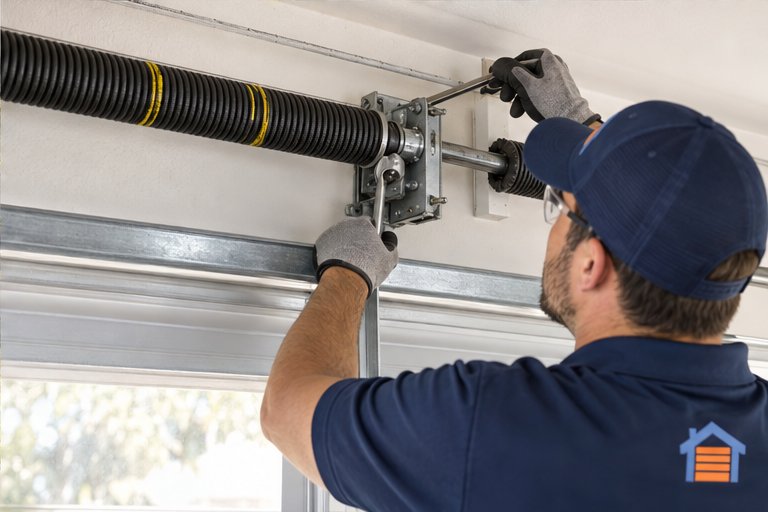
Most residential garage doors are lifted by a torsion spring, a heavy coiled steel spring mounted on a bar above the door. The spring is wound under a great deal of tension every time the door closes. Over thousands of cycles the metal tires, and one day a coil breaks.
When it breaks, the stored energy releases all at once. The sound is sharp and loud, often compared to a firecracker or a gunshot, and it can be heard from inside the house. Many homeowners walk into the garage expecting to find something fallen or broken, and see nothing obviously wrong.
That is the confusing part. The door may look perfectly normal, still closed and still in its tracks. But the spring that carried most of the door's weight is no longer doing its job, and the door is now very heavy for the opener to move.
First Things to Do Right Now
Stay calm and keep everyone away from the door. A broken spring is a mechanical problem, not an emergency, as long as nobody is standing under or beside the door while it moves. The goal for the next few minutes is simply to avoid making the situation worse.
Here is a sensible order of actions that needs no tools and involves no risk.
- Stop using the door. Do not press the remote or wall button again.
- Keep children, pets and anyone curious out of the garage for now.
- If the door is closed, leave it closed. If it is open, do not try to lower it by hand.
- Look from a distance only. Do not reach up toward the spring, cables or brackets.
- Make a note of what you heard and when, and whether the opener ran afterward.
- Contact us so a technician can look at the door and explain the options.
If someone is hurt
If anyone was struck by a part, cut, or caught under the door, call 911 first. Everything else on this page can wait until the person has been looked after.
How to Tell a Spring Broke Without Touching It
You can gather good clues using only your eyes and ears from a safe spot. Checking a few things also helps you describe the problem clearly when you get in touch, which makes the visit more useful.
Look for the gap
On a torsion spring, a break often shows as a visible gap in the coil, usually a few inches wide, where the two broken ends have pulled apart. The spring sits on a horizontal bar above the closed door, so a flashlight from the floor may be enough to see it.
Notice how the door behaves
If the opener hums or strains and the door barely moves, or lifts a few inches and stops, that fits a broken spring. A door that feels extremely heavy when lifted by hand points the same way, but please do not test that yourself with the opener disconnected.
Check the other clues
Sometimes a cable also slips when the spring lets go, leaving it hanging loose at one side. A loose cable is one more reason to keep hands away from the door hardware.
Why the Door Is Suddenly So Heavy
A typical garage door weighs well over a hundred pounds, and a double door can be far heavier. The spring exists to counterbalance that weight so the door feels almost light in your hand. Take the spring away and the full weight returns to whatever is trying to lift it.
Openers are built to guide and assist a balanced door, not to haul a full dead weight upward day after day. If you keep pressing the button, the motor strains, gears can wear, and a drive belt or chain can be stressed. In some cases the opener simply hums while the door refuses to rise.
This is why stopping early matters. Repeated attempts rarely move the door, and they can turn a spring repair into a spring and opener repair. Our page on an opener that hums but does not lift covers that related symptom in more detail.
What Not to Do
This is the most important section on the page. Garage door springs and cables carry dangerous tension, and the parts involved can cause serious injury even after a spring has broken. A broken spring does not mean the danger is gone, because the cables, drums and brackets may still hold force.
- Do not try to unwind, tighten, loosen or replace a spring yourself.
- Do not loosen set screws on the winding cones or drums.
- Do not pry on, hammer or reach near cables or brackets.
- Do not stand under the door or let anyone else stand there.
- Do not force the door up by hand, even if it moves a little.
- Do not wedge objects under the door as a prop unless a technician told you to.
- Do not keep pressing the opener in the hope it will eventually work.
Why online repair videos can mislead
Short videos make spring work look routine. They rarely show the tools, the winding bars, or how the work goes wrong. The correct spring size depends on the door's weight and height, and guessing leaves the door unbalanced and unsafe. This is work for a trained technician with the right tools.
Is the Door Safe to Leave Alone
In most cases yes. A closed door with a broken spring usually stays put, resting on the floor, and it is not going to fall further. An open door is different, because there is nothing helping to hold its weight, so it should not be moved or stood under.
If the door is partly open and you are unsure it is stable, keep people clear and tell us when you get in touch. We will explain what we find on arrival and how to secure it.
If a vehicle is trapped inside, please say so when you contact us. Do not use the manual release to open the door by yourself with a broken spring, because the door can be very heavy and can drop or lift unpredictably once released.
Securing the Garage in the Meantime
A door that cannot be raised also cannot always be locked or kept tidy while you wait. A closed door is generally secure enough, since it is resting in its closed position, but it helps to think through a few practical points.
Make sure the interior door between the garage and the house is locked if the garage door will be unusable for a while. If you rely on the garage as your main entrance, plan to use the front door and keep track of the keys.
- Lock the interior door that leads into the home.
- Leave the garage door closed and the remote out of reach of children.
- Move vehicles that are outside into a safe place if rain or wind is expected.
- Keep a flashlight handy if the opener light no longer works.
What a Spring Repair Involves
A technician starts by looking at the whole system, not only the broken coil. They check the door balance, cables, drums, bearings, rollers and the opener, because a spring failure often shows how much wear is elsewhere. Then they explain what they found and what the options are.
Replacing a torsion spring means choosing a spring matched to the door's weight, height and track set up, and installing it with proper winding bars. The cables and drums are inspected at the same time, since they work together with the spring. Afterward the door is balanced so it stays where it is placed when moved partway.
You can read about the work itself on our page about torsion spring repair, and about the other style under extension spring replacement.
One spring or two
Many doors use two springs on the same bar. If one breaks, the other has done the same number of cycles and is often close to the end of its own life. A technician will talk with you about whether replacing both makes sense for your door.
Matching the replacement
Springs are not interchangeable between doors. Wire size, coil length and winding direction all matter. A mismatched spring leaves the door too heavy or too light, and a door that is too light can fly upward. Matching is part of the job we explain on the visit.
Why Springs Break in the First Place
Every spring is rated for a number of open and close cycles. A household that uses the garage as the main entrance, with several trips a day, reaches that number sooner than one that uses it occasionally. Heat and humidity matter on the Space Coast, because salt in coastal air encourages rust on the coils, and rust weakens steel where it flexes.
Poor balance and lack of lubrication also shorten spring life. A dry, rusty spring rubs against itself as it winds and unwinds, and tiny surface cracks grow into a break. A door that has not been serviced for years often fails without any warning.
Our guide on how long garage door springs last looks at lifespan in more detail, and the guide on garage doors in a coastal climate covers the corrosion side.
Torsion Versus Extension Springs
The bang you heard can come from either of the two main spring styles, and the noise and result differ a little. The table below summarizes how each tends to look and behave when it fails.
| Feature | Torsion spring | Extension springs |
|---|---|---|
| Where it sits | On a bar above the closed door | Along the sides, beside each horizontal track |
| Typical sign | Gap in the coil, very heavy door | Door lifts unevenly or sags to one side |
| Sound | One sharp bang | Sharp snap, sometimes with a clatter |
| Extra concern | Cables and drums under tension | Spring may whip loose if no safety cable is fitted |
| Who should handle it | A trained technician | A trained technician |
Telling a Spring Break From Other Causes
A loud noise from the garage is not always a spring. It helps to understand the other possibilities, so you can describe the sound and the symptoms when you reach out.
A snapped cable can bang and leave the door crooked, a roller can pop out of a track, and a panel can crack. A failing opener part can also give a loud crack. Even a car or a falling shelf can be mistaken for a door problem.
Door crooked after the noise
If one side hangs lower than the other, a cable may have come loose. See a cable that snapped or came off the drum for the signs and the risks.
Door out of its tracks
If rollers have left the track or the door looks twisted, read about a door that is off track. Do not try to push it back into place.
Door still works but sounds harsh
A door that still moves but makes grinding or banging noises may need hinge, roller or track attention. That topic is covered by our page on doors that are very loud.
Common Misunderstandings After a Spring Breaks
Many homeowners assume a loud bang means something fell or the door is about to collapse. In nearly every case the door stays where it is. The noise is the spring releasing its energy, not the door moving.
Another common assumption is that a stuck door means the opener has died. The motor is often perfectly healthy and is simply being asked to do a job it was never built for. Replacing an opener when the real culprit is a spring is an expensive mistake, which is why a proper diagnosis comes first.
Some people also believe that a door which opens a little can be nudged along by hand. A door that is partly open with no spring support can slip, and it can cause injury if it comes down. Treat any movement as unsafe until the balance has been restored.
Reading the situation calmly
A broken spring is a repair job, not a crisis. Once the door is left alone and everyone is clear, there is time to arrange a proper visit and think through the options without pressure.
Preparing for the Technician's Visit
A little preparation makes the appointment smoother. None of it involves touching the door hardware. Clearing the area lets the technician set up without moving boxes and gives them room to work safely.
Write down what you remember. Did the bang come when the door was moving or sitting still? Was the door open or closed? Have you noticed any sagging, noise or slow movement in recent weeks? Details like these help narrow down the cause.
- Clear stored items away from the door, the sides and the area under the springs.
- Move vehicles out of the garage if the door is open, or away from the door if it is closed.
- Note the age of the door and opener if you know them.
- Take a photo of the spring area from a safe distance if you can do so without reaching.
- Share anything you have already noticed, such as loose cables or marks on the track.
Keeping the Next Spring Healthy
After a repair, a little care helps the new spring last. Lubrication on the coils and moving parts reduces friction, and regular checks catch frayed cables, loose hardware and balance drift before they become failures. A tune-up does not need to be elaborate.
Our maintenance and tune-up service looks at all of this on a single visit, and a monthly garage door checklist lists simple home checks you can do from the floor. If you want to understand how the whole system fits together, how a garage door works is a good place to start.
Questions and answers
Sometimes the opener can lift the door a little, but it is not designed to carry the full weight, and trying risks damaging the motor or the door. We recommend leaving the door as it is, because forcing it can bend the top section or pull a cable loose. If a vehicle is stuck inside, tell us when you get in touch and we will talk through the safest way forward for your particular door.
The spring itself is no longer a hazard once it has broken, but the rest of the system can still hold tension, and the door can be very heavy. The danger comes from trying to handle the parts yourself or standing under a door that is not properly balanced. Keep clear, keep children and pets out of the garage, and wait for a technician who can look at the cables, drums and brackets as well as the spring itself.
Springs wear with use. Each open and close flexes the steel, and rust, dryness and age make it weaker. The break usually happens during a normal use of the door, which is why it feels sudden even though the wear built up over time. It is not caused by anything you did wrong, and it is one of the most common reasons a garage door stops working for homeowners everywhere, including here on the Space Coast.
If your door has two springs, the second one has usually seen the same wear. Technicians often suggest replacing both so the door stays balanced and you avoid another failure soon after. We will look at the condition of the remaining spring, check for rust and wear along its coils, and explain what we see so you can make an informed decision about the repair rather than guessing.
We advise against it with a broken spring. Once released, a heavy door can drop suddenly or lift unexpectedly, and it can injure hands or feet. The release is meant for situations such as a power outage with a balanced door. A door with a broken spring needs a technician, and leaving it closed until one arrives is the safest choice for you and your family.
A few attempts usually do no lasting harm, but repeated tries can strain the motor, gears and drive parts. If the opener only hummed, it likely stopped without moving the door. We check the opener during the visit, listen to how the motor runs, look at the drive parts, and tell you plainly if anything else needs attention or if it is working normally.
Tell us what you heard, whether the door is open or closed, whether it moves at all, and the kind of door and opener you have if you know them. Mention any visible gap in a coil, loose cables or a crooked door. Photos taken from a safe distance are helpful, but please do not climb a ladder or reach toward the spring to take them. We will ask a few follow up questions if we need more detail.