
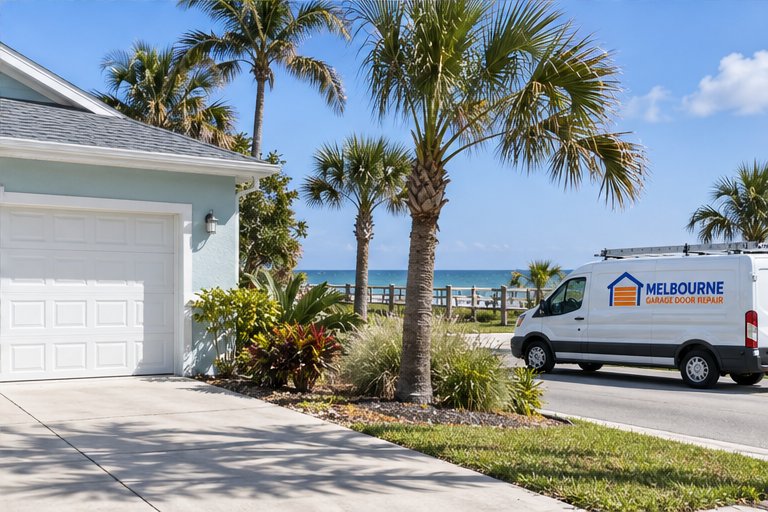
A garage built around gear
Living between the ocean and the lagoon changes what people keep in the garage. Alongside the cars you find tackle boxes, life jackets, wetsuits, kayak racks and sometimes a trailer. The door has to open wide, clear tall loads and cope with a lot of wet, sandy traffic.
That use shapes which problems appear. Wide openings put more load on the springs and the header. Tall items catch the top of the door opening. Wet gear brings moisture and salt inside. And a family that is always heading out to the water opens and closes the door many times on weekends.
This page is organized by what goes through and into the garage, then moves to wind, humidity and the parts that suffer. If your garage looks like a boathouse, the early sections will feel familiar.
Wide doors and the springs that carry them
A double door is wide and heavy, and an insulated or windowed double door is heavier still. The springs carry nearly all of that weight, and the opener only guides the door and gives it a push. When a spring weakens, the door feels heavier, the opener strains and the door may drift down when stopped halfway.
Wide doors also flex more. If the panels lack reinforcement, the door can sag in the middle and rub on the track, or twist as it rises. Struts across the top of a panel help keep a wide door straight.
We discuss the difference between spring types in our torsion versus extension spring guide. Springs are dangerous to adjust, so if you suspect a problem with yours, stop using the door and call for inspection.
Another sign of a wide door under strain is a gap that opens between the top panel and the rest of the door when it is partly raised. That can mean the panel joints or hinges are tired. A technician can often reinforce a wide door, or recommend a stronger replacement if the sections are past saving.
Boats, trailers and tall loads
Some garages in town hold a boat on a trailer, and getting it in and out is a careful job. The door must rise far enough to clear the highest point of the load, with some room to spare, and the opener must hold it there without drifting.
A door that is not fully open, or a track set a little low, is a common cause of a boat or antenna striking the top panel. If you hear a scrape or see a mark on the door, treat it as a warning. A struck panel can crack, and a bent track can derail the door.
If you regularly store tall items, tell us. High-lift track kits, adjusted travel limits and different hardware can increase clearance in some garages, depending on the ceiling. We will look at the headroom first and explain what is realistic.
Do not rely on guesswork when backing a load in. Mark the highest point of the load, open the door fully and check that the clearance is there before moving forward. A moment of care protects the door, the load and anyone standing nearby.
Golf carts, bikes and the cluttered floor
Golf carts and e-bikes are common in coastal communities, and they live in the garage between trips. They sit low and wide and can be parked close to the door, where a hurried driver may clip the bottom edge.
Keep a clear line for the door's path, especially at the edges where the tracks run. Do not park so near the door that the sensors are blocked. The photo-eye beam sits a few inches above the floor, and a low cart or a bike wheel can interrupt it and stop the door from closing.
Park bins and racks a safe distance from the track so that nothing can fall into the path of the door. A tidy floor protects your gear, your door and your safety sensors.
Rental guests, visiting family and teenagers all park differently from the owner. A simple painted line or a wheel stop on the floor can help everyone leave the same margin at the door.
Kayaks, boards and what hangs overhead
Overhead racks are popular for kayaks and boards, but the ceiling of a garage is also where the door travels when open. Racks that hang too low or too close to the horizontal track can catch the door or interfere with the opener rail.
Before you install storage overhead, open the door fully and look at where the panels and hardware sit. Leave a generous gap around the door in the open position, and keep anything heavy away from the springs and the torsion bar area. Never attach anything to the door, springs or cables.
If a rack has been installed and the door now scrapes, the noise is a hint that something is off. Our page on hinge and track service describes how we check alignment and clearances.
Also keep the area around the opener motor clear. The unit needs airflow, and a stack of boxes or a hanging board beside it can trap heat and block the light and the receiver from reaching your remote.
Wet gear, salt and sand on the floor
Gear comes back from the water carrying salt and sand, and both end up in the garage. A damp floor under the door can hold a puddle for hours, and the bottom seal sits in it. Rubber seals that stay wet can soften, stick or mildew.
The lower parts of the door, including the bottom brackets, lowest hinges and the base of the tracks, take most of the moisture. Those parts rust first, and they are also under tension, so they deserve attention. Do not loosen or scrape near the bottom brackets.
Rinse sandy items outside and let them dry before storing. Sweep the threshold area and wipe the bottom seal now and then. If the seal is cracked or flattened, our weather seal replacement page explains how it is replaced.
Wind that comes from two directions
Indian Harbour Beach has the Atlantic to the east and the Indian River Lagoon to the west, so wind can come from either side and brings moisture with it. A strong gust pressing on a wide garage door can flex the panels and push on the track.
A door that has been loose for a long time will rattle and shake in the wind. Rattling can also come from worn rollers, loose hinges or tracks that have pulled slightly away from the wall. Over time, vibration loosens bolts further.
If your door shakes in wind or vibrates as it moves, have the fixings checked. Our page on a door that shakes or vibrates lists causes. Tightening hinge and track hardware is routine work for a technician, but brackets near the springs should only be handled by a professional.
Storm preparation for a garage full of gear
Before a storm, a garage packed with gear is both a risk and a responsibility. Loose items can become projectiles if the door fails, and the door itself needs to be in good order.
Have the door inspected before the season. Secure or move boats and trailers according to local guidance, and put loose items away from the door. Know where the manual release is and make sure it works. If you have a battery backup, test it.
Our hurricane preparation guide covers the steps. We do not claim any door is storm proof. We can tell you its condition and what, if anything, should be addressed first.
Remember that a closed door does not mean a secure door. If the opener has been disconnected for an outage, check that the door is latched or locked afterward, and reconnect the trolley only when the door is fully closed and the area is clear.
Comparing what you store with what the door needs
Different stored items put different demands on the door. The table sets out a few examples and what we would look at, as a starting point for thinking about your own garage.
| What you store | What it asks of the door | What we would check |
|---|---|---|
| Small boat on a trailer | Full height and width clearance | Track height, travel limits and the top panel |
| Golf cart or e-bike | A clear floor line at the edges | Sensor placement and bottom seal |
| Kayaks and boards on racks | Space in the ceiling for the open door | Rack position, horizontal track and opener rail |
| Workshop and tools | Steady operation and security | Hinges, rollers, lock hardware and lighting |
| Two vehicles daily | Many cycles each day | Spring condition, balance and opener strength |
| Seasonal storage | Reliable start after sitting | Rollers, remote batteries and seals |
Humidity inside a closed garage
Even without direct rain, the humidity of Florida settles in a closed garage. Wooden sections swell, steel parts sweat, and rubber and plastic parts collect mildew. A closed garage that holds damp gear will stay damp.
Ventilation helps. Opening the door on dry days lets air change, and a small vent or dehumidifier can help in garages that stay shut. Wipe the inside of the door and the tracks occasionally to remove the film that builds up.
A door that feels stiff in the wet months and looser in drier ones is reacting to humidity. If it sticks only when damp, rollers, hinges and swollen sections are the usual suspects. A cleaning and lubrication of the right parts often clears it.
Condensation drips from cool metal onto the floor and can leave a ring of rust under the door. Keeping the floor swept and dry helps protect the bottom brackets and the lower end of the tracks, which sit where water collects.
Lagoon side and ocean side: different habits, same door
Homes on the lagoon side often have docks, canal access and boat storage, while homes nearer the ocean tend to hold beach gear. The mix of salt, brackish air and sprinkler overspray differs from lot to lot, and so does the wear on the door.
Irrigation is a quiet culprit. A sprinkler that sprays across the bottom of the door every morning keeps the lowest panel, the seal and the lower track wet. Over months this rusts the bottom bracket area and spoils the finish. Adjust sprinkler heads so they miss the door.
Pressure washing the driveway is another habit worth a second thought. Water forced under the door or into the tracks carries grit into moving parts and soaks the seal. Rinse gently and wipe dry, and leave the cleaning of the hardware to a cloth and the right lubricant.
Opener strength, travel and wide doors
An opener sized for a single door may struggle with a wide, heavy one, and an opener with worn gears will slow down or stop. The travel limits tell the opener where the top and bottom of the door are, and they can drift over time.
If the door stops short of the floor, or goes up and bumps the top, the limits may need adjusting. If the opener hesitates in the middle of its path, the cause may be balance rather than the motor. Our page on garage door opener repair describes how we sort one from the other.
For a house with a heavy double door, a stronger opener, a belt drive for quieter running and battery backup are all worth thinking about. We will look at the door first and then talk about the opener.
Homes with workshops and detached garages
Some owners use the garage as a workshop, with tools running, sawdust and metal filings in the air. Fine dust gets into the opener, the sensors and the tracks, and metal filings can short out electronics.
A workshop door benefits from regular cleaning of the sensors and the rail, and a lock or security hardware that matches the value of what is inside. A garage that contains tools is an attractive target for theft, so a door that closes fully and locks matters.
Our page on garage door lock and security hardware explains what is available. Keep the keypad code private, change it when it has been widely shared, and make sure your remote is not left in a parked car.
Signs you should stop using the door
Some warning signs mean you should leave the door alone until someone has looked at it. Stopping early prevents injury and further damage.
If any of these appear, close the door if it is safe to do so, keep people clear and call for service:
- A loud bang followed by a door that is heavy or crooked.
- A cable that is frayed, loose or hanging.
- A door that is off its track or bent along an edge.
- A door that falls rather than lowers when released.
- A panel that is cracked across or buckled after an impact.
How a visit works in Indian Harbour Beach
We come to the property and ask you to describe what is happening. We look at the door in its closed position, then watch it travel if that is safe. We examine the springs, cables, drums, rollers, hinges, tracks and opener, and check clearances for any tall items you store.
Then we explain what we found, what is urgent, what can wait and what the options are for each. If a spring or cable needs to be replaced, we say why. If the problem is as simple as a sensor or a battery, we say so.
When the work is done, we test the door through its full travel, test the safety reversal and make sure it closes fully.
Reaching us
Tell us what the door is doing and what you keep in the garage. A description of the gear, the way you use the space and any recent impact helps us prepare.
If anyone has been hurt, call 911. If a spring or cable has broken, keep people and vehicles clear of the door.
Use the contact page to reach us. We will look at the door, explain what we find and what the options are, and leave the decision with you.
Questions and answers
It depends on the opening, the ceiling and the track layout. The door must rise high enough to clear the highest point with room to spare. A technician can measure headroom, check travel limits and tell you what is realistic. Do not guess, because a struck panel or bent track is expensive to fix. That way you know what is happening before any decision is made.
An overhead rack may be sitting in the path of the open door, or close enough to touch the horizontal track or opener rail. Open the door fully and look at the gaps. If anything touches, move the rack. A bent track or misaligned panel may also need inspection. We are glad to talk it through on site, with the door in front of us.
A little movement is normal, but rattling or shaking suggests loose hinges, worn rollers or tracks that have drifted from the wall. Vibration loosens hardware over time. Have the door checked, and do not attempt to adjust anything near the springs or brackets. Describing what you have noticed helps us look in the right place. A short visit usually makes the picture much clearer.
Leave a clear margin. A cart too close can block the safety sensors, clip the bottom edge or tempt someone to park half in the door's path. Keep floor space at the sides for the tracks and keep the beam path clear so the door can close properly. A short visit usually makes the picture much clearer. Tell us what you see and we will explain what it means.
Signs include slow starts, hesitation midway, stopping short and a motor that runs hot or strains. But the cause is often balance, not the motor. A weak spring makes any opener work harder. A technician can test balance first and then judge the opener. Tell us what you see and we will explain what it means. We explain what we find and what the options are.
Improve airflow by opening the door on dry days, wipe the inner face and tracks and keep wet gear out of the closed garage. Persistent moisture speeds up rust and mildew. If the bottom seal is flattened or torn, replacing it often reduces the damp that enters. We explain what we find and what the options are. That way you know what is happening before any decision is made.
Stop if there has been a loud bang, if the door is heavy, crooked or off the track, if a cable looks frayed, or if a panel has cracked after an impact. Keep people and pets clear and call for service. Forcing a damaged door can cause injury and more damage. That way you know what is happening before any decision is made.