
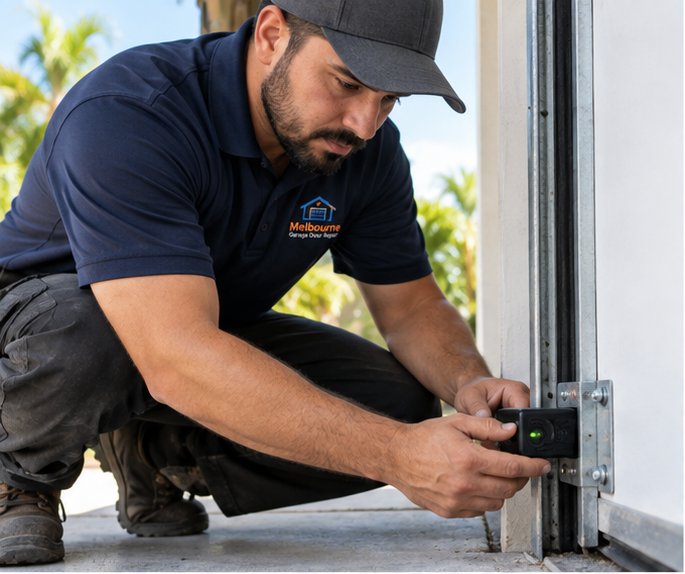
Why a closing problem is different
Closing is where the opener has to be most careful. A door coming down can trap a child, a pet or a bumper, so garage door safety standards call for two protections: photo-eye sensors near the floor and a reverse feature that sends the door back up when it meets resistance.
That means many closing faults are not broken parts at all. The opener is working as designed and refusing to close because something looks wrong. Finding what it is reacting to is the whole task.
It helps to remember that a stubborn door is not necessarily a failing one. Many of the calls we hear about end with a sensor wiped clean or a bracket nudged back. The goal of this page is to help you tell the small problems from the ones that need a technician, without putting yourself at risk.
- The door starts down and then goes back up
- The door will not move down at all
- The door closes a little and stops
- The opener light blinks and the door stays open
- The door closes only when you hold the wall button
Read the pattern first
Watch what happens when you press the button. The pattern points to the cause more reliably than guessing. A door that moves down then reverses before touching the floor suggests sensors or an obstruction in the path. A door that touches the floor and then reverses suggests the limit or force settings.
A door that does nothing but blink the opener light is nearly always a sensor fault. A door that closes only while you hold a button is the opener's way of telling you the sensors are not seen. Make a note of which one fits before you try anything.
Safety sensors and the beam
Two small units sit on either side of the door, a few inches above the floor. One sends an invisible beam and the other receives it. If anything interrupts the beam, the door will not close, or it will reverse.
A steady light on each unit usually means the beam is connected. A dim, flickering or dark light means something is wrong. Dirt, spider webs, sunlight, a bumped bracket or a loose wire can all be to blame.
If your sensors are mounted on brackets bolted to the wall or track, check that the brackets have not shifted. A bracket that has rotated even slightly will point the beam away from its partner. Gently look, but leave bending and wiring to a technician.
Lenses and obstructions
Wipe each lens gently with a soft dry cloth. Look for a stored box, a hose, a bicycle wheel or a garden tool in the beam. Move it clear and try again.
Sunlight
Low morning or evening sun can shine into a receiver and confuse it. If the door fails at the same time each day, mention that to us.
Alignment
Sensors that have been knocked slightly out of line will not see each other. Do not bend the brackets or loosen the wire to chase alignment. Our page on safety sensor repair covers what we do about it.
Blinking lights and what they say
Many openers flash their work light, or show a coded blink pattern on the motor head, when the safety system detects a fault. A series of blinks may mean the beam is broken, the wires are shorted or the sensors are misaligned.
The meaning of the pattern varies by model, so check your manual if you have it. Our guide to opener indicator lights explains the general idea, and sensor lights blinking looks at the symptom more closely.
Obstructions in the door path
Anything under the door or along the tracks can stop it. A small stone in the track, a pet's toy under the threshold, or a stack of paint cans near the edge can make the door reverse as it meets resistance.
Look along the full line of the door from the inside, and walk the tracks with your eyes only. Do not touch moving hardware. If you find nothing but the door still reverses, the issue may be settings or hardware rather than something sitting in the way.
Limit settings
The down limit tells the opener where the floor is. If it is set too short, the door stops before it seals. If it is set too far, the door pushes into the floor, senses resistance and reverses.
Floors change too. A new slab, a repaved apron or a thicker threshold seal can shift the closing point. Limit adjustment is possible on many openers, but wrong settings can create a hazard. We recommend having a technician set and test it, and our page on a door that reverses before closing describes the symptom.
Some openers learn the travel when they are programmed and remember it. After a power glitch or repair the memory may be lost, and the door can behave oddly until it is set again. That is another reason not to guess at the settings.
| Symptom | Most likely cause | What you can safely do |
|---|---|---|
| Reverses before the floor | Sensors or obstruction | Clean lenses, clear the path |
| Reverses at the floor | Down limit or force setting | Note it, call us |
| Blinks and will not move | Sensor fault or wiring | Check lights, clean lenses |
| Closes with held button only | Sensors not seen | Check sensors, call us |
| Stops partway down | Binding or track issue | Look only, call us |
| Remote will not close it | Lock mode or remote | Try the wall button |
Force settings and safety reverse
Openers measure how hard they push. If the door meets more resistance than the setting allows, it reverses. A force setting that is too low can cause nuisance reversals, while one that is too high defeats the protection.
The reverse feature is something you can test but should not tamper with. A simple test is described in our garage door safety tests guide. Use a flat object like a piece of wood on the floor, never your hand or foot. If the door does not reverse when it meets it, stop using the automatic close and have it adjusted.
Remote, keypad and lock mode
If the wall button closes the door and the remote does not, the control is the problem. Replace the remote battery, move closer and test again. A lock or vacation button on the wall control may also block remote closing.
This is the same set of questions we cover when a door will not lift, except in reverse. Compare with a door that will not open to see where the two share causes. If only the keypad fails, a fresh battery or reprogramming may be needed.
Door binding and hardware problems
Sometimes the opener is willing but the door is not. A bent track, a roller out of place, a dry hinge or a sagging panel can make the door bind on the way down. The opener senses the drag and reverses or stops.
Look at the door as it moves, from the side. If one side lags, scrapes or hangs lower, or the door looks twisted, stop. Pushing on may widen the damage. Our page on a door that stops halfway while closing goes into this in more detail.
If a remote closes the door from the driveway but not from the street, the cause may be range or interference from nearby electronics, not the opener itself. Mention where you are when it fails.
- One side lower than the other
- Visible gaps in the panel joints
- Scraping or squealing in the track
- A roller that has left its track
- Dents or kinks in the track
Springs and balance
A worn or broken spring changes the way the door falls. A door that drops too hard is dangerous. A door that stays half-open without the opener can be unbalanced. The opener may also reverse because the door seems heavier or lighter than its settings expect.
Never adjust springs, cables or brackets. If the door slams, drifts or feels odd when disconnected, leave it and read about a door that slams down. Springs hold dangerous tension.
Cold mornings are less of a concern here than in northern states, but humidity can make older rollers sticky and grease stiff. A door that closes after a second try may be showing early signs of drag.
Weather, floors and the Florida garage
Heavy rain and humidity can leave puddles, mud and grit at the threshold. A swollen bottom seal can catch on a wet floor, or debris blown in during a storm can sit under the edge. Coastal air also corrodes the small brackets and screws that hold the sensors.
Check the floor line for sand, leaves and standing water. If the sensor brackets look rusty or loose, tell us when you call. A weak bracket can pass cleaning and still lose alignment a day later.
After a storm or a vehicle bump
Wind-driven rain, flying debris and the occasional reversing car all knock things out of place. A sensor bracket can be bent by a bumper without anyone noticing. A track can be nudged by a bike or a lawn mower. The first sign is often a door that will no longer close.
If the door stopped working right after a storm or a bump, tell us. It helps to know what happened, because the damage may be more than it looks. A sensor that is lightly misaligned is easy to put right, while a bent track or panel needs proper repair.
Look at the floor around the door for water, sand or leaves, and check the wiring along the wall for signs of moisture. Do not use the opener if the garage has flooded or the outlet is wet. Leave that to an electrician or a technician.
Our guide on hurricane preparation suggests checks to do before storm season, such as testing the reverse and clearing the sensor area, so surprises are fewer.
What to try, in order
Work from the simple to the complex and stop whenever the next step touches the springs, cables or door hardware. Take your time and keep people and pets away from the opening.
If the door closes after any of these steps, note which one worked. That tells you what was wrong, and it helps if the problem returns.
- Clear the floor line and the path of the door
- Clean both sensor lenses with a soft dry cloth
- Check that each sensor light is steady
- Look for loose or pinched sensor wires from the floor
- Try the wall button, then the remote
- Check the wall control for lock mode
- Replace the remote battery
- Watch the door travel and note where it reverses
Why you should not disable the sensors
It can be tempting to cover a sensor, disconnect a wire or hold the button to force the door down. Please do not. These devices exist because garage doors have injured and killed people, especially children.
A technician can repair, replace or realign the sensors correctly. That keeps the door able to close and keeps the protection working. If the door must be closed urgently for security, tell us, and we will talk through the options.
We also like to leave you with something useful: how the sensor lights should look, where the lock button is, and what a healthy closing cycle sounds like. That way you will recognise a change sooner.
What we do on a visit
We watch the door run, test the sensors and the reverse function, check the limits and force settings, and look at the door's balance and hardware. We take the opener's behavior as evidence and follow it to the cause.
Then we tell you what we found in plain English and what the options are. That could be a sensor adjustment, new sensors or wire, a settings correction, or a hardware repair. Reach out through our contact page to arrange a visit.
If the door must be left open or closed for security while you wait, tell us what you did. Knowing that a sensor was covered, a wire disconnected or the door held with a prop lets us restore proper protection straight away and prevents surprises when the opener is used again.
A photo of the sensor area, the opener head and any blinking lights is useful to bring to the conversation. It lets us arrive with the right parts in mind and gives us a starting point for the explanation we then give you.
Questions and answers
That is the safety reverse. It triggers when a sensor beam is broken or the door meets resistance. Check for objects in the path and clean the sensor lenses. If it reverses at the floor, the down limit or force setting may need adjusting by a technician.
Often it signals a safety sensor or wiring fault. Clean the lenses, make sure nothing blocks the beam, and check that both sensor lights are steady. Beyond that, alignment and wiring should be looked at by a technician.
Some openers allow it in an emergency, but it bypasses the normal protection and should be a short-term fix at most. Stand clear and watch the door. It also means the sensors have a fault that needs repair.
A simple test with a flat piece of wood on the floor is normally safe. Never use your hand or foot. If the door does not reverse when it touches the object, stop using the automatic close and have it adjusted.
The wall control may be in lock mode, which blocks remotes, or the remote battery may be low. Replace the battery, test close to the opener, and check for a lock button on the wall unit.
Yes. Direct sun on a sensor lens can confuse the receiver. If the door fails at the same time of day, note it. Shading the sensor or adjusting its position may help, and a technician can advise.
It can be, but binding is just as likely. A bent track, a stuck roller or a spring problem can make the door drag. Look from the side without touching the hardware, and stop if one side hangs lower.
No. The sensors protect people and pets from a closing door, and disabling them is unsafe. Have them repaired or realigned instead. We can explain the options when we look at the door.