
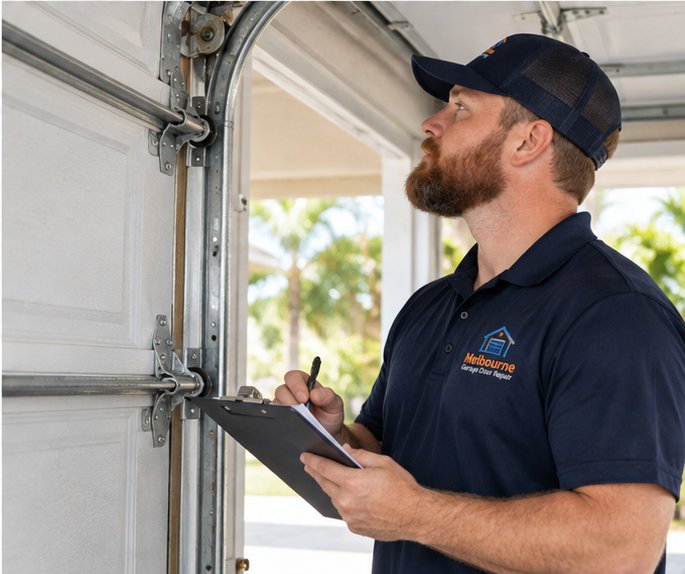
Why a garage door earns regular attention
Most people open and close their garage door several times a day. Over a year that adds up to a great many cycles, each one asking springs, cables, rollers, hinges and the opener to do their share of the work.
Because the door usually works, it is easy to forget about it. Wear builds slowly, a squeak here, a slightly slower close there, until one morning something gives way. A tune-up is a chance to catch small changes while they are still small.
We approach maintenance as a conversation with the homeowner. We look, we test, we explain, and you decide what makes sense for your door and your household.
What a tune-up includes
No two doors are identical, but a thorough tune-up follows a familiar path. The goal is to look at every moving and load bearing part, test the safety features, and leave the door running more smoothly than we found it.
- A visual inspection of springs, cables, drums, brackets and pulleys
- A look at rollers, hinges and track alignment
- Lubrication of the moving parts that need it
- A balance test to see how the door behaves at rest
- A reversal test on the opener
- A check of safety sensors, remotes and wall controls
- Tightening of hardware that has worked loose
- A review of the weather seals and panels
What we do not do on a tune-up
We do not replace parts just to replace them. If something is worn, we show you and explain what the options are. Parts that are in good condition stay in place.
The visual inspection, step by step
We begin by looking at the door as a whole. A door that hangs level and closes evenly tells us a lot before we touch anything. We watch the door travel in both directions and note anything that looks or sounds unusual.
Then we look at the parts one at a time. Springs are checked for gaps, stretched coils or rust. Cables are checked for fraying, kinks or broken strands. Brackets and drums are checked for cracks, loose fasteners and wear.
We also look at the panels and the bottom edge. Dents, cracks, rust and soft spots are noted, since a panel that is weakening can pull the whole door out of shape over time.
Why we keep our hands off the spring system
Springs and cables hold a great deal of tension. During a tune-up we inspect them closely, and any adjustment or replacement is handled with the proper tools and training. We never ask homeowners to loosen or adjust them.
Lubrication: what, where and why it matters
Moving metal parts need a thin film of the right lubricant to run quietly and wear slowly. We apply it where it helps, such as hinge pivots, roller bearings and the spring surface, and we leave it off where it does not belong.
One common mistake is spraying lubricant on the tracks. Tracks are meant to guide the rollers, not be oiled, and a coating collects dust and grit that can gum up the rollers. We wipe the tracks clean instead.
Choosing the product also matters. A garage door lubricant made for the job lasts better than a general spray that thins out and drips. We use what suits the part and explain what we put where.
- Hinge pivots receive a light application
- Roller stems and bearings, where exposed, receive lubricant
- The spring surface is treated to cut friction and noise
- Opener chain or screw receives lubricant where the maker calls for it
- Tracks are cleaned and left dry
The balance test and why it is central
A well balanced door feels almost weightless when it is released from the opener and lifted by hand. The springs carry most of the weight, so the opener only has to guide the door. If the balance is off, the opener works harder, the door wears faster and safety is affected.
During a tune-up we release the door from the opener and observe how it behaves. A door that holds in the middle of its travel is behaving well. A door that falls or rises on its own tells us the spring tension is wrong, and any correction is a job for a trained technician.
We cover this in more detail on our page about garage door balance and adjustment. If your door ever feels heavy, or if it drops when released, please do not try to fix it yourself.
The reversal test and the safety features
Modern openers are built to reverse if the door meets an obstruction while closing, and to stop if a sensor beam is broken. These features protect children, pets, vehicles and anything left in the doorway. We test both on every visit.
For the reversal test, we check that the door reverses when it meets resistance on the way down. For the sensors, we check that the lenses are clean and aligned and that the door stops or reverses when the beam is blocked.
If something does not behave as expected, we explain what is happening. Our safety sensor repair page describes common sensor issues, and the guide to garage door safety tests shows what you can safely check on your own.
A note about timing
Safety features should work every time, not just most of the time. A tune-up is a sensible moment to catch a sensor that has drifted out of line or an opener setting that has changed.
Tightening, alignment and track care
Every cycle of the door creates a little vibration, and over time fasteners work loose. Track brackets, hinge screws, opener mounting bolts and similar hardware benefit from a check with the right tools.
We look at the tracks for alignment and for dents. A track that is out of line by a small amount can cause rubbing, noise and uneven wear on the rollers. We correct what can be corrected during the visit and explain when a part needs more attention.
If the rollers show cracks, flat spots or play in the bearings, we point it out. Our page on garage door roller replacement describes what that work involves, and the choice is always yours.
- Hinge screws and bolts
- Track brackets and jamb fasteners
- Opener rail and mounting hardware
- Wall control and sensor brackets
- Handles, locks and lift points
How the Florida climate changes the checklist
Salt air, humidity, heat and sudden downpours all affect a garage door. Close to the Indian River and the Atlantic, salt in the air speeds up rust on springs, hardware and the bottom edge of the door.
Humidity can make wooden doors swell and stick, and heat can bake lubricant away and harden rubber seals. Sprinkler overspray leaves mineral spots and encourages corrosion on lower panels and tracks.
For that reason we pay extra attention to rust, seals and finish. If you live near the coast, our guide to garage doors in a coastal climate explains what the environment does to each part. It is worth a read before your visit.
How often a visit makes sense
There is no single schedule that fits every door. A door used a handful of times a day in a mild setting needs different attention from one used by a busy household or a small business, or one sitting a block from the water.
As a general guide, many homeowners find it sensible to have the door looked at once a year, and some prefer a visit before storm season. A door that is older, heavily used or showing signs of trouble may benefit from more frequent attention.
We would rather give you a sensible plan than a rigid rule. After a visit we can tell you what we noticed and when you might want us to look again.
| Situation | What to consider |
|---|---|
| Door is under a few years old and runs smoothly | A yearly look is usually reasonable |
| Door is near the coast or salt water | Yearly or before each storm season, with extra attention to rust |
| Door is used many times a day | Consider more frequent visits since wear builds faster |
| Door has started to make new noises | Do not wait, have it looked at soon |
| Door sat unused for months | A visit before regular use returns is a sensible step |
| You bought a home and know nothing about the door | A first inspection is a good starting point |
Simple checks you can do between visits
You do not need tools to keep an eye on your door. A few minutes once a month, with your hands off the springs, cables and brackets, can tell you a lot.
Watch the door open and close and listen for new sounds. Look for gaps in the weather seal, frayed cable strands, and rust spots on the lower panels. Check that the sensor lenses are clean and that the lights on them are steady.
Our monthly garage door checklist lays this out step by step, including where to stop and call someone.
- Watch the full travel of the door and note anything unusual
- Listen for scraping, popping, grinding or squealing
- Wipe sensor lenses with a soft dry cloth
- Replace remote batteries when the range drops
- Look at the bottom seal for cracks or gaps
- Keep the area around the tracks clear
Stop points
If the door will not move, sits crooked, drops when released, or shows a cable hanging loose, do not keep operating it. Keep clear and contact us. If anyone is hurt, call 911.
What we may recommend after a tune-up
Often the answer is simply that the door is in good shape and a little lubrication and tightening was all it needed. We say so, and that is the end of it.
Sometimes we find something that is worth acting on. A worn roller, a frayed cable, a stretched spring or a cracked hinge may be recommended for replacement before it fails and leaves you with a stuck door. We show you the part and explain why.
Other times we find something you may want to plan for, such as a seal that is nearing the end of its life or an opener that is showing its age. We note those and let you decide what to do and when.
Parts that wear first
Rollers, hinges and seals are common candidates. Springs and cables wear more slowly but matter more when they fail, so we look at them closely every time.
Parts that tend to last longer
Tracks, panels and mounting hardware often last for many years when they are cared for. We still check them, since a dent or a rust patch can change that.
Opener care during the visit
The opener is the part most people think of first, yet it does the least lifting. We still give it attention, since it carries the safety logic for the whole system.
We look at the mounting, the rail, the chain, belt or screw, and the limit and force settings. A chain that has stretched, a belt that has frayed or a screw that has dried out will show up as noise or hesitation, and we mention it.
We also check the wall control, the opener light and the remotes. A remote with a weak battery or a keypad with worn buttons is easy to fix if you know about it before the day you are locked out.
- Rail, chain, belt or screw condition
- Mounting brackets and ceiling attachment
- Close force and travel limit settings
- Wall button and opener lights
- Remote and keypad response
How to get ready for a visit
A little preparation helps the visit go smoothly. Park vehicles outside so the technician can reach both sides of the door, and clear stored items from the area close to the tracks and the opener.
Make a short list of anything you have noticed, such as a squeak that comes and goes, a door that sticks in the morning, or a remote that sometimes needs two presses. Small details often point straight at the cause.
If you know when the door was installed, or if you have paperwork for earlier work, set it aside. It is not required, but it helps us understand the door's history.
What to tell the technician
Mention any recent storm, any bump from a vehicle, any change in sound and any time the door has stuck. Those clues help us focus on the right parts.
Maintenance for homes, rentals and small businesses
Homeowners are not the only people who rely on garage doors. Landlords with rental properties, small shops with roll up doors and workshops with heavy daily use all benefit from knowing the condition of their doors.
For a rental, a tune-up before a new tenant moves in can head off complaints. For a business, a yearly look helps avoid a door that sticks at the worst possible moment. We tailor the visit to the way the door is used.
Commercial doors are larger and built differently, and we adjust the visit to suit the size and the way the door is used.
Tune-up or repair: how to tell which you need
A tune-up is for a door that works but could work better, or for a door you want checked before something goes wrong. A repair is for a door that has already stopped doing what it should.
If your door is stuck, off its track, will not open, or has a broken spring or cable, you are past a tune-up. Our problem pages, such as a door that will not open, can help you work out what is happening while you wait for a technician.
In practice the two often overlap. A tune-up visit can turn up a repair, and a repair visit usually includes some tune-up work, since a technician is already looking at the door. We tell you what we find either way.
Questions and answers
A tune-up typically includes an inspection of springs, cables, rollers, hinges, tracks and panels, lubrication of the right moving parts, a balance test, a reversal test, a check of sensors and controls, and tightening of loose hardware. We explain what we find so you know the condition of the door. Nothing is replaced unless it needs to be.
Many homeowners find a yearly visit sensible, with extra attention for doors near the coast, heavily used doors, or doors heading into storm season. If the door starts making new noises or moving differently, it makes sense to have it looked at sooner. It depends on the door, its age and how it is used, and we will talk it through with you.
You can do simple things, such as watching and listening to the door, wiping sensor lenses, replacing remote batteries and clearing debris. Springs, cables, brackets and drums hold dangerous tension and should be left to a trained technician. Stop and call us if you see anything unusual. When in doubt, a phone call costs nothing and a mistake can cost a great deal.
No. The tracks are meant to guide the rollers and work better kept clean and dry, since lubricant collects dust and grit. Lubricant belongs on hinge pivots, roller bearings and the spring surface, applied lightly. A technician can show you where it goes and what product suits each part. Wiping the tracks clean with a dry cloth is usually the only care they need.
A balance test checks how well the springs support the weight of the door. With the door released from the opener, a well balanced door tends to stay where it is left. A technician performs the test and makes any adjustment, because spring tension is dangerous for homeowners to change. We explain the result in plain terms so you know where the door stands.
Often it helps, since dry hinges, worn rollers and loose hardware are common sources of noise. If the noise comes from a worn part, lubrication will only reduce it for a while. We find the source, explain it, and tell you whether a part should be replaced. We would rather you know the cause than guess.
Yes, salt in the air speeds up rust on springs, hinges, tracks and the bottom of the door. Homes near the water benefit from a closer look at corrosion and sealing. Rinsing the lower panels and keeping lubricant on the right parts can slow the damage. A rinse with fresh water after storms helps too.
We replace a part only when it is worn or damaged enough to need it, and we explain why before we do so. If everything is in good condition, the visit is lubrication, tightening and testing, and we tell you the door looks healthy. You stay in control of what gets done and when.