
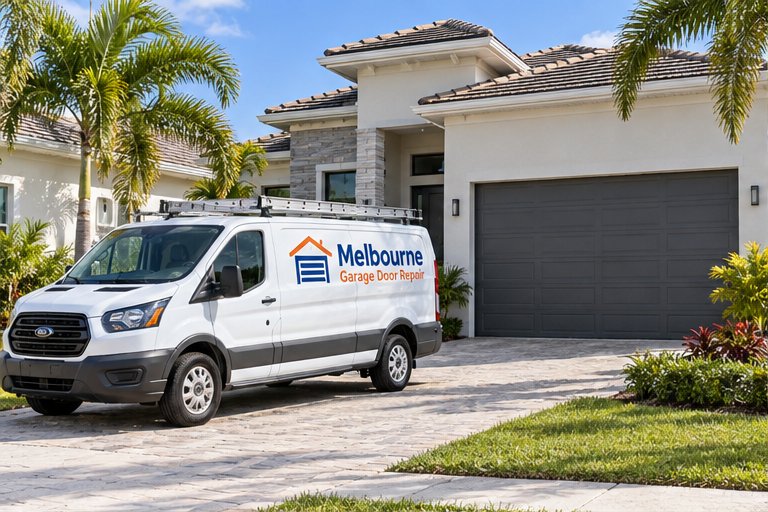
Why Viera garages behave alike
Viera is a master-planned community in central Brevard County, and that single fact shapes almost everything about its garage doors. When a neighborhood is laid out and built in phases, the same builder crews often hang the same style of door on hundreds of homes within a few years of each other. The doors then age together.
For a homeowner this is useful knowledge. If a neighbor two streets over had a spring break last spring, your own spring was probably built in the same period, wound to a similar size and cycled a similar number of times. It is not a prediction of failure, but it is a reason to pay attention.
We approach a Viera visit with that pattern in mind. We still look at your specific door and explain what we see, but we know the common builder-grade parts, the usual opener generations and the typical openings, so the conversation starts further along than it would in a neighborhood where every garage is different.
The life of a builder-installed door
Most garage doors in newer communities leave the factory as a sensible, middle-of-the-road product. They are built to meet the builder's budget and the home's plan, and they perform well when they are looked after. They are not built to be ignored for fifteen years.
Here is the rough life story we see in Viera garages, described in stages rather than dates because every household uses its door differently.
The first few years
Almost nothing goes wrong. The most common calls in this stage are remotes that stop responding, a sensor knocked out of line by a bicycle or a storage bin, and a door that rattles slightly as the hardware settles in. These are small jobs, and a good adjustment solves them.
The middle years
Rollers begin to wear, the hinges loosen a little, and the lubricant that was applied at the factory is long gone. The door gets louder and a little heavier on its springs. This is the stage where a maintenance visit pays for itself in avoided breakdowns.
The later years
Torsion springs reach the end of their rated cycles, cables fray where they wind onto the drums, and the opener's gear or circuit board shows its age. Repairs here are more significant, and it is also when many owners start asking whether the whole door should be replaced.
Springs on doors of this age
A torsion spring is rated for a number of full open and close cycles. A household that leaves for work, returns, and runs errands on weekends may use the door several times a day, so a spring rated for a modest cycle count can be used up sooner than people expect.
When one breaks, the sound is memorable. Homeowners describe a bang from inside the garage, followed by a door that will not lift or feels impossibly heavy. If you hear that, stop using the door and keep everyone clear of it. The spring assembly holds a great deal of stored force and it is not a place for guessing.
You can read more about what the repair involves on our page about torsion spring repair. In short, we confirm the spring size from the door's weight and dimensions, replace what is needed, and rebalance the door so it moves smoothly by hand and under the opener.
Uniform openings, individual doors
Because Viera streets are lined with similar floor plans, many openings are the same width and height. That helps when a replacement is needed, since standard sizes are easier to source and plan. It does not mean every door in the neighborhood is identical.
Some owners upgraded to insulated panels. Some added windows. Some enlarged the opening for a tall truck. Some doors have been repaired several times and carry a mix of old and new parts. We always measure and inspect rather than assume, and we match parts to the door in front of us.
- We check the door's weight against the springs, not against a neighbor's door.
- We look at the track and bracket condition on both sides, since wear is often uneven.
- We confirm the opener's age and drive type before suggesting anything.
- We note whether the door has been modified from its original build.
Dealing with the community association
Many Viera neighborhoods sit under a homeowners association, and associations commonly care about how the front of a house looks. A garage door faces the street, so it often falls under architectural review. Some communities set limits on color, panel pattern, window style and hardware finish.
We cannot tell you what your specific association requires, because the rules differ from one community to the next and change over time. What we can do is help you ask the right questions before you order a new door. Start with the governing documents or the management office, ask whether a like-for-like replacement needs approval, and ask what the process is for a change in style.
Our guide to HOA rules and garage doors walks through the questions worth asking. A repair that keeps the same door, such as a new spring, rollers or opener, normally does not change the look of the house at all, though you should still confirm anything your association says about visible hardware.
Because the rules vary, we also suggest taking a photo of your current door before any work begins. If an association ever asks what was there before, a dated picture settles the question promptly and keeps the conversation friendly. It is a small habit that spares owners a surprising amount of back and forth.
Heat, humidity and afternoon storms
Central Brevard summers are hot and humid, with thunderstorms that arrive on many afternoons. A garage can heat up significantly, and the door, its hardware and the opener all feel it. Metal expands, lubricants thin out, and plastic parts become brittle over time.
Humidity encourages rust on exposed steel, especially at the bottom of the door and on track fasteners. Heavy rain driven by wind can find any gap in the weather seal, and a door that does not meet the floor evenly lets water and insects in. Sensors can be thrown off by low sun angles at certain times of day, which creates the odd situation where a door closes in the morning and refuses to close in the evening.
None of this is dramatic, but all of it adds up. A seasonal check on seals, rollers and sensors is a practical response to the climate, and our page on weather seal replacement covers the part of the door that takes the most abuse from rain and sun.
Lightning, surges and openers
Thunderstorms bring a particular risk to garage openers: electrical surges. An opener is a small computer with a motor, and it is plugged into a ceiling outlet that shares a circuit with other things. After a nearby strike or a power flicker, some openers stop responding, lose their programmed remotes, or show flashing lights.
Before assuming the opener is finished, check the simple things. Make sure the outlet has power, try the wall button, and look at whether the light on the motor head is showing a pattern. If the door will not move at all, you can disconnect it from the opener with the red release cord and operate it by hand, but only if the door is balanced and not off track, and only after you have read the guidance on our page about the door that sticks after a power outage.
If the door feels very heavy when released, stop. That points to a spring or cable problem and the door should not be lifted by hand.
A sensible checklist for Viera owners
Owners in newer communities often assume a younger door needs no care. A short routine each season keeps small issues small. These are things you can do without tools and without touching springs, cables or the brackets that hold them.
Walk through this list a few times a year. Keep a short note of the date of each check, because when a technician asks how long a noise has been going on, a written answer is far more useful than a guess. It also shows whether a problem is getting worse over a season or staying the same.
Keep the area around the door clear as well. Storage boxes stacked against the track, a bicycle leaning on a sensor or a ladder hung near the springs all interfere with safe operation, and a clear lane on both sides of the opening makes every inspection simpler.
- Watch the door travel from top to bottom and listen for scraping, popping or grinding.
- Look for gaps in the bottom seal where daylight shows under a closed door.
- Wipe the sensor lenses with a soft dry cloth and check that both indicator lights are steady.
- Test the reversing function by placing a roll of paper towels under the door as it closes. The door should reverse on contact.
- Replace remote batteries once a year, whether or not the remote seems weak.
- Open the door by hand with the opener disconnected only if you know it is balanced, and stop if it resists.
When the opener is the real problem
In many Viera homes the opener was installed with the house and has run quietly for years. When it finally fails, owners often assume the whole door must be replaced. In most cases the opener and the door are separate decisions.
A repair is possible when the issue is a worn gear, a failed logic board or a loose connection. A replacement makes sense when the unit is old enough that parts are hard to find or the safety features are out of date. Our pages on opener repair andopener replacement describe how we think about each choice.
Whichever way it goes, we test the safety reversing system and the sensors before we leave, because an opener that moves a door but does not protect a child or a pet is not finished work.
Replacing a door in a reviewed community
Sometimes a door has aged past the point where repairs make sense. Panels may be dented from years of weather, or the owner may simply want a different style. In a community with architectural review, the order of steps matters.
First, decide what you want: the same style, a new color, windows, or an insulated build. Second, check with the association about approval requirements, and keep whatever approval you receive in writing. Third, measure the opening and plan for headroom, side room and any obstacles such as a ceiling-mounted storage rack. Fourth, ask for a clear written description of the door, track, springs and opener you are agreeing to.
Our page on new garage door installation explains what a visit and an installation involve, and the guide to measuring for a new garage door is useful before you talk to anyone.
Garage use in a modern household
A garage in Viera is rarely just a place to park. It is often the main entrance to the house, a laundry zone, a workshop, a storage area for bikes and holiday boxes, and sometimes a gym. That heavy daily use means the door is opened more than the original builder may have planned for.
If your door is the family's main entry, reliability matters more than it does for a door used once a week. A battery backup for the opener keeps the door working when the power is out, which is a real consideration in storm season. Smart opener features let you check whether the door was left open, which many people find reassuring.
If the garage is also living space, insulation and weather sealing matter more. Our guide to garage door heat and garage temperature explains what a door can and cannot do for a hot garage.
What a visit to a Viera home looks like
When we arrive, we begin by listening. You tell us what the door has been doing, when it started and whether anything happened just before, such as a storm, a bump from a car or a power flicker. Then we look at the door and the opener without touching anything that carries tension.
We check the balance by observing how the door moves, we look at the springs, cables and drums, we inspect the rollers and hinges, and we test the sensors and the reversing function. We explain what we find in plain language, show you what we mean, and describe the options.
You decide what to do. We do not push work the door does not need, and if the cause is something simple, we will say so. Our page about what happens during a garage door service visit gives the full picture.
Garages that serve a business or a rental
Not every garage in the Viera area belongs to a family home. Some are part of rental properties, small offices or commercial units. A landlord needs a door that works for the next tenant without fuss, and a business owner needs a door that is dependable on a busy day.
For rentals, we suggest keeping a simple record of when the door was last serviced, what was replaced and what the opener model is. That record helps at turnover and saves time when a tenant calls with a problem.
For commercial openings the weight and cycle count are different, and the hardware is often heavier. Our page on commercial garage door service explains how we approach those jobs.
Common questions from Viera homeowners
Owners here tend to ask the same handful of things. Is it normal for a door this age to need work? Usually yes, because wear arrives on a schedule. Can I keep my door and just fix the opener? Often yes, if the door is sound. Will a new door cost me my association approval? Only if the style changes in a way your rules do not allow, which is why we suggest asking first.
Another frequent question is whether it is worth repairing a door that has had several fixes. That depends on the condition of the panels and track and on how the repairs have held up. The comparison page on repairing or replacing a garage door sets out the factors.
Getting in touch about your Viera door
If your door is making noise, moving unevenly, stopping short or refusing to respond, tell us what you notice. The more detail you can give about sounds, lights and timing, the easier it is for us to arrive prepared.
Please do not try to adjust springs, cables or the brackets that hold them. Those parts hold energy that can injure you. If someone is hurt, call 911 first and worry about the door later. Everything else is a conversation we are happy to have.
Questions and answers
A newer door needs less repair, but it still benefits from seasonal attention. Heat, humidity and afternoon storms wear on seals, rollers, sensors and lubricant even in the first several years. A short check each season catches small problems, such as a loose roller or a misaligned sensor, before they become larger repairs. Tell us the age of the door and what you have noticed, and we will say what to watch.
A repair that keeps your existing door, such as a new spring, rollers or opener, normally does not change the look of the home. A replacement door with a new style, color or window pattern is more likely to need review. Check your governing documents or the management office before ordering anything. Your association's office can usually tell you promptly which category your plan falls into.
Low sun can shine into a safety sensor lens and confuse it, which makes the opener think something is in the way. Slight misalignment can also show up only when the door frame warms and shifts. Wipe both lenses, check that the lights are steady, and let us look if it continues. If the problem follows a pattern by time of day, mention the pattern when you contact us.
Yes, in many cases. The opener and door are separate parts, and a sound door can work with a new opener. We check the door's balance first, since an opener should never be asked to lift a door that the springs are not supporting properly. Tell us the opener brand if you can see it on the unit, and describe the door's current condition.
A sudden bang often means a torsion spring has broken. Do not try to lift or force the door, and keep people and pets away from it. Disconnecting the opener is not a fix, because the door will be very heavy. Contact us and describe what you heard so we can plan the repair. Please do not try to disconnect or lift the door yourself, and keep a clear distance until we have looked.
They can be. A nearby strike or a power flicker may stop an opener from responding, erase programmed remotes or cause flashing lights. Check that the outlet has power and look at the motor head light pattern. If the opener stays unresponsive, we can test it and explain whether it needs repair or replacement. Mention whether any other electronics in the garage were affected, because that helps us narrow the cause.