
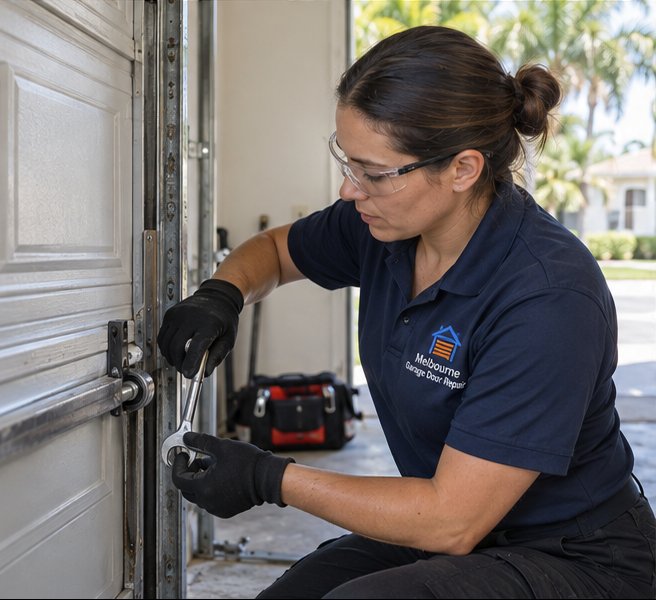
What garage door rollers do
Each roller is a wheel on a metal stem. The stem slides into a hinge on the edge of a door panel, and the wheel sits inside the track. As the door moves, the wheel rolls along the channel, keeping the panel in line and carrying a share of the door's weight through the curve and across the ceiling.
A typical residential door has around ten rollers, one at each end of every hinge position. Because every one of them turns on every cycle, they collect wear faster than almost any other part. A wheel that stops turning smoothly drags on the track and sends a noise through the whole door.
Steel, nylon and everything in between
Rollers come in a few common types, and the difference shows up mostly in sound, lifespan and cost. The right choice depends on the door, how often it is used, and how much noise matters in your home.
Our guide to types of garage door rollers covers the options in detail. Here is the short version of what we explain to homeowners.
Steel rollers
Steel wheels are the traditional choice. They are strong and handle weight well, but metal against metal is loud. Many are made with exposed ball bearings that can dry out or collect grit. They tend to be the sound you hear when a garage door rumbles through the house.
Nylon rollers
Nylon wheels roll quietly because plastic does not ring against the steel track the way metal does. Many have sealed bearings, which keep grit out and last longer between services. They are a popular upgrade for garages that sit below a bedroom or beside living space.
Sealed and heavier-duty types
Some rollers use more bearings or a different stem length to suit heavier doors. Insulated doors, wide doors and doors with windows add weight, and a roller should be matched to it. We check the stem size and wheel diameter so the replacement fits your hinges and track.
How to tell rollers are wearing out
Rollers rarely fail all at once. They get gradually louder and rougher, and the change is easy to miss because you hear it every day. A visitor or a neighbor often notices first.
Think about how the door sounded when it was new, and compare it with how it sounds now. If the difference is clear, the rollers are a very likely cause.
- A rattling, grinding or rumbling sound as the door travels.
- A door that shakes or vibrates, especially on the curve.
- Squeaking even after lubricating the hinges and track.
- Visible cracks, flat spots or wobble in the wheels.
- Rollers that no longer spin when you gently touch them with the door at rest.
- Stems that look bent or sit loosely in the hinge.
- A door that sticks or hesitates in one spot.
Noise is a signal, not just an annoyance
A loud door is not simply irritating. It is telling you where something is rubbing, loose or worn. Rollers are one common source, but a noisy door can also come from dry hinges, a loose track, a worn opener chain or a bracket that has started to wobble.
That is why we look and listen before suggesting new rollers. Replacing parts that are not the problem does nothing for the sound. Our guide on diagnosing garage door noises explains how different sounds point to different parts, and it can help you describe the problem when you contact us.
What we inspect during a roller visit
The rollers do not work alone, so a roller visit is really a visit to the whole travel path of the door. We start by watching the door move through a cycle, with the opener disconnected when appropriate, and note where the effort or noise changes.
Then we look closely at each part that touches the rollers.
Some doors have been serviced before, and the parts on them are a mixture of old and new. We note which rollers are original and which have been changed, because a newer roller sitting next to a tired one can hide where the noise is coming from.
- Wheels for cracking, flat spots and play on the bearings.
- Stems for bending or wear where they sit in the hinge.
- Hinges for cracks, loose screws and elongated holes.
- Track for dents, dirt, rust and straightness.
- Track brackets and fasteners for tightness.
- Top section and fixtures, since the top roller carries extra load.
- Cables and springs, in case they contribute to uneven travel.
How rollers are replaced
Most rollers can be replaced without touching the springs. The stem slips out of the hinge, and a new roller goes in. In practice, some positions need care, and the bottom rollers are the exception. The bottom bracket on each side is under load from the lift cable, so we do not touch it without following proper safety steps.
We work through the door section by section, keeping the panels supported and the door from shifting. Old rollers come out, the hinge sockets are checked, and new rollers are seated and verified. Then we move to the next position. When the last one is in, we run the door by hand and listen to the difference.
The bottom roller and why we handle it differently
The bottom corners of the door look like just another roller position, but they are not. The bottom bracket holds the end of the lift cable, and the cable is connected to the spring system. Removing that bracket without relieving the tension can cause serious injury, because the force is released suddenly.
For this reason we never suggest that homeowners replace bottom rollers themselves. The same caution applies to anything near the cable or drum. If you are curious about what is involved, our garage door cable repair page explains how that system works and why it needs trained handling.
Hinges deserve attention too
Hinges join the panels and hold the roller stems, so a worn hinge often shows up as a roller complaint. Look for a hinge with a loose or oval-shaped hole, a crack at the bend, or screws that no longer bite. These let the stem shift and the panel flex.
Hinges come in different thicknesses, called gauges, and different positions on the door call for different ones. The center hinges are typically lighter, while the end hinges carry the load of the rollers. When we replace rollers, we check each hinge and let you know if any should be changed with them. See our page on hinge and track service for more.
Cleaning the track
A roller is only as smooth as the surface it rolls on. Over time the inside of the track collects dust, old lubricant and sometimes small debris. Spray lubricant applied to the track acts like glue for dirt, and rollers then ride on a gummy surface.
We clean the track channel where the wheels run and wipe away built-up residue. A clean track often makes a quieter door by itself. If the channel is dented or rusted where the wheels run, cleaning will not cure it, and we will point that out so you can decide what to do about the track. Keep in mind that track and brackets are held under load, so we never loosen them casually. We avoid greasing the track, because the wheels are meant to roll, not slide. Our garage door lubrication guide explains what to apply and where.
Roller wear in a humid, salty climate
Brevard County air is warm and damp for much of the year, and homes near the coast also get salt. Steel wheels with open bearings can rust inside, and a rusted bearing grinds. Plastic wheels hold up well to moisture, but heat inside a closed garage can dry out the lubricant packed in their bearings.
If your garage is not air conditioned, the door lives in a hot box in summer. Plastic and rubber parts age faster in that heat. Checking your rollers a little more often than a drier region would require is a sensible habit here, and a visual look from the floor costs nothing.
Safe checks you can do yourself
A few simple checks are fine for any homeowner. Stay on the floor, keep your hands clear of moving parts, and avoid touching anything near the springs or cables.
If anything on the list looks wrong, or if the door starts to shake, stop using it and contact us.
- Run the door and listen. Does the noise come from one side, the top or the whole door?
- Look at the rollers you can see without climbing. Are any wheels cracked or tilted?
- Wipe visible dust from the track with a dry cloth while the door is closed.
- Apply a light garage-door lubricant to the hinge pivots only, if the door is noisy.
- Do not spray or oil the track, and never touch the bottom bracket or cables.
Choosing between roller types
There is no single right answer, because garages are used differently. A detached garage that holds a workbench and lawn equipment may not need the quietest wheel available. A garage with a bedroom above it very likely does. We ask how the space is used before suggesting a type.
Weight matters too. A plain single-layer steel door is light, while an insulated double door is much heavier, and the roller should be built for the load. Wheel diameter and stem length must also suit the hinge and track. Choosing a roller that does not match the hardware causes more noise, not less.
| Consideration | Why it matters |
|---|---|
| Garage beside or below living space | Quieter wheels and sealed bearings reduce transmitted sound |
| Heavy or insulated door | Roller and stem need to suit the added weight |
| Frequent daily use | Sealed bearings last longer under many cycles |
| Humid or coastal setting | Bearings that resist moisture and rust matter more |
| Older hinges or track | New rollers must fit the existing hardware |
What happens if worn rollers are ignored
A worn roller does not usually cause a dramatic failure on its own, which is why it is tempting to ignore. But the consequences build. The track begins to wear where a rough wheel scrapes it, and a damaged track is a bigger repair than a set of rollers.
A cracked wheel can also let a stem slip out of position, and a roller that leaves its track is how many doors end up crooked and jammed. If you ever find yourself dealing with that, see off-track garage door repair. Dealing with worn rollers early is almost always simpler than dealing with the problems they can cause later.
Roller replacement and your opener
A door that drags on worn rollers makes the opener work harder. The motor strains, the chain or belt takes more load, and the gear inside the unit wears. Replacing rollers can reduce that strain, and a smoother door often means a quieter opener as well.
After we change the rollers, we check that the opener's force and travel settings still match the door. Sometimes a door runs so much more freely that the settings need a small correction. We also test the safety reversing function, so everything works as intended before we leave.
Many homeowners are surprised by how much of the household noise came from the door. A garage that shares a wall with a bedroom or a family room carries every rumble into the house. Once the wheels are rolling cleanly and the hinges are snug, the difference is usually obvious the first time the door runs.
It is also a good moment to think about the rest of the door. If the panels are dented, the weather seal is worn or the opener is aging, mention it while we are there. We would rather give you the whole picture in one visit than have you discover a second problem next month.
Planning your roller service
When you contact us, tell us how long the noise has been going on and roughly how old the door is. Mention whether the door has had rollers replaced before, and whether the garage is attached to living space. These details help us decide what to bring.
We come to the property, check the whole system, and explain what we find. You will know which rollers are worn, which parts are sound, and what we suggest doing. You may also want to read about noisy garage door service for a wider look at sound problems. When you are ready, get in touch and we will take it from there.
Questions and answers
Usually it makes sense, because they have all lived the same life. Replacing only one or two can leave older wheels failing soon after, and each visit disturbs the door again. If some rollers are clearly newer or in good shape, we will say so and let you decide. We explain what we see before any work begins.
In most homes, yes. Plastic wheels do not ring against the metal track, and sealed bearings reduce grinding. Door noise also comes from hinges, tracks, springs and the opener, so new rollers help most when the wheels were the source. We listen to your door first to find out.
There is no single interval. Wear depends on how many cycles the door makes, the type of roller, the climate and how well the door has been maintained. A door used several times a day will wear its rollers sooner than one used occasionally. Inspection tells us more than a calendar does.
The middle and upper rollers are sometimes within a careful homeowner's reach, but the bottom rollers sit on brackets connected to the lift cables and spring tension. That part is dangerous and should be left to a technician. We recommend leaving the whole job to us rather than attempting part of it.
Often, but not always. A shaking door may be caused by worn rollers, but it can also come from loose track brackets, bent hinges or an unbalanced door. We check these during the visit and explain which part is responsible so the fix addresses the real cause.
Yes. A cracked or flat wheel scrapes and chatters against the channel instead of rolling, which can scuff the track and, over time, leave rough spots that make the next set of rollers wear faster. That is one reason we look at the track whenever we replace wheels, and clean it before fitting new ones.
You should notice a smoother, quieter movement. A door that feels very different in the way it balances or drifts after rollers are changed is a sign of another issue, such as spring tension, and should be looked at. We test balance after every roller visit and tell you what we find.
A light application of garage-door lubricant on the roller bearings, if they are exposed, and on the hinge pivots is reasonable. Keep it off the inside of the track, and do not use thick grease. Sealed nylon rollers usually do not need oil. When in doubt, ask us what suits your type of roller.