
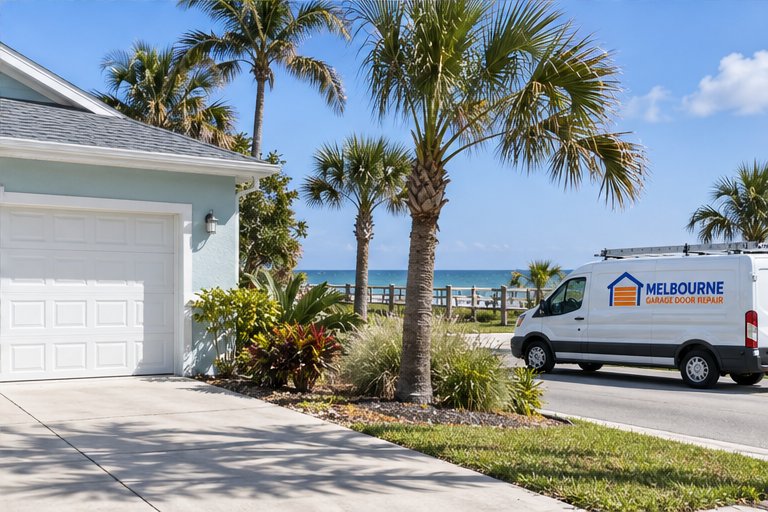
A small town where every square foot counts
Indialantic is a compact barrier island town near Melbourne Beach, with the ocean to the east and the lagoon to the west. Lots tend to be modest, streets are close together, and many homes were built when a garage was an afterthought rather than a feature.
That shapes how garage doors are used. A door that opens onto a short driveway, or straight onto the street edge, gets opened more often and in more awkward conditions than one in a sprawling suburb. Cars are parked close, bikes lean against walls, and the garage holds more than it was designed to hold.
This page looks at garage doors through that lens. Rather than starting with the hardware, we start with how people in a small coastal town actually live with the door, and then work back to what goes wrong and what can be done about it.
The garage as a second living room
Walk past enough garages in a town like this and you will see open doors with a workbench, a surfboard rack, a spare freezer, a row of paddleboards or a space set up for hobbies. When a garage doubles as living space, the door is often left open for light and air, then closed again, many times in a day.
Every cycle counts toward the life of the springs and the opener. A door that opens and closes a handful of times a day is working much harder than one used only to park a car at night. Springs are rated for a number of cycles, and more use means they reach the end of their life sooner.
If your garage is a busy room, mention it when you call. It helps us judge whether the springs, rollers and opener are suited to that level of use. See how long garage door springs last for the reasoning behind cycle life.
Tight driveways and the sensor problem
A short driveway means a parked car or a stack of boxes is often near the door. The two safety sensors, small eyes near the floor on each side of the opening, send a beam across the doorway. If something blocks it, the door will not close, or will reverse as it closes.
In a tight garage the sensors get knocked, covered in dust or pushed out of line by a bumped bin or a bike handlebar. A door that stops and reverses for no clear reason, or an opener that blinks, is often telling you that a sensor has lost its partner.
Simple checks are safe: look for a blinking indicator, wipe each lens with a soft cloth and see whether anything has bumped either bracket. Do not bypass the sensors. If the problem continues, our safety sensor repair page explains how we diagnose and fix the cause.
Older cottages and mid-century garages
Many Indialantic homes are older cottages, mid-century block houses and bungalows, some lovingly updated and some barely touched. A garage in one of these houses may have been built for a smaller car, with a narrow opening and a low ceiling.
Garage doors in these openings are often single-wide or a tight double, and the framing around them may have shifted over the years. A door that was once square can bind on one side because the header has dropped slightly or the jamb has moved. The door may rub, scrape or hang unevenly.
We check how the door sits in the opening, whether the tracks are parallel and plumb and whether the fixings are still sound in the wood or block. A track bolted to damaged framing needs a different fix than a track that has simply worked loose, so the first look matters.
Remodels, additions and teardowns
Coastal towns with high demand see a steady stream of renovations. Owners add rooms, raise houses, replace garages or rebuild entirely. A garage door that suited the old building often does not fit the new plan, and changes to headroom, ceiling height or the sides of the opening can alter what door and opener will work.
Before a door is chosen, the opening needs measuring carefully, including headroom above the opening, room beside it and the depth of the garage. Our guide on measuring for a new garage door explains the dimensions that matter.
If you are in the middle of a remodel, tell us early. A door ordered before the framing is final can end up the wrong size, and a conversation on site often avoids that. Our new garage door installation page describes how a replacement is planned.
Street-side noise and neighbors
With houses close together, the sound of a garage door carries. A rumbling, squealing or banging door wakes a neighbor as well as the family, especially when it runs early or late. Noise is not only a nuisance, it is information about what is wearing.
Squeals usually point to dry hinges or rollers. Grinding often comes from worn rollers or dirty tracks. Loud bangs on closing can be a spring or balance issue. A shuddering opener may be a worn drive component. Each sound has a different story behind it.
Our guide to diagnosing garage door noises lists common sounds and likely causes. If your door has become much louder than it used to be, it deserves a look, because noise often arrives before a part fails.
Humidity, rain and sticky doors
Indialantic's climate is warm and damp for much of the year. Humidity makes wooden door sections swell, causes rubber seals to soften and stick and encourages mildew in a closed garage. Summer storms push water against the door and under the bottom edge.
A bottom seal that has flattened or torn lets in rain, leaves and insects, and a door that sits against a seal that has stuck to the floor can strain the opener when it tries to lift. Replacing worn seals is a modest job that makes a real difference to how the garage feels.
See bottom seal and threshold service for how floors, seals and thresholds work together. If the floor slopes toward the door, the fix may involve the threshold or the way the seal is fitted rather than the seal alone.
A small garage that holds a lot tends to stay damp, because air does not move through it and wet gear dries slowly. Moisture then settles on the door hardware, and dust sticks to it. A few habits cut down the wear without taking much time.
Leave the door open for a while on dry days so the air can change. Wipe down the inside face of the door and the track with a dry cloth, keep boxes off the floor along the base of the door and sweep sand out rather than letting it pile against the seal.
Check for pests too. Insects and small animals look for sheltered corners, and a worn bottom seal or a gap at the corner of the door gives them a way in. If you find nests or droppings near the tracks, clear them carefully with gloves before they interfere with the sensors or wiring.
Beach gear, bikes and what hangs on the door
Garages in a beach town fill with wet items: boards, chairs, coolers, bikes and wetsuits. Salt and sand come in with them. Items stored too close to the door can be struck by it, and tall items leaned against the track can bend it.
Keep a clear lane on both sides of the door and along the tracks. Do not hang anything from the door itself or from the spring and cable area. Overhead racks that sit too near the door path can catch the top panel as it passes into the horizontal tracks.
Rinse sand and salt from items before they come inside, and sweep the floor along the bottom of the door now and then. A door that closes on a pile of sand will not seal properly, and grit on the track can wear rollers down.
Hurricane season and a small footprint
A small lot gives less room to move a vehicle or tuck away loose items before a storm, and garage doors near the coast face the same wind as everyone else. A door in poor condition is a weak point, so it makes sense to check it before the season starts.
Look for dents, loose hinges, tracks that do not sit firmly against the wall and an opener that struggles. Anything that looks bent or loose should be inspected before storm season rather than during it.
Our guide to garage door hurricane preparation covers what owners can do safely. After a storm, check the door for damage before running it, and if it looks out of line, leave it alone and have it looked at.
When an older opener is the real problem
Sometimes the door is fine and the opener is what is tiring out. Older chain drives may be loud, sensors may be mismatched or a logic board may fail. Replacing the opener can solve issues that no adjustment will.
A modern opener usually offers quieter operation, battery backup options and better safety features. It also helps when the garage sits under a living space and noise matters. The right drive type depends on the size of the door, the ceiling and how sound-sensitive the home is.
Our guide to choosing a garage door opener describes the choices. We can look at your current setup and tell you whether repair or replacement makes more sense.
Garages that serve home businesses
Some Indialantic residents run small businesses from the garage: a craft studio, a repair bench, a place to stage deliveries. A garage door in that setting is part of the working day, and downtime is felt more directly.
If a door is the main access to a workspace, it is worth considering how it is maintained. A scheduled tune-up gives a technician a chance to spot wear before a failure interrupts work, and a door with the right springs for its cycle count will last longer.
Larger commercial-type doors have different needs, and we cover them under commercial garage door service. For a home studio with a standard door, the points in this page apply.
Wood, block and stucco around the opening
The material around the door matters as much as the door. Many island homes use concrete block with stucco, others use wood framing, and the header above the opening carries the weight of the wall. Where moisture reaches wood or where stucco cracks, the framing that holds the track brackets can soften without any outward sign.
When tracks are fixed into soft wood, they loosen over time, and a loose track lets the door wander as it travels. That shows up as scraping, a door that hangs crooked or rollers that pop out. Fixing the track alone will not last if the wood behind it is damaged.
During a visit we press and test the fixings, look at the jambs and header and tell you if the surrounding structure needs attention from a carpenter or builder before the door work can hold.
Reading the signs of a spring that is tiring
Springs rarely fail without warning, even though the final break feels sudden. A door that feels heavier, an opener that strains, a door that drifts down when stopped halfway or a gap that appears between the coils are all signals worth noting.
In a garage that sees heavy daily use, springs reach the end of their cycle life sooner. Replacing one spring on a pair often means replacing both, since the older one is close behind. We explain why on site rather than just doing it.
Do not try to wind, loosen or adjust a spring. The stored energy can cause serious injury. If you suspect a problem, stop using the door and read about a spring that snapped with a loud bang to learn what to expect.
A short checklist before you call
It helps to arrive at a service visit with a few observations. Note when the problem happens, whether the door moves part way, what sounds it makes and whether the opener light or the sensors show anything unusual.
Try the wall button and the remote, and see whether the door moves by hand when you use the manual release. If it feels very heavy, jerks or will not lift, stop. A broken spring or cable is a hazard, and the door should not be forced.
- Which control fails: remote, wall button, keypad or all of them?
- Does the door move at all, and how far?
- Is there a new noise, and when does it occur?
- Are the sensor lights steady or blinking?
- Has anything hit the door or been stored against it recently?
Getting your Indialantic door looked at
When you reach out, tell us how the garage is used as well as what is wrong. A door in a busy workshop garage is a different job from one in a rarely used storage space, and the answer may differ too.
We come to the property, look at the door, explain what we find and what the options are, and leave the decision with you. If anyone has been injured, call 911 first, and keep people clear of any door with a broken spring or cable.
You can reach us through the contact page.
Questions and answers
Usage and conditions make a big difference. A door used many times a day, stored against, or exposed to salt and sand wears out sooner than one that is opened twice daily. Springs, rollers and opener gears all have limited cycle lives. Mentioning how the garage is used helps us judge what is normal. That way you know what is happening before any decision is made.
Look at the two safety sensors near the floor. Wipe each lens with a soft cloth, make sure nothing blocks the beam and check that neither has been bumped out of line. A blinking indicator light usually means a sensor problem. If it still reverses, the travel settings or the door balance may need a technician's attention. We are glad to talk it through on site, with the door in front of us.
Indirectly, yes. Cars and objects parked close increase the chance of striking the door or blocking the sensors, and moisture and splash from the street reach the bottom seal more easily. Keeping a clear space and checking the sensors often prevents most of the trouble. Describing what you have noticed helps us look in the right place. A short visit usually makes the picture much clearer.
Some sound is normal, but a squeal, grind, rattle or bang that is new or growing deserves attention. Dry hinges, worn rollers and loose hardware are common causes. If the noise comes with jerking or an uneven path, stop using the door and have it inspected, since a spring or cable may be involved. A short visit usually makes the picture much clearer.
Not necessarily. A weak battery is the most common cause, so try a new one first. If the wall button also fails, or several remotes stop at once, the opener's receiver or power supply may be at fault. We can test the opener and tell you whether repair or replacement is sensible. Tell us what you see and we will explain what it means.
Early, before framing and ceiling heights are final. Headroom, side room and the depth of the garage decide which doors and openers fit. A short conversation and an on-site look before ordering can prevent a door that does not fit, and it makes the rest of the project smoother. We explain what we find and what the options are.
Some simple checks are fine, such as cleaning sensor lenses, replacing remote batteries and looking for obvious damage. Anything that involves the springs, cables, drums or the brackets that hold them is not safe for a homeowner, because they hold dangerous tension. Leave those jobs to a trained technician. That way you know what is happening before any decision is made.