
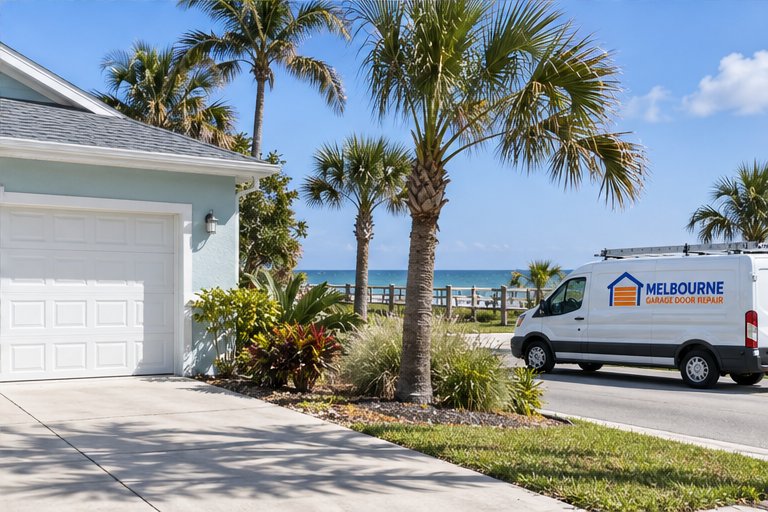
Why this island is hard on garage doors
Few places ask more of a garage door than a strip of land between an ocean and a river. Cape Canaveral homeowners live with salt carried on the breeze, humid mornings, hard afternoon downpours and the occasional tropical system. A door that would last a long time inland can show its age much sooner here.
Most of the trouble starts small. A roller that used to glide begins to stick, a hinge leaves an orange streak on a white panel, or the opener groans on cold mornings. Those early signs are easy to ignore and far easier to deal with when they are still minor.
We treat the island as its own environment. Our advice about hardware, lubrication, and inspection intervals is shaped by what salt air does to steel over a few seasons, not by what a catalog says about a door in a dry climate.
Reading the early warning signs
Your garage door usually tells you something is wrong well before it stops working. Learning to read those hints lets you call us on your schedule instead of in the middle of a stressful morning.
Listen when the door runs. A clean, even sound is normal. Scraping, popping, rattling or a rhythmic squeal means something is rubbing, loosening or running dry. Watch the door too, since a panel that rises unevenly or a gap along one side points to a balance or track issue.
- Orange or brown streaks near hinges, brackets and track edges
- A door that hesitates at the start of its travel
- Noise that is louder than it was last month
- A remote that works only when you stand close to the door
- A bottom seal that has hardened, cracked or lifted away
Salt air and what it does to metal
Salt is the main enemy on the island. It settles on bare steel, draws in moisture, and speeds up rust on springs, cables, hinges, fasteners and track. Rust is not only cosmetic. A cable with corroded strands or a spring with surface pitting is carrying a heavy load with less margin than it had when new.
Painted panels can hide a lot, but the exposed hardware tells the truth. Check the lower corners of the door, where moisture collects, and the track screws, where water sits behind the bracket.
If you see rust, our page on rust on a garage door and track explains what is cosmetic and what calls for a technician. We never ask you to touch springs or cables yourself, because they hold dangerous tension.
Living in a condo or townhome garage
Many Cape Canaveral residents have a garage that belongs to a condominium or townhome community, and that changes a few practical points. The door may be an association item, a unit-owner item, or a mix, depending on the governing documents. Knowing which applies before you call saves back and forth.
Shared walls matter as well. A noisy opener on one side of a wall can disturb a neighbor's bedroom, so a smooth, well adjusted door is a courtesy as well as a convenience.
Association rules often cover door style, color and window layout. If a replacement is on the table, check those rules first. Our guide to HOA rules and garage doors lists the questions worth asking your board or manager before anything is ordered.
Working around launch days and busy schedules
The community lives alongside the port and the launch facilities, and many neighbors work shifts that begin early or end late. That affects when a garage door visit is most welcome. A technician with a rattling door and a screeching opener is not what a night worker wants at the front of the house at dawn.
When you contact us, tell us about sleeping schedules, pets, young children and anything else that shapes your day. We will try to work with the way your household runs, and we will explain what we find before any work begins.
On launch days, traffic and viewing crowds can make roads slow. Mention in advance if your street or driveway tends to be busy so the visit goes smoothly.
Wind, storms and the barrier island
A barrier island has nothing to slow the wind. A garage door is one of the largest openings in a house, and in a strong blow it takes the pressure. A weak or damaged door can bow, buckle or come off its track, and that can put the whole structure at greater risk.
Before storm season, have the door and hardware looked at. Check that panels are straight, rollers turn, hinges are tight, and the opener releases normally. Our garage door hurricane preparation guide walks through the steps homeowners can take themselves, along with the ones that belong to a technician.
After a storm, do not run a damaged door under power. Look from a safe distance, and call us if panels are bent or the door sits crooked in its opening.
Springs and cables on island doors
The springs on a garage door do the heavy lifting, and on the island they live in a salty, humid space. A torsion spring over the door or an extension spring along the track can corrode, lose strength or snap, usually with a loud bang from inside the garage.
If you hear that bang, stop using the door. Do not try to lift it by hand beyond a careful release, and never touch the spring, the cable or the brackets. Our page on broken torsion spring repair explains how replacement is done and why it is a technician's job.
Cables are the other hidden hazard. A frayed or rusty cable can let one side of the door fall, which is why we look at both when we inspect.
Openers that work in a damp garage
Opener motors and circuit boards do not enjoy humidity. Condensation on a control board can cause odd behavior, such as a light that blinks, a door that reverses, or a remote that works one day and not the next.
Garages near the water often have less ventilation than people expect, and car doors, wet beach towels and coolers add moisture. Keeping the space reasonably dry helps the opener as much as it helps your belongings.
If your opener hums but will not lift the door, or runs while the door sits still, see an opener that hums but does not lift for what is usually going on. We service and replace openers, and we explain the drive options in plain language.
Seals, weather stripping and thresholds
A bottom seal is a strip of rubber or vinyl along the floor edge of the door, and it keeps out rain, wind-driven spray, insects and leaves. In sun-baked, salty conditions it hardens and cracks sooner than most people expect.
A worn seal shows up as daylight under the door, damp patches inside after rain, or small creatures finding their way in. Side and top seals matter too, particularly when wind pushes rain sideways.
We replace weather seals as part of service visits and as stand-alone work. See bottom seal and threshold service for how we approach uneven slabs, which are common in older island garages.
Vacation rentals and part-time residents
Some Cape Canaveral properties sit empty for weeks while owners are elsewhere or guests come and go. Garage doors used by many hands wear differently. Remotes get lost, keypad codes get shared, and nobody notices a failing door until it fails in front of a guest.
If you manage a property that others use, a simple routine helps. Test the door and its reverse feature each time you visit, change keypad codes between guests, and keep the manual release cord clear.
Our guide to garage doors for rental properties covers what landlords and managers should track. We can also reprogram remotes and keypads when a code has to change, and we explain the process while we do it.
Older homes and original equipment
Parts of Cape Canaveral were built decades ago, and some garages still hold their original doors and tired openers. These systems have usually earned their retirement, but there is a difference between worn and unsafe.
Old doors may lack modern safety features, such as photo-eye sensors that stop the door when something is in its path. Old openers may have worn gears, noisy chains or controls that no longer match modern remotes.
We look at each situation without pushing a replacement. If repair makes sense, we say so. If the door is at the end of its useful life, we explain why and talk through the options. Our guide to repairing or replacing your garage door shows how we think about that decision.
If you are buying or inheriting an older island property, have the garage door checked before you move in. It is a large moving part that the home inspection may only touch lightly, and knowing its condition early lets you plan any repairs on your own terms.
Simple things you can do between visits
You can do a lot to protect a door without ever touching anything dangerous. Wipe down the door and visible hardware with fresh water to remove salt, particularly after storms or on windy days. Keep the tracks clear of debris and make sure nothing is stored where it could block the door's path.
Test the safety reverse monthly. Place a roll of paper towels on the floor under the door and close it. The door should stop and return when it touches the roll. If it does not, stop using the opener and call us.
Check that the manual release works, without pulling it while the door is up. Know where it is and make sure everyone in the home does too.
- Rinse salt from the door surface and visible hardware with fresh water
- Keep sensor lenses clean and aimed at each other
- Look for frayed cable strands, but do not touch them
- Listen for new noises and write down when they begin
- Keep remotes and keypad codes up to date
Garages that do double duty
On a small lot or in a condo building, the garage rarely holds only a car. It becomes the place for paddleboards, fishing rods, bicycles, a workbench and boxes of seasonal decorations. All of that stuff changes how a door behaves and how it should be cared for.
Weight on the door matters. Hanging a shelf or a hook on a panel, or leaning a heavy item against the track, can upset the balance the springs depend on. Items stacked too close to the opening can also block the sensors or hit the door on its way up.
Sand and beach gear add their own wear. Grit works into roller bearings and the bottom of the track, so a gritty sound when the door closes is a cue to sweep the floor and wipe the track gently with a dry cloth. Rinse wet gear outdoors before it comes in, since salt and damp are what the hardware dislikes most. Keep a clear lane along both sides of the door and a gap around the opener rail above the car. If you want a storage rack overhead, ask us first so it sits where it will not interfere with the track, the springs or the opener's travel.
What happens during a visit
When we arrive, we start by looking at the door in its resting position, then run it through a cycle while watching and listening. We check the springs, cables, rollers, hinges, track alignment, balance, opener force settings and sensors.
We explain what we find in plain terms and show you the worn or damaged parts. You hear the options before any work starts, and you choose what to do.
For a closer look at the process, see our guide to what happens during a service visit. If you have questions about the work, ask them. A good technician is happy to explain.
Power flickers and the opener
Summer thunderstorms are a fact of life along this coast, and with them come power flickers, surges and the occasional outage. Openers have electronics that dislike abrupt changes, and a door that behaves strangely right after a storm often has a confused control board rather than a mechanical fault.
If the power goes out, the door can still be opened by hand using the red release cord, but do this carefully and only with the door fully closed and nothing in the way. Never release the door while it is partly open, because it may fall.
A surge protector on the opener circuit and a battery backup can reduce these headaches. We can talk through options when we visit, and we will tell you plainly whether they suit your setup.
Commercial and small business doors
Not every garage door in Cape Canaveral belongs to a house. Shops, marine businesses, storage spaces and service companies near the water use overhead doors that run many cycles a day, often with heavier equipment than a home door.
Those doors wear faster, and downtime costs money. A business owner usually wants a clear record of what was done and a plan for preventive checks. We can look at rolling steel doors, sectional doors and the operators that run them.
Our commercial garage door service page explains the types we work on and how we approach a business property.
Questions and answers
Yes, it can. Salt settles on steel parts, holds moisture against them, and speeds up rust on hinges, springs, cables and track fasteners. Painted panels may look fine while the hardware underneath weakens. Rinsing the door with fresh water, keeping moving parts lubricated and having the door inspected on a regular schedule all help it last longer on the island.
Often you do. Many communities set rules about door style, color and window layout, and some treat the door as shared property. Check your governing documents or ask your manager before ordering anything. Once you know the rules, we can help you pick a door that fits them and explain the installation steps. Keep any written approval handy in case a neighbor or manager asks about it later.
Stop using the door and keep people and vehicles clear. Do not try to lift it, adjust the spring or touch the cables or brackets, because they hold dangerous tension. If you must open the door, release it carefully only if it is safe to do so. Then contact us so a technician can inspect and replace the broken parts.
Yes. After a storm, do not run a door that looks bent, crooked or off its track. Look from a safe distance and note what you see. We will inspect the door, explain whether the panels, track or hardware need repair or replacement, and go over the options with you before we start any work. Taking a few photos from a safe distance beforehand can help with insurance conversations.
Yes. Remotes and keypad codes can be cleared and set again so former guests no longer have access. We can also add new remotes, replace lost ones and check that the wall control and sensors still work as they should. See our remote and keypad programming page for how that service works, including what to have ready.
For island homes, a professional look at least once a year is a sensible habit, and a check before storm season is wise. Between visits, you can listen for new noises, watch for rust and test the safety reverse monthly. If anything changes suddenly, such as a loud bang or an uneven door, call us right away rather than waiting for the next scheduled visit.
We can look at them, but who may authorize the work depends on your documents. Some boards want to approve repairs, others leave small jobs to unit owners. Tell us who manages the property when you contact us, and we will explain what we find and what the options are so the right person can decide. That keeps everyone informed and avoids surprises.