
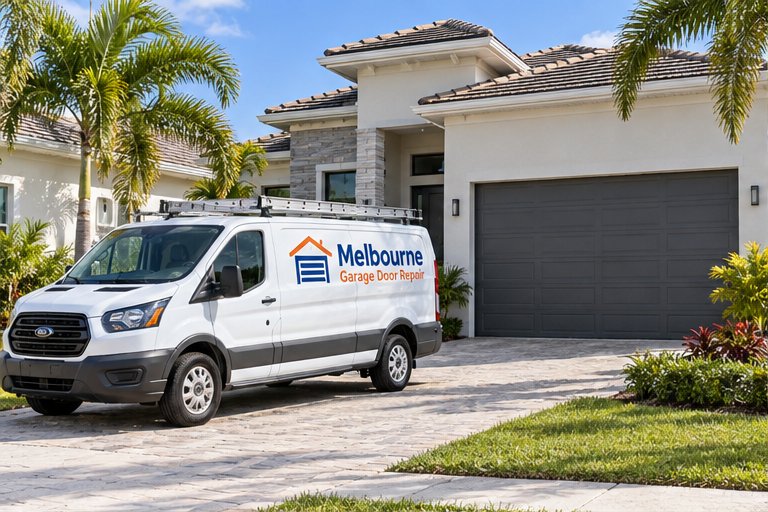
A garage with a past
Walk through an established neighborhood and you will see something you do not see in a brand-new subdivision. Garage doors that have lived through years of use, repairs and changes of ownership. One house still has its original door. The next has a replacement from a decade ago. A third has a door from one era and an opener from another.
That mix is what makes service in a community like Suntree different. We rarely meet a door that is still exactly as it left the factory. More often, we meet a door that carries a history, and the first job is to read it.
Reading the history of your door
A technician can tell a lot from small details. Springs that are shiny and clean were replaced recently, while springs with dark, dry coils have been in place for years. Mismatched rollers suggest piecemeal repairs. Cable ends that look newer than the drum they sit on tell their own story.
This is useful because parts wear at different rates. Replacing one component on an old door can reveal that its neighbors are close behind. Knowing what is old and what is new lets us give you an honest picture of what to expect over the next few years instead of treating each repair as a separate event.
It also helps to know your own side of the story. If you bought the house and never learned what was done to the door, tell us what you remember: noises, past breakdowns, any repairs a previous owner mentioned.
What age does to each part
Different parts of a garage door age in different ways. The table below summarizes what we tend to see on doors that have been in service for many years. It is a general guide, not a schedule, since use and conditions vary from house to house.
Use it to decide what to watch rather than what to panic about.
| Part | What age tends to do | What you may notice |
|---|---|---|
| Torsion or extension springs | Coils fatigue after many cycles and rust in humid air | A sudden bang, or a door that feels heavy |
| Lift cables | Strands fray, especially near the drum or the bottom bracket | Visible fraying, a door that sits crooked |
| Rollers | Bearings dry out, plastic cracks, steel wheels wear flat | Rumbling, squeaking, a rough ride |
| Hinges | Pins wear and holes elongate | Loose panels, rattling, uneven movement |
| Opener | Gears wear, circuit boards fail, travel limits drift | Grinding, hesitation, lights that blink |
| Weather seals | Rubber hardens, cracks and flattens | Daylight under the door, leaves and water inside |
| Panels | Steel dents and rusts at the bottom edge, wood swells | Dents, rust spots, soft areas |
Trees, debris and the garage door
One of the pleasant things about established neighborhoods is the shade. Mature trees line many streets, and they are a real asset. They also drop leaves, pollen, seed pods and twigs, and a lot of that ends up on the driveway and against the bottom of the garage door.
Debris matters in three ways. It packs into the bottom seal and keeps it from sitting flat, so the seal wears and lets pests in. It collects in the track and can interfere with the rollers. And it lands on sensor lenses or gets pushed against them by a broom, which causes the intermittent door that sometimes will not close.
A brief sweep along the base of the door and the track is a simple habit. Do not spray water or cleaners into the track or onto the opener. Wipe sensor lenses with a soft dry cloth, and if the door has been closing unevenly, tell us what you noticed.
Roots, settling and an opening that has moved
Over decades, a garage slab and its surroundings can shift a little. Tree roots lift concrete, soil settles around a foundation, and a driveway apron can tilt. These movements are small, but a garage door fits an opening with fairly close tolerances.
When the floor is no longer level, the door may close with a gap at one corner. When the opening itself has racked slightly, the door can bind in the track or rub against the jamb. When the apron rises, the bottom seal may drag.
These problems are not always a door problem. Sometimes the fix is an adjustment to the track or a differently shaped seal, and sometimes it is a conversation about a floor that needs attention from someone else. We tell you which it is. Our page on a door that is crooked or uneven describes the signs.
Original openers and their quirks
Many established homes still have an opener that has been running for a long time, and these older units have quirks. Some use a fixed code or a limited set of switch positions rather than the rolling codes used today. Some lack the modern safety sensors that sit near the floor. Some have lights that no longer work and travel limits that have drifted.
An old opener that still runs is not automatically a problem. But the safety standard for openers has moved on, and an opener without working sensors or a reliable reversing function does not protect a child, a pet or a bicycle the way a current unit does.
We assess older units honestly. If the opener can be repaired reasonably, we say so. If parts are scarce or the safety features are out of date, we explain why replacement is worth considering. Our page on opener replacement describes the options, and a guide to choosing a garage door opener helps you decide what features you actually need.
Springs on a door that has been there for years
If your door has been in place for many years without a spring replacement, it is operating on borrowed time. Springs are rated for a number of cycles and do not last forever. When one lets go, the effect is sudden: a loud bang, a door that will not lift, and sometimes a damaged panel or a bent bracket nearby.
Replacing springs on an older door is a good moment to inspect everything attached to them. Cables, drums and bearings share the load. If the spring has failed, the cables may have taken a shock. If the door sat crooked for a while, the track may be bent.
We do not recommend adjusting or replacing springs yourself. The stored force is real and it injures people every year. Our page about how long garage door springs last explains what to expect and why replacing in pairs often makes sense on older doors.
Repair, upgrade or replace
The central question for an older door is how much more to put into it. A repair is the right answer when the door is structurally sound and the failed part is a normal wear item. Replacement is the right answer when the panels are damaged, the track and hardware are worn throughout, or the door lacks features you now want, such as insulation.
In between lies a useful middle path: targeted upgrades. A new set of rollers, a better seal, a new opener and modern sensors, and a fresh set of springs can make an old steel door feel new without changing its look. That path is especially attractive in a neighborhood where owners value the character of the house as it stands.
If you are weighing options, the page on repair versus replace lays out the questions we ask. None of it requires you to decide in a hurry. We describe what we see and let you choose.
Wood, steel and doors from earlier eras
Established neighborhoods often have a mix of door materials. Wood doors from earlier decades can look wonderful and can also swell, warp or rot at the bottom where moisture collects. Steel doors dent and rust at the base. Some homes have older fiberglass or aluminum doors that have faded in the Florida sun.
Each material asks for a different kind of care. Wood benefits from paint or sealer kept up around the edges and bottom. Steel wants rust spotted early and treated before it spreads. Lightweight aluminum can bend more easily at the panel edges, and fiberglass can crack with impact.
Our guide to garage door materials compared explains the strengths and weaknesses of each. If you are thinking about replacement, it is a good place to start before you look at samples.
Garages used for more than cars
In many established homes the garage became a workshop, a storage barn, a hobby room or an extra living space long ago. Heavy shelving, a bench against the door wall, boxes stacked beside the track and a freezer near the opener are all common.
These uses affect the door. Storage too close to the track can block rollers or hit the door as it travels. A workbench near the springs puts tools within reach of something that should not be touched. A garage used as living space may need better insulation and weather sealing, because the door becomes part of the thermal boundary of a room that people sit in.
We are glad to look at how you use the space and suggest sensible changes. Often it comes down to moving a shelf a few inches or replacing a seal, which makes a bigger difference than owners expect.
Safety standards that have moved on
The rules and norms around garage doors have changed over time, mostly in the direction of better protection. Reversing mechanisms, sensor placement, manual release design and spring containment have all improved.
Doors and openers from earlier eras may not have those features. That does not mean they are dangerous every day, but it does mean you should know what your system has and what it lacks. A simple test is to place a roll of paper towels or a thin board on the floor in the door's path. A properly working door should reverse when it touches the object. If it does not, stop using the automatic close and have the opener looked at.
Our guide to garage door safety tests shows how to carry out these checks without taking risks.
Power cuts, surges and the manual release
Older neighborhoods often have older wiring in the garage, and an opener plugged into a long-serving outlet takes whatever the storm sends it. After a thunderstorm or a power cut, an opener may stop, lose its settings or behave oddly.
Every opener has a manual release, usually a red cord hanging from the trolley. It disconnects the door from the motor so the door can be moved by hand. In a balanced door this is a useful feature. In a door with a broken spring or a frayed cable it is a trap, because the door can be far heavier than it looks and may drop.
Before you pull the cord, make sure the door is closed or fully open, and never use it with the door part way up. If the door feels heavy as soon as it is released, stop. If you are not certain the door is balanced, leave the cord alone and call us. A door that stays shut for a day is an inconvenience, and a door that drops on a person or a vehicle is something else entirely. The same caution applies after any storm, when a bent track or a shifted bracket may have changed how the door behaves without any visible sign.
Hardware that has to match
On an older door, replacement parts must fit what is already there. Track widths, roller stem sizes, hinge gauges, bracket patterns and drum sizes vary, and a part that looks right can be wrong by a small but important margin.
This is another reason we look before we promise anything. We identify what you have, match it where it makes sense and tell you plainly when an old part is no longer a good choice. Sometimes matching is the right move because it keeps the door consistent. Sometimes an upgrade to a stronger or quieter part makes more sense, such as nylon rollers in place of worn steel ones.
If you have a label inside the door panel or on the spring bracket, a photograph of it helps. So does a photograph of the opener's label. Those small details let us bring the right parts to the job instead of making a second trip.
Planning work so it fits your life
Established neighborhoods are full of people who know their house well. Many owners prefer to plan work, ask questions and compare options. We welcome that. If you are thinking of a larger project, such as replacing a door, you can describe what you want and we can talk through what is practical.
Useful things to have ready include the approximate age of the home and the door, any past repairs you remember, the opener's brand and model if visible on the unit, and photographs of the door from inside and outside. None of it is required, but it saves time.
If a repair is urgent because the door is stuck open or closed, say so. Our page on a door that will not open explains the first things to check while you wait.
Keeping an older door going
With attention, a well-built older door can serve for many more years. The routine is short. Lubricate the moving parts with a product suited to garage doors, wipe the sensors, keep the track clear, test the safety reverse, and listen for changes.
The most valuable habit is paying attention to small changes. A door that was silent last month and squeaks now has told you something. A door that takes longer to close, or closes with a bump, is telling you something else. Acting on those signals costs less, in money and in stress, than waiting for a breakdown.
If you want a hand setting up a routine, our maintenance visit covers the whole system and gives you a clear picture of what is holding up and what is not.
Getting in touch about your Suntree door
Tell us what the door is doing, how old it is if you know, and what has been done to it before. We will arrive ready to look, explain and help you decide.
As always, please leave springs, cables and the brackets that hold them to a professional. If anyone is injured, call 911.
Questions and answers
Not necessarily. A well-built door can last many years with maintenance. The parts that wear out, such as springs, cables, rollers and seals, are replaceable. We inspect the panels and track as well, since structural damage or heavy rust is a better reason to replace the whole door than age alone. Photographs of the door label and the opener unit help us bring the right parts.
Yes. Debris packs into the bottom seal, collects in the tracks and covers sensor lenses. That can make the door close unevenly, wear the seal or refuse to close at all. Sweeping the base of the door and wiping sensor lenses with a soft dry cloth are simple habits that prevent many calls. Sweeping the base of the door each week during leaf season keeps seals and sensors clean.
Not always, but older openers may lack modern sensors or a reliable reversing function. Test the reverse by placing a roll of paper towels in the door's path. If the door does not reverse when it touches the object, stop using the automatic close and have the opener inspected before using it again. Keep children and pets clear of the door while you test, and stop if anything feels unsafe.
Often yes, especially on an older door. Springs on the same door have been through the same number of cycles, so a second spring is likely to be near the end of its life. Replacing both also helps keep the door balanced. We explain the reasoning when we look at your door. If the door has not had its springs replaced in many years, mention that when you contact us.
The floor may have shifted, the track may be out of line, a cable may be stretched or a spring may be uneven. Some causes are simple adjustments and others point to worn parts. Because cables and springs are involved, please do not adjust anything yourself. Describe what you see and we will look. Photos of the gap taken from inside the garage with the door closed are very helpful when you describe it.
Sometimes. Cleaning, rust treatment, repainting and new hardware can refresh a sound steel door. If panels are dented, rusted through or separating, replacement may be a better choice. We give you an honest view of the condition of the door before you decide how far to go. Rust treatment and repainting work well only on sound metal, so we check how deep any corrosion goes first.