
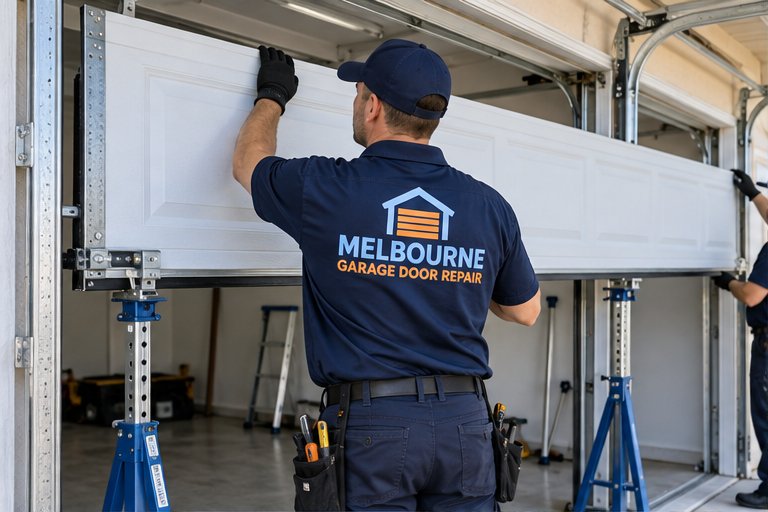
Why this decision feels hard
A garage door problem usually arrives on a bad day. The door will not open, there is a loud bang, or the opener hums and nothing moves. In that moment it is easy to feel pushed toward either a hasty patch or a complete new door, and neither instinct is reliable.
The better approach is to separate two questions. First, what exactly failed? Second, what condition is everything else in? A snapped spring on an otherwise sound door is a very different situation from a snapped spring on a door whose panels are cracked and rusted.
This page lays out the factors a technician weighs when we look at a door. You can use the same factors at home to get a feel for the answer before anyone arrives.
The decision table
The table below lists the main factors, what each one tends to point toward, and the guidance we usually give. No single row decides the matter. Most real doors land in a mix, and the overall picture is what counts.
| Factor | Leans toward repair when | Leans toward replacement when |
|---|---|---|
| Part that failed | A single moving part such as a spring, cable, roller or sensor | Several major parts failing together, or the panels themselves |
| Panel condition | Panels are straight, solid and finished well | Panels are cracked, rusted through, bowed or delaminating |
| Age of the door | The door is within a normal service life and has been looked after | The door is very old and parts are hard to match or find |
| Damage extent | One section or one track is affected | Impact has bent multiple sections or twisted the whole door |
| Parts availability | Standard parts are readily matched | The model is discontinued and sections cannot be matched |
| Safety and wind | The door is sound and meets current expectations | The door is not built for the wind loads now expected locally |
| Insulation and noise | You are happy with how the door performs | You want a quieter, better insulated or more secure door |
| Repeated repairs | Repairs have been occasional and spread over years | Visits are becoming frequent and each fixes only part of the trouble |
Start with what actually failed
Many garage door breakdowns are hardware failures, and hardware is designed to be replaced. Springs wear out after a set number of cycles. Rollers wear and flatten. Cables fray. Openers lose a gear or a circuit board. Sensors get knocked out of alignment. None of these means the door is finished.
A door with a broken torsion spring, for example, is usually a repair job. The panels, tracks and hinges may be in fine shape, and the springs are made to be swapped. You can read what is involved on our broken torsion spring repair page.
When the failure is in the door itself, such as a split panel or a rusted-out bottom section, the reasoning changes. A panel can sometimes be replaced alone, but if the damage is widespread the cost of patching can outrun the value of what remains.
Look at the panels honestly
Panels are the body of the door. If they are in good condition, almost any hardware problem can be fixed around them. If they are not, new hardware only dresses up an old door.
Walk up to the door with the garage lights on and look at it closely. Check the bottom edge of each section for rust or swelling. Look along the face for cracks, long dents or places where the skin has pulled away from the core. Sight along the top edge of the closed door to see whether it bows or sags.
Do not climb on anything or touch the springs and cables. Looking from the floor is enough. If the panels show heavy damage, the conversation with a technician will probably lean toward replacement.
- Bottom edge rust or soft, swollen material
- Cracks that run across a section
- Dents at hinge points or along a crease
- Visible bow or sag in the middle of the door
- Peeling, bubbled or delaminating skin
- Sections that no longer line up flat
Age matters, but not alone
People often ask how old is too old. There is no single number, because use matters more than the calendar. A door that cycles four times a day wears faster than one used twice a day, and a door that has been maintained will outlast one that has been ignored.
What age does affect is the supply of matching parts and the way the door was built. Older doors may use components that are no longer common, and older openers may lack safety features that new ones include. Replacing an old part with a modern one is sometimes easy and sometimes awkward.
If your door is old but straight and sound, and the problem is a single worn part, repair often still makes sense. If it is old and showing wear everywhere, replacement starts to look reasonable. Our guide on how long garage door springs last covers the wear side of this.
Repeated repairs tell a story
One repair after many years is normal. Several repairs in a short span suggest something else is wrong. Perhaps the track is bent and eating rollers. Perhaps the door is out of balance and wearing everything. Perhaps the door is simply worn out in many places at once.
Before deciding the door is finished, ask whether a root cause has been found. Frequent visits that each fix only a symptom are frustrating and are a sign that the true cause may still be hiding. A careful inspection can often name it.
If the root cause is a fixable issue such as balance or alignment, repair may stop the cycle. If the cause is general wear throughout the door, a new door may be the sound choice. Either way, you are making the decision with information instead of frustration.
Safety is not a side issue
A garage door is one of the heaviest moving objects in a home, and it is held up by springs and cables under serious tension. A door that is badly out of balance, off its track or missing safety features can injure people or damage vehicles.
If the door is unsafe, that comes first. A door that is hanging crooked or partly off the track should not be forced. Keep people and pets clear and do not try to operate it. If anyone is hurt, call 911.
Sometimes safety tips the decision. A door that cannot be made safe to use with reasonable repairs should be replaced. More often, repair restores safety. Our guide to garage door safety tests describes simple checks homeowners can do without touching springs or cables.
Wind, storms and local expectations
On the Space Coast, wind is a real part of the picture. Doors in Brevard County are exposed to tropical storms and the occasional hurricane, and building expectations for garage doors reflect that. Newer doors and installations are often built with reinforcement and mounting that older doors lack.
This does not mean every older door must be replaced. It does mean that if your door is already near the end of its life and you have concerns about storm performance, replacing it can address both questions at once. If the door is still sound, repair with an eye on storm readiness may be enough.
Rules and requirements can change depending on the area and the kind of work, so it is wise to confirm what applies to your address. We discuss the basics in our guide to wind and building rule basics.
Comfort, noise and security upgrades
Sometimes the door is functional but not pleasant to live with. It rattles at night, the garage bakes in summer, or the door is flimsy. These are valid reasons to consider replacement even when nothing is strictly broken.
Not every complaint requires a new door. Noise often comes from worn rollers, dry hinges or a loose chain, and a tune-up can transform the sound of a door at a modest effort. A visit to adjust, tighten and lubricate is worth considering before spending on something new.
If the complaint is heat, a replacement with an insulated core addresses it directly, though add-on insulation kits exist for some doors. If the complaint is security, newer locking hardware and openers can improve things without a new door. Our page on insulated and non-insulated doors helps with that comparison.
The opener is a separate decision
The door and the opener are two systems that work together. A failing opener does not condemn the door, and a failing door does not mean the opener must go. Each should be judged on its own condition.
An opener that is old, noisy or missing modern safety features may be worth replacing even if the door is sound. A new opener on a worn door, on the other hand, will struggle if the door is out of balance. Balance should always be checked first.
If you are leaning toward a new opener, read our page on garage door opener replacement. It explains how an opener is matched to the door and what a visit includes.
Worked examples
Examples make the table easier to apply. These are typical situations rather than real customers, and each shows how the factors combine.
The door will not lift, there was a loud bang, the panels are straight and the finish is good. The likely answer is repair: a broken spring is the failure, and the rest is sound. After the work, the door should lift smoothly and balance correctly.
A car backed into the door, bending three sections and the track. The panels are creased across the face and no longer meet evenly. Replacement is usually the sounder path, since patching three damaged sections often costs and achieves less than a new door.
A very old door with rust along every bottom edge, a failing opener and a spring that has just broken. Each part might be fixable, but the number of problems together suggests replacement deserves serious thought.
A door that works but is loud and hot in summer. A tune-up may quiet it. If heat is the main complaint and the garage is used often, a replacement with insulation could be worth discussing.
How a technician makes the call
When we visit, we do not start with a sales pitch. We start by watching the door move, listening, looking at the springs, cables, rollers, hinges and tracks, and checking balance and the opener. That gives a picture of what failed and what else is wearing.
We then explain what we found in plain words. We describe what repair would involve, what replacement would involve and what we would do if it were our own garage. You decide. Nobody should feel pushed.
If it helps to prepare, our guide on questions to ask a garage door technician lists things worth asking. Write down your own list too. Questions about parts, timing for work, how the door will be balanced and what to expect afterward are all fair.
What life looks like after each choice
After a repair, the door that you know stays in place. It should lift more smoothly, run quieter and balance correctly, but it is still the same door with the same panels, the same insulation and the same look. Any wear in the parts we did not touch continues, which is why a careful technician points out what else is aging.
After a replacement, you start over with new panels, new tracks and hardware matched to the new weight. The door usually runs quietly and looks fresh, and you can choose insulation, windows and finish. The tradeoff is more work on the day of installation, and in some cases a wait for the door to be built and delivered.
Neither path is without risk. A repair on a worn door may be followed by another repair later. A replacement door still needs maintenance, since springs, rollers and openers wear on any door. The goal is to pick the path that fits how you use the garage and how long you plan to keep the house.
Whichever you choose, ask what routine care the door will need afterward. A short list of habits, such as a monthly look and a yearly tune-up, protects the work you have just paid for.
Questions to ask yourself first
Before the visit, a few honest questions can sharpen the conversation. Answering them also helps if you are comparing the door with a newer one at a neighbor's house.
- How long has this door been in the house, and has it been serviced?
- Is this the first problem or one of several?
- Is the garage used for parking only, or also as a workshop or storage room?
- Do I plan to stay in the home for years, or sell soon?
- Is storm readiness on my mind?
- Am I bothered by noise, heat or looks?
Selling, renting and planning ahead
If you plan to sell, a working, clean garage door helps the house show well. You do not always need a new door, and an expensive upgrade does not always return what it cost. A sound repair and a tidy finish are often enough. Our guide to garage doors and home selling goes into that.
If you manage a rental, reliability and low upkeep are the goals. Repair is often the practical answer for isolated failures, and replacement makes sense when a door has become a repeated maintenance burden.
If you simply want to plan ahead, a periodic inspection tells you how much life the door has left. That lets you budget for a replacement on your own timetable instead of reacting to an emergency.
Next steps
If you are still unsure, that is normal. The right answer depends on the door in front of you, and a visit is the most direct way to get one grounded in facts. We will look at the door, explain what we find and lay out the options.
You can also read the longer discussion in our guide on repairing or replacing your garage door, or contact us to have the door looked at.
Questions and answers
If the panels are straight and solid and the failed part is a spring, cable, roller, hinge, sensor or opener component, repair is usually possible. Widespread cracking, rust through the panels or a badly bent door points elsewhere. A technician can look at the door and tell you what is practical. Every door is different, so the surest guide is a close look at yours.
Not automatically. Age matters, but condition and use matter more. An older door that is straight, sound and maintained can keep working with the right repairs. Replacement becomes more sensible when many parts are worn at once, matching parts is difficult, or you want better insulation or storm performance. A technician can look at yours and explain how much life it has left.
Sometimes. If the door model is still available and the damage is limited to one section, a replacement panel can work, though color or finish may differ slightly from older panels. If multiple sections are damaged, or sections are no longer available, a new door often makes more sense. Ask what is available before you decide.
No. Springs are wear parts that are meant to be replaced. If the rest of the door is in good shape, a spring replacement and a balance check are usually all that is needed. Never try to adjust a spring yourself, because the tension can cause serious injury. The rest of the door is judged separately from the failed part.
It can be, if the door is sound and balanced. A new opener on a door that is out of balance will wear out sooner, so balance should be checked first. An older opener without modern safety features is a good candidate for replacement on its own. We check balance first, since it decides how long the new opener lasts.
Keep people clear and do not force the door. Impact can bend tracks, creases panels and shift hardware, and a door in that state can be unstable. A technician can check the damage and explain whether repairing tracks and sections is practical or whether replacement is the safer choice. Stay well back from the door until it has been checked.
An insulated door can reduce how much summer heat enters, and it can make the door quieter and stiffer. How much difference you notice depends on the garage, its other walls and how often the door opens. It helps most when the space is used as a workshop or living area. Seals and shaded entrances also make a difference.
We look at the door, test how it moves, check the springs, cables, rollers, tracks and opener, and explain what we find in plain language. We describe the repair options and, where it applies, replacement options, then let you decide without pressure. You choose, and there is never any pressure to pick one path. We will not rush you toward either choice, and you can take your time.