
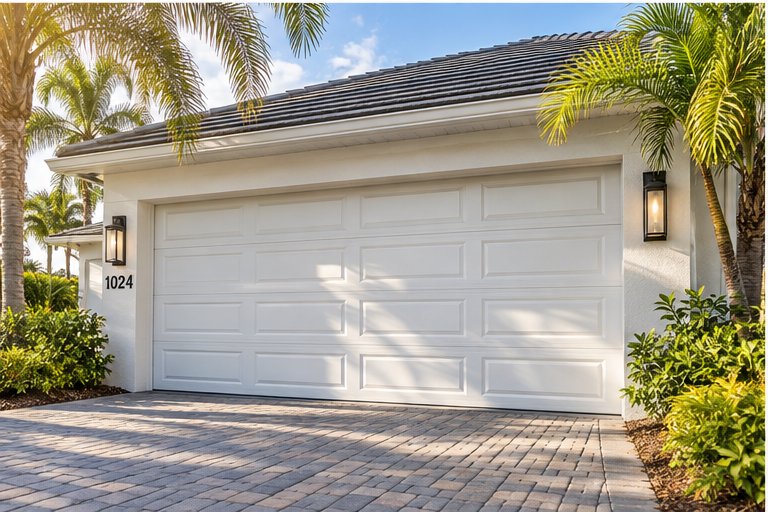
Why material matters more near the coast
A garage door in Ohio and a garage door in Melbourne can look identical on the showroom floor and age very differently. Here the door lives with salt in the air, strong ultraviolet light, long wet seasons and the occasional tropical storm. Those conditions test finishes, fasteners and joints in ways inland homes rarely see.
Material is the first decision that shapes everything else: how heavy the door is, how it is finished, how it is repaired and how long it holds its shape. Getting it right early is easier than correcting it later. The rest of this guide takes the choices one at a time and then pulls them together with a few practical checks you can make before you commit to a door. Nothing here requires technical knowledge, and every opinion is offered with the reason behind it so that you can weigh it against your own priorities.
The short version before the details
If you only want a short orientation, here is how the usual choices sit against each other. The sections below explain each point in more depth, and our side-by-side page on steel, aluminum, wood and composite doors puts the main four in one table.
| Material | Weight | Dent resistance | Rust or rot risk | Upkeep |
|---|---|---|---|---|
| Steel | Moderate to heavy | Good with thicker skins | Rust if the coating is scratched | Wash, touch up scratches |
| Aluminum | Light | Dents more easily | Does not rust but can pit | Wash, check finish |
| Solid wood | Heavy | Good | Rot and swelling if not sealed | Regular sealing or painting |
| Composite | Moderate | Good | Low moisture risk | Light cleaning |
| Fiberglass | Light to moderate | Flexes rather than dents | Low, but can fade or crack | Cleaning, check finish |
| Vinyl | Moderate | Good | Low | Light cleaning |
Steel: the common workhorse
Steel is the most widely installed material for sectional garage doors, and for good reasons. It is strong, it can be formed into raised panels or flat designs, and it takes paint well. Thicker skins resist dents better, and a foam core makes the whole section stiffer.
The weakness is moisture, and in this climate moisture is always present. Steel doors are coated, and the coating protects the metal underneath. A deep scratch, a chip from a bumped lawn tool or a cut edge at the bottom of a section lets moisture reach bare metal. In coastal air, rust can then spread under the paint. The fix is small if caught early and large if left.
What to look for on a steel door
Check the bottom edge of each section, the area around hinges and the lower corners, and look inside as well as outside, because rust often shows first on the back of a panel where nobody looks. Bubbling paint or orange stains are early signs. See our page on rust on a garage door and track for what to do when it appears.
How steel gets repaired
Small chips can be touched up with matching paint after cleaning. A badly dented or rusted section is usually replaced rather than patched, because the section has to stay straight to travel in the track.
Aluminum: light and resistant to rust
Aluminum does not rust the way steel does, which makes it attractive near salt water, and it is often the first material people mention when the house is a short walk from the beach. It is also light, so it puts less load on springs and openers. Full-view doors, with glass panels set in aluminum frames, are a common way to use it, especially on modern-style homes and on some commercial buildings.
The trade-off is that aluminum is softer. A knock from a car bumper or a thrown ball can leave a dent that is hard to remove. Anyone who has watched a patio chair frame turn chalky near the water will recognize the look. Over time, salt can cause pitting or a chalky surface on some finishes, and the thin frames of a glass door can loosen at the corners if the door is slammed or struck repeatedly.
- Choose a durable factory finish, because bare aluminum weathers unevenly.
- Check frame corners periodically for movement or gaps.
- Rinse salt residue off after storms and on a regular schedule.
- Glass panels bring heat gain, so think about shading and sun direction.
Solid wood: beauty with a maintenance bill
A well-built wood door can be the most attractive option on the street. Carriage-house styles and custom stained doors are often wood. Wood is also forgiving to repair, since a damaged board can sometimes be replaced individually.
In a humid, wet climate, wood needs steady care. Moisture makes it swell, and swelling makes the door stick in the track or bind against the jamb. Sun and rain strip finishes and open the grain, and a season of neglect can undo years of good care. Hairline cracks across the boards are the usual first warning, and they let water in behind the surface. If the finish is allowed to fail, rot can start at the bottom edges. Wood is also the heaviest common choice, so it needs a carefully matched counterbalance system.
Where wood goes wrong first
Bottom rails, end joints and any place where water can sit. Look for soft spots, cracks that open and close with the seasons, and finish that has gone dull or flaky. Our page on doors that stick in humidity explains why swelling matters.
Is wood realistic here?
It can be, for an owner who is willing to inspect and refinish the door on a schedule. For anyone who prefers to set it and forget it, a wood-look alternative is usually a calmer choice.
Composite and wood-look doors
Composite doors combine wood fibers, resins and a protective skin, or a steel frame with a molded wood-grain face. They are designed to give the look of stained wood without the swelling and rot. Many are built with insulating cores and carefully shaped panels that do a convincing job of imitating carved lumber.
Owners often describe composite as the sensible middle road: close to the look of real wood, with far fewer chores. In practice, a composite door usually asks for light cleaning and an occasional look at the finish. It is generally heavier than steel or aluminum, and the cost is often higher than a plain steel door, though we do not quote prices here. Repair options depend on the exact build, so ask how a damaged section would be replaced before you buy.
Fiberglass: light, flexible and sun-sensitive
Fiberglass is less common than steel, but it has loyal owners near the coast. These doors flex slightly when struck, which means they often spring back instead of holding a dent. They are light and do not rust, which suits humid, salty conditions. Fiberglass can be textured or colored to look like wood grain.
The concern with fiberglass is sunlight. Over many years, ultraviolet light can fade color and make the surface chalky or brittle, especially on dark finishes facing the afternoon sun. Impacts can crack the surface rather than dent it. A door of this type performs well when the finish is cleaned and checked each year.
- Light finishes tend to hold up better than very dark ones.
- Inspect for hairline cracks around corners and hinge points.
- Check how the manufacturer finishes cut edges, because exposed fibers can weather faster.
Vinyl-clad doors
Vinyl is usually used as a skin over a steel or core structure. It is resistant to moisture, easy to clean and does not need repainting, which makes it popular for families that want low upkeep. Vinyl colors are mixed through the material, so small scratches are less obvious than on a painted door.
The limits are choice and temperature. Vinyl comes in fewer colors and styles, so if you have a specific shade or design in mind it may not be on offer, and on a very hot day dark vinyl can expand slightly. If the door is large, the build quality of the underlying frame matters more than the skin.
How weight changes the whole system
Heavier materials need a counterbalance system built for them. Springs, cables, drums and the opener are all chosen to match the door. A light aluminum door and a heavy wood door on the same springs would behave very differently.
This is one of the reasons we never advise adjusting springs yourself. Torsion and extension springs hold dangerous tension, and a mismatch between weight and spring rating can cause drifting, slamming or unexpected opening. Our guide to weights and balance explains the principle, and contact us if your door has ever seemed heavy or uneven.
Salt, sun and storms: how each material copes
Each environmental factor on the Space Coast stresses materials differently, and it is useful to think of them separately.
Salt air
Steel needs a sound coating and prompt attention to scratches. Aluminum, composite, fiberglass and vinyl handle salt better, though fasteners and hardware still corrode. Choose galvanized or coated hardware wherever the door allows it.
Intense sun
Dark colors on any material run hotter and fade sooner. Fiberglass and vinyl show sun damage in surface appearance, while wood suffers in the finish and the grain.
Wind and storms
Wind-rated doors depend on reinforcement, track and hardware, not only the face material. See hurricane preparation and the basics of wind and building rules before you decide.
Hardware, fasteners and the parts you do not see
People choose a door by its face, but the parts behind the face do much of the work. Hinges, rollers, track, brackets and the bolts that hold everything together all live in the same salty air as the panels. A handsome door with weak hardware will start to sag, rattle or bind long before the face looks tired.
In coastal conditions, look for hardware with a zinc or similar protective coating, and sealed or nylon rollers that resist corrosion. Stainless fasteners cost more in general but are far less likely to streak or seize. Ask what the hardware is made of, not only the panels. Our overview of hinge and track service explains what wears and why.
- Hinges should move smoothly without visible rust bleeding down the panel.
- Track should be straight, firmly bolted and clear of flaking.
- Brackets at the top corners and bottom should look sound, but never touch them, because the bottom brackets are under spring tension.
- Rollers should turn quietly and not wobble on their stems.
Judging a sample in person
A photo can tell you very little about how a material feels. If you can, look at a sample or a displayed door and treat it like a test drive. Press a thumb into a section and see how much it gives. Run a hand along the edges. Look closely at the finish for thin patches or sharp lines where paint has pooled.
Hold a sample of the color you like outdoors, in direct sun and again in shade. Colors that look calm under showroom lights can look quite different on a wall facing the afternoon. Bring along a photo of your house and, if you have one, a swatch of the trim or brick so you can judge the match in daylight.
Things to feel and look for
Solid construction feels the same from end to end, without hollow or flexing spots. Edges should be finished neatly, with no exposed raw metal or fibers. Joints between sections should line up evenly.
Things to ask about
Ask how the finish was applied, whether it is meant for coastal sun, and how color touch-ups are handled over the years. If a supplier cannot tell you, you may want to ask someone else.
Upkeep you should expect, material by material
Every door needs a small amount of regular attention, and the type of attention depends on the material. Planning for it makes ownership easier.
- Steel: rinse with fresh water, wash gently, touch up chips promptly and watch bottom edges.
- Aluminum: rinse salt, check frame corners and avoid abrasive cleaners.
- Wood: keep the finish sealed, re-coat on a schedule and inspect the bottom rail.
- Composite: clean lightly and check the finish for peeling at edges.
- Fiberglass: wash, protect from long direct sun and look for hairline cracks.
- Vinyl: wash with mild soap and make sure the tracks are clear.
- All types: keep tracks, rollers and hinges clean and lubricated as described in our lubrication guide.
Matching a material to your house and habits
A good choice fits the house, the budget and the owner. A family in a home near the water, with little time for upkeep, may value a coated steel or composite door with a light color. Someone who loves a traditional look and enjoys maintenance may choose wood and accept the schedule. A modern house with large windows may suit aluminum and glass if the garage is not heated by the afternoon sun.
Think also about who uses the door. Teenagers learning to drive, delivery drivers and guests who park close to the door all raise the odds of an occasional bump. A busy household with children and bicycles may prefer a surface that tolerates knocks. A rental property needs durability and easy repair, as discussed on our page about garage doors for rental properties.
Repair and replacement realities
Not every material is equally easy to repair, and the difference often shows up only years after installation. A damaged steel section can often be replaced with a matching one if the model is current. Wood sections may be rebuilt. Some composite and fiberglass designs are no longer produced, which makes a single-section swap harder.
When a section is badly damaged, we weigh the cost and effort of repair against replacing the door, as covered in our repair or replace guide. Having the door looked at before deciding is the sensible first step.
Questions to ask before you choose
Whoever sells or installs the door should be able to answer these in plain terms. If the answers are vague, take that as information.
- What is the skin made of, and what is the finish?
- How does the door handle salt air and humidity?
- How heavy is the complete door, and which spring system suits it?
- What upkeep will it need, and how often?
- How would a damaged section be repaired or replaced?
- Is the door rated for the wind requirements at my address?
Questions and answers
No material is perfect, but aluminum, composite, fiberglass and vinyl do not rust the way steel can. Steel with a sound coating also does well when scratches are touched up promptly. Hardware near the coast corrodes regardless of the door face, so check hinges, fasteners and tracks regularly. Rinsing with fresh water after storms helps every material last longer.
Yes, as long as the coating stays intact. Steel is strong and available in many styles. Wash off salt residue, touch up chips and scratches promptly and look at the bottom edges each season. Rust usually starts where the coating is broken, so early attention matters. Spring and cable work is never a do-it-yourself job, whatever the door is made of.
They can, but they need steady care. Moisture makes wood swell and the finish fail, which can cause sticking and rot at the bottom rail. If you like the look and are willing to refinish on a schedule, wood can work. Otherwise a wood-look composite is lower effort. Ask to see how the maker finishes the cut edges, since that is where trouble often starts.
The springs, cables and opener are chosen to match the weight of the door. A heavier material needs a stronger counterbalance system. If weight and springs do not match, the door may drift, slam or strain the opener. Spring work is dangerous, so always leave it to a trained technician. If your door ever feels heavy or uneven, contact us and we will check the balance.
Often yes, but the material and finish matter. Steel, wood and some composites can be repainted with suitable products, while vinyl and some factory finishes cannot. Dark colors on some materials can absorb heat and cause warping or fading, so check with the manufacturer or a technician first. A color that suits your association rules and your sun exposure helps too.
Steel sections are usually the simplest to replace when the model is still made, and wood can sometimes be patched or rebuilt. Some composite and fiberglass designs are harder to match. Ask whoever installs your door how a damaged section would be handled before you commit. Also ask whether replacement sections will still be available in several years, because a discontinued profile can turn a small repair into a whole-door decision. Availability can change, so ask about replacement sections before you buy.