
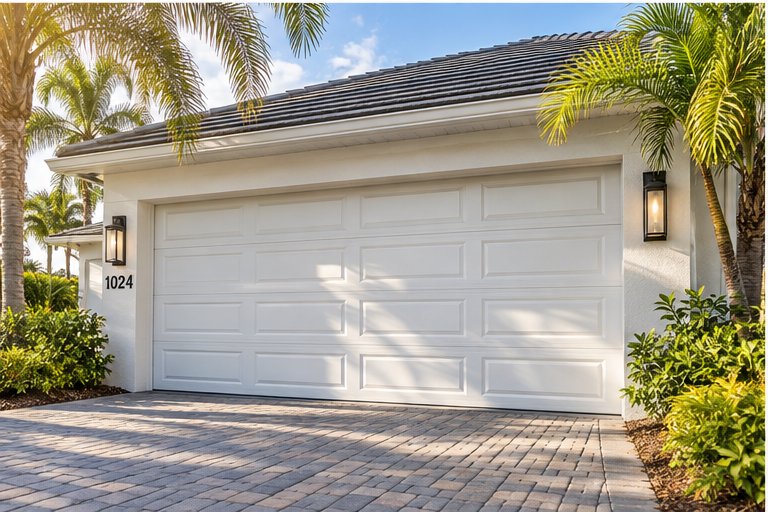
What insulation means on a garage door
An insulated garage door has a layer of material sandwiched inside the panel, or attached to its back. The layer is usually polystyrene foam or polyurethane foam. A non-insulated door is a single skin of steel, aluminum or another material, often with a simple stiffening rib behind it.
People sometimes talk about insulated doors as if they were a different species. In reality it is the same kind of sectional door with extra material in each section. The tracks, springs, rollers and opener work the same way.
What changes is the panel itself: how thick it is, how much it weighs, how it handles heat and how it sounds when it moves. The rest of this page goes through those changes one by one.
Comparison table
This table summarizes the main differences. It describes typical behavior, and the exact result depends on the door model, the garage and how the space is used.
| Question | Non-insulated door | Insulated door |
|---|---|---|
| Summer heat in the garage | Skin warms up sharply in the sun and passes heat inside | Core slows heat moving through the panel |
| Noise when running | More hollow and rattly | Dampened and often quieter |
| Panel stiffness | Flexible, can dent more easily | Stiffer and often more dent resistant |
| Weight | Lighter | Heavier, so springs are sized to match |
| Appearance | Varied styles available | Varied styles; looks are not tied to insulation |
| Opener load | Lower | Higher, which the opener and springs must handle |
| Air leaks | Not changed by the panel | Not changed by the panel; seals do that work |
| Upkeep | Same moving-part care | Same moving-part care |
Heat in a Florida garage
The main reason Space Coast homeowners ask about insulation is heat. A garage with a dark door that faces west can feel like an oven in the afternoon. A single skin of steel absorbs sun and passes the warmth to the air inside.
A foam core slows that transfer. It does not make the garage cool, and it will not replace air conditioning, but it can reduce how much heat enters through the largest single surface on the building. Most owners notice the difference most in the late afternoon.
Remember that the door is only one part of the picture. Walls, the roof, any attic space above and the floor all play a role. If the garage shares walls with living space, extra insulation at the door can help comfort in the rooms beside it. Our page on garage door heat and your garage temperature looks at the whole picture.
Color also plays a part. A light colored door reflects more sun than a dark one, and the two features work together. A pale insulated door facing the afternoon sun behaves very differently from a dark single-skin door in the same spot.
Noise and vibration
A hollow single-skin door can sound loud. Rollers, hinges and the opener travel along the panels, and a thin sheet of metal acts a bit like a drum. An insulated panel has a core that damps that vibration.
This matters if the garage is under a bedroom, beside a home office or next to a neighbor's wall. Many owners who upgrade say the biggest surprise is how much quieter the door is when it runs.
A quieter door still needs good hardware. Worn rollers, dry hinges or a loose chain can make even an insulated door loud. If your current door is noisy, a tune-up may fix the problem without any new door. Our loud garage door page explains common causes.
Sound also depends on the opener. A chain drive transmits more rattle than a belt drive, and a door that is out of balance makes the opener groan. If noise is your main reason for considering insulation, check the whole system first.
Strength and dent resistance
An insulated panel is built like a sandwich. The foam bonds two skins together and makes the panel stiffer than a single sheet. That stiffness makes the door less likely to crease at the middle or ding from light impacts.
It does not make the door bulletproof. A direct hit from a vehicle will damage either kind of door. Wind loads are carried by reinforcement, track mounting and fasteners, so an insulated door is not automatically stronger against a storm.
If storm readiness is a top priority, talk about the whole door assembly, not just the panel. See our guide to garage door hurricane preparation for more on that.
Dent resistance also depends on the thickness of the outer skin and on the finish. A thin skin over foam can still dimple under a hard bump, so ask about the build and not only the presence of a core.
Weight, springs and the opener
An insulated door weighs more than the same door without a core. The difference is not enormous, but it matters because springs are sized to the weight of the door. A door that is heavier than its springs were chosen for will be hard to lift by hand, and the opener will strain.
This is the most important technical fact about adding insulation. If you add a foam kit to an existing door, or replace a non-insulated door with an insulated one, the springs may need to change. Springs and cables are under dangerous tension, and we advise owners not to adjust them.
A technician sets the new spring size and tests balance on site, then checks the opener's load. Without that step, a heavier door can wear out the opener and springs long before their time. You can read more in our guide on garage door weights and balance.
What does not change
Some benefits people expect from insulation do not come with it. Knowing this ahead of time prevents disappointment.
- Gaps along the sides and bottom are controlled by seals, not by the panel core
- A door with worn bottom seals leaks air and water whether or not it is insulated
- Wind rating depends on reinforcement and installation, not on foam
- Springs, cables, rollers and hinges wear on the same schedule
- The garage will not stay cool without help if the rest of the building is hot
- Rust on steel depends on the finish, not on the core
Seals matter as much as the core
Heat, humidity and insects often enter along the edges of the door, not through the panel. A bottom seal that has cracked or flattened leaves a gap along the floor. A worn side or top seal leaves lines of light and air.
Replacing seals is a small job that can make a larger difference than people expect, especially in the rainy season when water runs toward the door. It makes sense with either an insulated or non-insulated door.
See our pages on weather seal replacement and bottom seal and threshold service to see how seals are handled. Sealing the edges first is sometimes the smarter step before buying a new door.
Adding insulation to an existing door
Kits exist for adding insulation panels to some existing non-insulated doors. They are usually foam boards or reflective material cut to fit inside each section. A kit can reduce heat gain on a door that is otherwise sound, and it may be an attractive option when replacement is not on the table.
Two cautions apply. First, adding material adds weight, so balance must be rechecked. A door that was balanced before may not be balanced after. Second, not every door is shaped to hold a kit. Some panels have ribs or shapes that make a clean fit hard.
Our page on garage door insulation and window inserts describes this service. If you try a kit yourself, have the balance checked afterward, and never loosen or tighten springs to compensate.
How to tell whether your door is insulated
Many owners are not sure what they have. The easiest check is to look at the back of a section from inside the garage. A non-insulated door shows bare metal with ribs or channels. An insulated door shows a flat layer of foam or a smooth back skin covering the foam.
You can also knock lightly on a panel. A hollow, tinny sound suggests a single skin. A duller, more solid sound suggests a core. The edge of a section, where it meets the next section, sometimes reveals the layered build.
Another clue is the door label, usually on the back of the bottom section or inside the door. Our guide on reading your garage door label explains what the label tells you. Stay clear of the springs and cables while you look, and do not touch them.
Common myths about insulated doors
A few ideas come up again and again. The first is that insulation will make the garage comfortable all year. It reduces heat flow through the door, but a garage with an uninsulated roof and poor seals will still run warm.
The second is that an insulated door is always better. For some garages that is true, and for others it adds weight and expense with little reward. The right answer depends on use.
The third is that insulation prevents rust or rot. The finish and the material protect the door, not the core. A scratched steel panel will rust the same way whether or not foam sits behind it.
The fourth is that you can bolt on a heavier door and keep the old springs. Heavier doors need springs chosen for them. Skipping that step is one of the more expensive mistakes a homeowner can make.
What installation looks like
If you decide on a new insulated door, the installation follows the same steps as any sectional door. The old door is removed, new tracks and hardware are set, the panels are stacked and joined, and springs sized for the new weight are installed and balanced.
The opener is then adjusted for the new door, and the force and sensor settings are tested. Safety sensors should be checked every time, and the door should reverse when it meets an obstruction.
We explain what we are doing as we go, and we tell you what to watch for afterward. You can read more on our new garage door installation page.
Expect the old door to be handled with care. Removing a door means releasing the tension in the springs, which is why that step belongs to trained hands. Once the new door is up, we run it through several cycles, listen for rubbing and check that the panels sit evenly when closed.
Who benefits most, and who may not need it
Insulation pays off most in specific situations. If your garage is attached and shares a wall with a bedroom or living area, the door is a source of heat and noise right beside the family. If you use the garage as a workshop, home gym, laundry room or office, the temperature matters daily.
It also helps those who keep items that dislike heat, such as certain paints, hobby supplies, food storage or electronics. Heat is hard on many things, and a garage that stays a few degrees lower can be easier on them.
If the garage is used only to park a car for a few minutes each day, the benefit is smaller. In that case other priorities, such as a better opener or fresh seals, may deserve attention first.
Some owners reasonably choose a non-insulated door. A detached garage used only for storage, a rental where cost control matters more than comfort, or a shaded, covered entrance may not see enough benefit to justify the added weight and expense. A plain steel door with a strong finish and good seals is a sound door, simply a simpler one.
Choosing by how you use the garage
Rather than start from a feature list, start from the room. The way you actually use the space tells you more than any brochure. The notes below describe common situations on the Space Coast and how insulation tends to fit each one.
Garage used as a workshop or gym
If you spend hours inside, the heat is a daily factor. An insulated door, good seals and some airflow turn a stifling room into a usable one. Noise reduction also helps if you run tools or a treadmill that other family members hear.
Garage below or beside bedrooms
Door noise travels through walls and floors. A damped panel and a well maintained opener make early departures and late returns less disruptive. Heat transfer through shared walls is also reduced when the door is not baking in the sun.
Garage that stores vehicles and tools only
A plain door may be perfectly adequate. Put the effort into seals, balance and lubrication, which affect reliability more than the core does. If you later change how you use the space, you can revisit the question.
Commercial and rental settings
Businesses and landlords often value durability and low upkeep more than comfort. Insulation can matter for storage of heat-sensitive goods. Our commercial garage door service page covers the other side of that choice.
How a technician evaluates your garage
When we look at a door, we do not assume it needs insulation. We check how the garage is used, how the door is built, how heavy it is and whether the opener and springs can handle a heavier panel.
We also look at the seals and the weather conditions at the opening. In many cases a technician will find that a few small fixes address most of the complaint. If an insulated door is the right answer, we say so and explain why.
If you are comparing a repair against a new door, our repair or replace decision table is a useful companion to this page.
Summing it up
An insulated garage door changes heat flow, sound and stiffness. It does not change how the springs, tracks and rollers work, and it does not fix leaky seals. It adds weight, so springs must be sized for it.
For a Melbourne garage that bakes in summer, doubles as a workspace or sits under living space, insulation is often worth it. For a simple storage garage, a plain door with good seals may be just as sensible.
If you would like to talk it through, contact us and we will look at the door and explain the options.
Questions and answers
It slows heat moving through the door, which can lower the temperature rise on hot afternoons, but it will not cool the garage by itself. Walls, roof, seals and airflow also matter. Owners usually notice the biggest difference when the door faces afternoon sun and the garage is used as living or work space. Light colors and shade help too.
Often, yes. The foam core damps vibration, so the panel sounds less hollow as rollers and hinges move. If a door is loud because of worn rollers, dry hinges or a loose chain, a tune-up or part replacement may be needed as well. Insulation helps, but hardware condition still counts. Tune-ups often restore quiet to a noisy door, so check the hardware first.
It is heavier than the same door without a core. Springs are matched to door weight, so changing the door can mean changing the springs. A heavier door on weak springs strains the opener. We size the springs and test balance on site, and we advise owners not to adjust springs. Ask about spring size whenever you change the door weight, as balance protects the opener.
Often yes, using kits made for sectional doors. The extra weight can throw off the balance, and some panel shapes do not accept a kit well. Have the balance checked afterward by a technician. Never loosen or tighten springs to compensate, because the tension can cause serious injury. Ask us to check the balance after installing any kit.
No. Leaks along the bottom and sides are controlled by the seals. Worn seals let in air, water, dust and insects no matter what the panel contains. Replacing a cracked bottom seal is often a simple step that helps more than people expect, and it suits either door type. A small repair here is easy and worth doing first.
Not by themselves. Stiffer panels resist dings and creasing, but wind performance depends on reinforcement, track mounting, fasteners and installation. If storm readiness matters, discuss the whole door assembly and local requirements rather than assuming insulation provides wind protection. Reinforcement and mounting carry that load. Reinforcement and mounting carry that load. A door with sound seals and correct balance is the better starting point for storm readiness.
Usually not, if the opener is in good condition and the door is balanced correctly. Insulated doors are a little heavier, and a healthy opener should handle that when the springs carry most of the weight. We check the opener's behavior as part of the installation. A balanced door and sound springs help the opener last.
No. For a storage garage, a detached building or a covered entry, a plain steel door with good seals and sound hardware can be a sensible choice. The right door depends on how you use the garage, how hot it gets and how much noise matters to you. Think about use first, then features.