
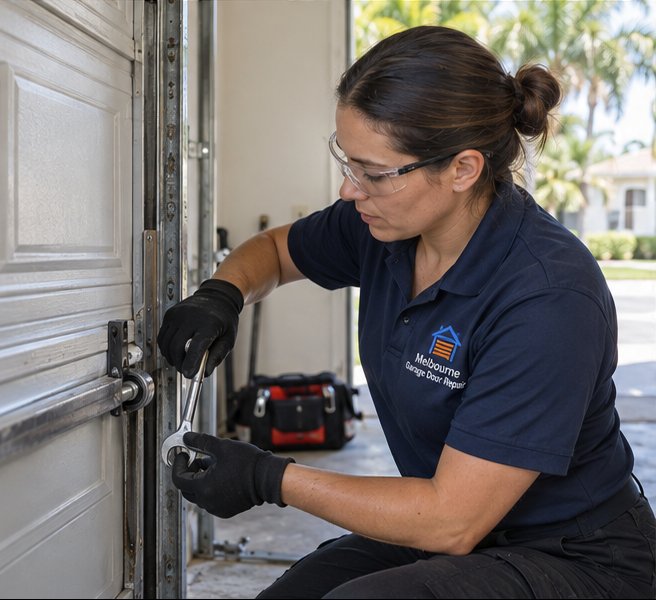
Start by listening, not touching
The first step in diagnosing a noise is simply to listen with the door in normal use. Stand in the garage, close to the wall but clear of the door and its tracks, and have someone operate the door with the wall control while you pay attention. Notice when the sound happens, not only what it sounds like.
Timing is more useful than the sound itself. A noise at the very start of travel points somewhere different from a noise in the middle, and a sound at the very end points somewhere different again. Write down whether it happens on opening, closing or both, and whether it comes from one side or from the ceiling.
Try this in the morning and again in the afternoon, because heat changes how a door sounds. Keep your hands, hair and clothing away from rollers, hinges, tracks and springs while the door is moving. Garage doors are heavy, and the parts that make noise are often the same parts that can pinch or catch.
Squeaking and squealing
A high, repeating squeak is the classic sound of metal rubbing on metal without enough lubricant. It most often comes from hinges, rollers or the bearing plates that support the spring shaft, and it tends to get louder as the door moves through the middle of its travel.
Climate plays a part here. Humid Florida air and salt carried inland from the coast can dry out or wash away lubricant and leave surfaces slightly corroded, which squeaks. A door that was quiet in winter may begin to complain in the wet season.
A squeak that goes away after cleaning and appropriate lubrication was a dry part. A squeak that returns within days, or that is paired with wobbling, deserves a closer look, because worn rollers and loose hinges can make the same sound and need replacing, not oiling. Our lubrication guide covers what to treat and what to leave alone.
Grinding and scraping
Grinding is a lower, rougher sound than squeaking and suggests two parts that are cutting into each other. Common sources include worn steel rollers running in a dirty track, a bearing that has seized, or the drive gear inside an opener that has lost its teeth.
Scraping, by contrast, usually means something is dragging. A panel edge may be touching the track, a bent track may be catching the roller stems, or debris may be sitting in the track channel. Look for shiny, polished marks on the metal, which show where parts are touching.
If the grinding comes from the opener head, listen for whether it changes with the weight of the door. A grinding opener that is working hard against a heavy or poorly balanced door has a different underlying cause than a worn gear. For the opener side, see our page on a garage door that makes a grinding noise.
A safe look at the track
With the door closed and the opener unplugged or switched off, you can look along the tracks for dirt, dents or gaps. You can wipe loose grit from the track channel with a rag. Do not loosen or move track brackets, and do not try to straighten a bent track.
Rattling and vibrating
A rattle is the sound of something loose. On a garage door, loose hardware is the most common cause: bolts that hold hinges, brackets or the opener to the ceiling can work themselves loose with thousands of cycles of vibration. The result is a chatter that you can often feel through the wall of the house.
Other sources include a loose chain on the opener, a metal rail that is not seated properly, a panel that is no longer held firmly by its hinges, or items stored near the door that vibrate in sympathy. A rattle that only happens at one point in the travel often comes from a single loose component.
You can safely tighten visible fasteners on the opener mounting, such as ceiling bolts and the wall bracket, if you have the right tools and a stable ladder. Do not touch the heavy brackets at the ends of the spring or the cable fittings near the bottom corners of the door. If a vibration is strong or paired with visible shaking of the door, stop using it and have it looked at, since shaking can mean a spring, track or roller problem.
Popping and banging
Popping sounds come from parts that stick and then release. Hinges that are dry or stiff can pop as the panels flex. A roller may jump a small ridge in the track. Torsion springs also make a groaning or twanging sound as they wind and unwind, and some doors have a normal creak of this sort.
A single very loud bang is a different matter. If you hear a sharp report from the garage, followed by a door that will not lift, a spring or a cable may have broken. The parts hold dangerous tension, and the door may be much heavier than it should be. Stay clear of it and do not try to lift or operate it.
Our page on a spring that snapped with a loud bang describes what to look for and why this is a job for a trained technician. If anyone has been hurt, call 911.
Clunking and thumping
A heavy clunk at the start of movement often comes from the opener's trolley engaging the door, or from a slack chain or belt taking up the load. A clunk when the door reaches the floor can be the bottom seal compressing or the opener bumping against a travel limit that is set slightly wrong.
A thump in the middle of the travel is worth investigating. It may be a roller dropping through a gap where track sections meet, or a panel catching on a joint. Watch the door in motion from the side, keeping a safe distance, and note exactly where in the movement the thump happens.
Some clunks are harmless, but a door that clunks and hesitates, or one that slams closed rather than settling, needs attention. A door that slams down is a different matter from a noisy landing, and it points to a spring or balance problem that needs a technician.
Humming, buzzing and whining from the opener
Opener noises are a separate family. A steady hum while the door does not move means the motor is receiving power but cannot turn the drive, which can come from a failed gear, a jammed door or a door that is too heavy because of a spring problem. Turn the opener off if the hum continues.
A whine that rises and falls with the speed of travel is usually the motor and the drive running normally, and it is more noticeable in chain models than in belt models. A buzz can be a loose cover, a vibrating light socket or a relay clicking inside the head.
If the motor runs but the door does not move, that is the situation described on our page about an opener that hums but does not lift. Check that the door is not locked, and see whether it moves by hand with the opener disconnected, but only if there is no sign of a broken spring or cable.
Clicking and ticking
A single click when you press the remote is often a relay in the opener or in a receiver, and it can be perfectly normal. A rapid clicking sound from the opener when you press the button, with no movement, can indicate a failing logic board, a power supply issue or a limit problem.
A rhythmic tick during door travel is usually mechanical. A bent hinge, a flat spot on a roller, a bolt head catching on a track or a chain link that is worn can each produce a tick once per revolution of the part concerned. The spacing of the ticks relative to the speed of travel can tell you which part is responsible.
A cold-start tick that disappears once the door has run a few cycles is often a stiff hinge warming up with use, and it is rarely urgent. Ticking from the remote or keypad is often a failing battery or a stuck button. Replace the battery according to the maker's instructions and test again before assuming anything more serious.
Chain slap, belt noise and drive sounds
Chain drive openers are known for noise. A metallic slapping sound can mean the chain has too much slack and is flicking against the rail. A rough clatter can point to dry rail or trolley surfaces, or to a chain that has been stretched by years of use.
Belt drive openers are quieter, but a belt can squeal if it is dry or misaligned, and can whump if it is loose. Screw drives tend to produce a steady rhythmic sound that comes from the threaded rod and can change if the rod is dry or dirty.
Each drive type works differently, which is why chain, belt, screw and jackshaft openers all sound different. Adjusting tension on a drive is a task that depends on the model, so check the manual or have the opener looked at.
A sound by sound summary table
The table below pulls the common sounds together. It points to the usual area, not a certain cause. Treat it as a starting guide for what to look at, and as a list of what to describe if you contact a technician.
| Sound | Where it usually comes from | Safe first check |
|---|---|---|
| High squeak | Hinges, rollers, bearings | Look for dry, shiny or rusty joints |
| Grinding | Rollers, track, opener gear | Look for dirt and polished marks |
| Scraping | Panel or roller dragging on track | Look for contact marks along the edge |
| Rattle | Loose bolts, brackets, chain | Check opener mounting bolts |
| Pop | Stiff hinge or jumping roller | Watch where in the travel it happens |
| Loud bang | Possible broken spring or cable | Stay clear and do not use the door |
| Clunk | Trolley, limit setting, seal | Note if it is at start or end |
| Hum with no movement | Opener motor or drive | Turn the opener off |
| Rapid click | Relay or logic board | Try a power reset only |
What you can safely do about noise
A short list of tasks is within reach for most homeowners. They are about observation and care rather than adjustment. Doing them gives you information and sometimes solves the problem outright.
The key is the stop point. If a task requires touching the springs, cables, or the heavy brackets at the bottom corners of the door, it is not a homeowner task. The tension in those parts is capable of causing serious injury.
- Wipe dirt and grit from the track channels and the rollers
- Apply a suitable lubricant to hinges and rollers according to the maker's guidance
- Tighten opener ceiling bolts and wall brackets you can reach safely
- Check that nothing is stored where it can rattle against the door or the opener
- Replace a remote battery
- Look for fraying, gaps or rust and photograph what you see
What to leave alone
Do not adjust, loosen or oil the springs in a way that involves touching their fittings. Do not remove or loosen cable ends, drum set screws or bottom brackets. If the noise seems to come from those areas, describe it and let a technician look.
Noise that comes with other symptoms
A sound is more worrying when it comes with something else. A noise together with a door that is crooked, one that takes more effort, or one that reverses unexpectedly suggests that the sound is a symptom of a developing fault rather than just a dry part.
A short voice memo recorded on your phone, made while the door runs, is surprisingly helpful. A technician can often recognize the source from the recording alone, and you can compare it with a later recording to see whether the sound is changing. Pay attention to changes over time. A door that has been gradually getting louder over months is usually wearing in a predictable way. A door that suddenly sounds different overnight probably has a specific change, such as a loose bolt, a displaced roller or a fraying cable.
If the door is also uneven, treat that as a separate problem to be inspected. A door that hangs unevenly puts uneven load on tracks and rollers, and the noise that results will not go away with lubricant.
How a technician approaches a noisy door
A technician begins the way you did, by listening and watching the door run through its travel. They then inspect each moving part in order: rollers, hinges, tracks, springs, cables, bearings and the opener. Because the sources overlap, they often test with the opener disconnected to separate door noise from opener noise.
They may check the balance of the door, which tells them whether the springs are carrying the weight properly. A door that is out of balance puts extra strain on rollers, hinges and the opener, and noise is one of the first signs. Our page on door weight and balance explains the idea.
After the inspection you should be told what was found, which parts are worn and what the options are. A good explanation includes the reason for the noise, not only a list of parts.
Preventing noise before it starts
Most garage door noise is a maintenance signal. Regular cleaning of the tracks, periodic lubrication of the right parts, and an annual look at the hardware keep the door quiet and also extend the life of the parts. Because Florida air is humid and salty near the water, it helps to do these checks more often than the calendar minimum.
A monthly habit of watching and listening to the door as it runs lets you catch changes early. Our monthly garage door checklist outlines a routine that takes only a few minutes and requires no special tools.
If you would like a technician to listen to the door and look it over, you are welcome to contact us. We will explain what we find and what the options are.
Questions and answers
Squeaks usually come from dry hinges, rollers or bearings where metal rubs on metal. Cleaning and applying a suitable lubricant to those parts often helps. If the squeak returns within days or the door also wobbles, worn rollers or loose hinges may be responsible and need replacing. Springs and cables should never be oiled or touched by homeowners.
It can be. Grinding suggests parts cutting into each other, such as worn rollers, a seized bearing or a stripped opener gear. A little dirt in a track is easy to wipe out, but persistent grinding is worth having looked at before the damaged part harms its neighbors. Stop using the door if it also moves unevenly.
Stay clear and do not try to lift or operate it. A sharp report followed by a door that will not rise often means a spring or cable has broken, and those parts hold dangerous tension. Switch the opener off at the wall and describe what happened when you contact us. Call 911 if anyone is hurt.
Openers get louder with wear and with extra load. A chain may have slackened, the rail may be dry, bolts may have loosened, or the door may be harder to lift because the springs are tired. Tightening visible mounting bolts is safe. If noise persists, have the door and opener inspected together, since each can affect the other.
Yes. Humidity, heat and salt air change how lubricants behave and can cause light corrosion on hinges, rollers and track surfaces. Wood and some composite panels also swell and shrink with moisture, which can cause rubbing and creaks. Keeping parts clean and treated appropriately is the most reliable way to keep the door quiet through the seasons.
No. Lubricate hinges and roller stems as the maker advises, and avoid getting lubricant on the track surface the rollers ride in, or on belts. Never apply anything to spring fittings or cable ends yourself. A good lubrication guide lists what to treat, what to leave alone and what product types are generally suitable. Keep lubricant off the belt of a belt drive opener.
Stop if the noise comes with a door that is crooked, harder to move, reversing, or hanging unevenly, or after any sudden loud bang. Also stop if you see frayed cables or gaps in the springs. Use the manual release only with care and only when the door seems sound, then arrange for an inspection.