
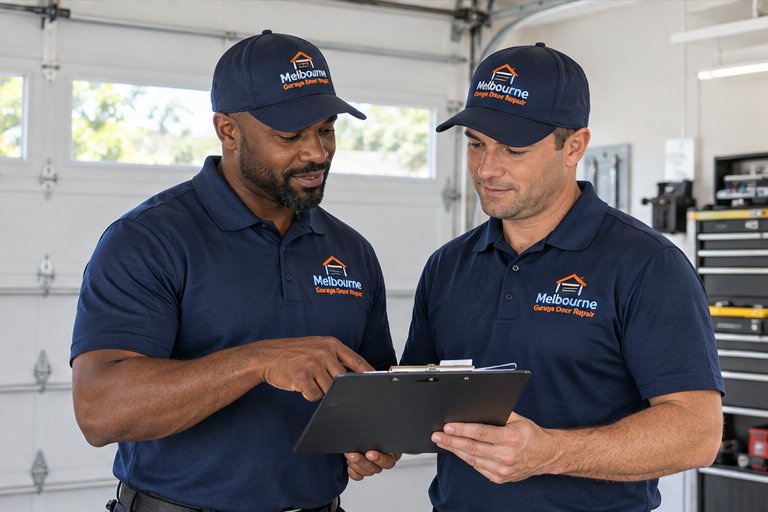
Why asking questions is a good idea
A garage door is the largest moving object in most homes, and its repair involves tension, weight and electrical controls. Most people have no reason to know how the parts work, so a technician's explanation carries a lot of weight. Asking questions is not rude; it is how you stay in the decision.
A reputable technician expects questions and answers them without irritation. They want you to understand what you are agreeing to, because a clear understanding reduces disagreement later. If someone becomes defensive or vague when asked a reasonable question, that is useful information too.
It also helps to prepare a little. Before the technician arrives, note when the problem started, what you heard or saw, whether the opener hums, clicks or stays silent, and whether anyone has worked on the door recently. If the door seems stuck or heavy, do not force it, because a broken spring can make movement unsafe. Having this information ready makes the diagnosis more accurate.
You do not need to memorize technical terms. Plain questions such as what failed, how do you know and what are my options will get you most of the way. The sections below group the questions by topic, so you can pick the ones that fit your situation.
Questions about the problem itself
Start with the diagnosis. You are paying for someone to find the cause, and you should leave the visit knowing what it was and how it was identified.
- What exactly is wrong with the door?
- How did you confirm that this is the cause and not something related?
- Did you check the other parts that could be involved?
- Is anything else worn or close to failing that I should know about?
- What happens if I leave the problem alone for now?
- Is the door safe to use in the meantime?
Ask to be shown
A good technician will point to the failed part. A snapped spring, a frayed cable, a cracked roller or a bent track section is usually visible if you know where to look. Seeing it yourself makes the explanation concrete and confirms the repair is needed.
Ask about related causes
Symptoms overlap. A door that reverses on its way down might have a sensor issue, a force setting issue or an obstruction in the track. Asking what else was ruled out shows how thorough the diagnosis was. Technicians work through these possibilities one at a time, from the simplest to the most involved.
Questions about the options
There is rarely only one way to handle a problem. Springs can be replaced singly or as a pair. A damaged section can sometimes be repaired and sometimes must be replaced. An aging opener may be repaired or swapped for a newer model.
Ask what the options are, what each involves and which one the technician would choose and why. The reasoning matters more than the recommendation itself. If the technician can explain the tradeoffs clearly, you can weigh them against your own priorities, whether that is a short-term repair, a long-term fix or a modest upgrade.
It is also fair to ask what the minimum safe repair is, separate from any recommended extras. That lets you see the essential work distinctly from the improvements. Our guide on repair or replace describes the points that usually tip the decision.
Questions about the parts
Parts decide how long a repair lasts and how well it fits. Ask what is being installed, and ask for specifics rather than a general description.
- What type and size of spring is being used, and how was it matched to my door?
- What kind of rollers will be installed, and how do they differ from the old ones?
- Are the cables, drums and bearings being checked or replaced?
- Where do the parts come from, and are they made for residential or commercial use?
- Is the part a direct replacement or a different model that fits?
- Will you leave me the old parts so I can see them?
Sizing matters
Springs and cables are selected according to the weight and height of the door. A technician who weighs or measures the door and explains how the spring was chosen is doing the job properly. A one size fits all approach is a warning sign. Weight and balance drive almost every sizing decision.
Questions about safety
Safety is both a reason to hire a professional and a way to judge one. Ask how the technician secures the door during the work, and ask what safety tests are performed afterward.
After a repair, the door should be balanced, the opener should be set so the door reverses when it meets resistance and the photo-eye sensors should stop the door when the beam is interrupted. These are not extras. They are the checks that confirm the door will not injure someone or damage a vehicle.
You can ask to see the tests. A technician should be willing to show the door stopping at a sensor and reversing against resistance. If you have children or pets, mention it so the technician can discuss controls and sensor placement. Our guide to garage door safety tests explains what to expect.
Questions about springs in particular
Spring work deserves its own set of questions because it is the most hazardous part of garage door service. The springs store enough energy to cause serious injury if released improperly, and the correct tools and procedures are not optional.
Ask whether the technician replaces springs as a pair when a door uses two, and why. Ask what the springs are rated for, in general terms, and whether the new springs match the old or are a different specification. Ask how the door will be secured before work begins.
Never accept advice to adjust or replace springs yourself, and do not do it. If someone suggests it, treat that as a reason for caution. Our guide to how long garage door springs last explains why springs wear out and how that affects what you should ask.
Questions about the opener
Opener questions depend on whether you are repairing or replacing. For a repair, ask what failed and whether the part is a common wear item or a sign of a bigger problem. For a replacement, ask why the old unit is not worth repairing and what the new one offers.
Ask about the safety features as well. Photo-eye sensors, a reversing mechanism and a manual release are standard elements, and the technician should explain how each was tested. If your household includes children, mention it so that wall control placement and sensor height are discussed.
Compatibility is a key topic. Ask whether the new opener suits the weight and size of your door, whether the old remotes and keypad will work with it, and what accessories are included. Also ask how the unit will be mounted and whether the existing wiring and sensors will be reused.
If you care about noise, smartphone connection or battery backup during outages, say so up front. Noise level, drive type, smart features and backup power are the topics most worth raising.
Questions about the quote
A quote is easier to understand when it is explained. Ask what the quote includes and what it does not. Ask whether it covers only the repair discussed or any other items, and what happens if the technician discovers additional problems once the work is underway.
It is reasonable to ask for the quote in writing, with the work and parts described clearly. A single line labeled service tells you little. A breakdown by component and task lets you compare against other estimates and avoid surprises.
Ask which items are required for a safe, working door and which are optional upgrades. That separation lets you handle the essential repair first. Our companion page, what goes into a service quote, explains the factors behind any estimate in plain terms.
Questions about warranty and terms
Terms differ by product and by company, so ask rather than assume. What covers the parts? What covers the labor? How long does each last, and what conditions apply? Are there actions that could void the coverage, such as skipped maintenance or work done by someone else?
Ask to receive the terms in writing, and keep them with your records. A verbal promise is easy to forget and hard to prove. If the technician refers to a manufacturer's terms, ask to see them. We do not claim any particular coverage on this page, because it depends on the product and the work done.
For a general explanation of the common types of coverage and the questions worth asking, see garage door warranty basics.
Questions about the process and the visit
Understanding the process reduces stress. Ask what will happen on the day, how long the technician expects to be there, what you need to do to prepare and what the door will be like when they finish. Ask whether anything may need a second visit, such as a special-order part.
Ask what will happen if the technician cannot complete the repair that day. A responsible answer explains how the door will be left secure and safe to use or not use. Also ask how the work area will be cleaned and whether old parts will be taken away.
Our page on what happens during a service visit walks through a typical visit step by step, which helps you know what to expect.
- Who will be at the property and what will they do first?
- Do I need to clear the area or move vehicles?
- Will the technician explain what they find before starting work?
- Is there anything that might extend the work, such as hidden damage?
- How will the area be left when the work is finished?
Questions about credentials and responsibility
You may want to know who is responsible if something goes wrong. Ask who will do the work, whether the person at your door is the one performing the repair and how a problem after the visit would be handled. Ask how to reach the company later.
Credentials and insurance are legitimate topics for any contractor. Check what applies in your area for the kind of work being done, and ask the company to explain their practices in their own words. We are careful not to make claims on this page that we cannot verify for you, and we encourage you to confirm details with anyone you hire.
It is also reasonable to ask about the property itself. Will the technician protect floors and vehicles? Will they tell you before moving or covering stored items? Who should you speak with if you have a concern after they leave? Small questions like these show how the company treats a customer's home.
A company that is comfortable answering these questions plainly is generally one that expects to stand behind its work.
Questions for a replacement or new installation
A new door raises its own list. Ask about the material, the insulation type, the panel style, the window options and the hardware. Ask about the wind rating or product approval that applies to your address, since Florida homes have requirements that depend on location.
Ask about measurements. The technician should measure the opening, check headroom and side room and confirm the dimensions with you before ordering. Ask what is included, such as removal and disposal of the old door, new tracks and springs, trim, weather seals and opener adjustment.
Also ask about HOA approval and permits, and who is responsible for each. Our page on new garage door installation explains the surrounding steps.
Questions about maintenance after the repair
A repair is not the end of the story. Ask what you should do to keep the door working: how often to lubricate the moving parts, what to check each month and what sounds or behaviors to report early. A technician who explains this is helping the repair last.
Ask which parts are most likely to wear next and when it might be wise to have the door inspected again. A door that is regularly looked at is less likely to fail at an awkward moment, particularly in a coastal environment where humidity and salt speed up wear.
Our monthly garage door checklist gives you simple checks you can do safely yourself, with clear stop points when a professional should take over.
How to listen to the answers
The quality of an answer matters as much as the content. Good answers are specific, patient and plain. They name the part, describe what it does and explain what the technician plans to do. They acknowledge uncertainty where it exists, for example, I cannot tell until I take this apart.
Be cautious of answers that are all urgency and no explanation. Pressure to decide immediately, claims that the door is about to fail without showing why, and refusal to put terms in writing are all reasons to slow down. It is fine to say that you would like to think about the options.
Take notes during the visit, or ask permission to record the key points on your phone. Write down the name of the technician, the part that failed, the options offered and anything promised. Notes help when you compare opinions and when you talk with other people in your household who were not home.
Trust your own sense of whether you understood what you were told. If you did not, ask again in different words. A technician who is willing to explain twice is generally a safe bet.
Finally, you do not have to ask everything on the first visit. Pick the questions that matter most to your situation, write them down and tick them off as they are answered. If a point comes up later, call and ask. The answers should be as clear on the phone as in person.
A short list to keep on your phone
If you only remember a few questions, make them these. They fit on a note and cover most of what matters during a first visit.
- What failed, and how do you know?
- What are my options, and which would you choose?
- What parts are going in, and how were they sized to my door?
- How will you test the door when you finish?
- What does the quote include, and what could change?
- What are the terms on parts and labor, in writing?
- What should I do to keep it working?
Questions and answers
Ask what failed and how the technician knows. A clear answer names the specific part, explains how it was tested and rules out related causes. Everything else, from the options to the quote, depends on a correct diagnosis, so it is worth getting that explained before you discuss anything else. That single answer shapes every other decision about the repair.
Yes. Springs, cables, rollers and track sections are often visible, and seeing a snapped spring or frayed cable makes the explanation concrete. It also confirms the repair is needed. A good technician is glad to show you and to hand over the old parts if you wish. It also gives you something to compare if you seek a second opinion.
Absolutely. After work, the door should be balanced, the sensors should stop it when the beam is blocked and it should reverse when it meets resistance. Ask the technician to demonstrate each. Watching these checks is a reasonable request and an easy way to confirm the door is safe. Clear terms in writing help avoid surprises later.
Not at all. A written quote that lists the work and parts clearly protects both sides and makes comparison with other estimates possible. A single vague line is not enough. Ask what is included, what is optional and what could change if additional problems are found. You should never feel hurried into a decision you have not understood.
Ask again in different words, and say that you would like the explanation in plain terms. It is fine to take time to decide. A technician who explains patiently is a good sign, while pressure to decide immediately without an explanation is a reason to slow down. Taking a moment to repeat the answer back is a good check.
Yes. Springs hold dangerous tension, so ask how the door will be secured, whether springs are replaced as a pair, and how the new ones are matched to the weight of the door. Do not attempt spring work yourself, and be cautious of anyone who suggests it. When in doubt about safety, stop and call a professional.