
What rollers do and why they matter
A sectional garage door travels up and around a curve and then along the ceiling, guided by two metal tracks. Rollers sit in those tracks and are attached to the door by hinges. Each roller turns as the door moves, which lets a heavy panel travel smoothly instead of dragging.
A typical door has several rollers on each side, and they are among the most frequently used parts in the whole system. Every time the door goes up or down, each roller turns many times along its path. Over years, that work wears the wheel, the bearing and the stem.
Because rollers are small and inexpensive compared with other parts, they are often neglected. Yet a worn set can be responsible for much of the noise and rough movement that people blame on the opener or the springs. Understanding the types helps you make a sensible choice when it is time to replace them.
The anatomy of a roller
Every roller has three basic parts. The stem is the thin shaft that slides into the hinge on the door. The wheel is the part that rolls inside the track. Between the stem and the wheel are the bearings, which let the wheel spin with little friction.
Some rollers have a short stem and some have a long one. The length depends on how the door is mounted and what kind of hinge it uses, so the right roller for one door may not suit another. The size of the wheel matters too, since the track has a specific width.
When people talk about different types of rollers, they are usually talking about differences in the wheel material and the bearing design. Those two choices have the biggest effect on noise, smoothness and durability.
- Stem: slides into the hinge and holds the roller in place
- Wheel: the part that contacts the track and rolls along it
- Bearings: allow the wheel to turn with less friction
- Race or shield: the housing that keeps the bearings in position
Steel rollers
Steel rollers have a metal wheel and are the traditional, widely used type. Many builder installed doors come with them. They are sturdy and can carry heavy loads, and they are a reasonable choice for many doors when they are kept clean and lubricated.
The drawback of a steel wheel is noise. Metal rolling on a metal track produces a rumble, and the sound travels into the structure of the house. If the garage shares a wall with a bedroom or a living space, you may hear every trip of the door.
Steel rollers can also develop flat spots or rust over time, particularly in humid, coastal conditions. Those defects make the wheel rattle and bump instead of rolling. Many homeowners find that replacing worn steel rollers with a quieter type is one of the more noticeable improvements they can make.
Nylon rollers
Nylon rollers have a plastic wheel, usually with a steel stem and bearings inside. They are known for quieter operation, because the softer material absorbs vibration instead of passing it into the track. People who live with a garage next to living spaces often choose them for that reason.
Nylon does not rust, which is a plus in a humid climate. The wheel surface is smooth and gentle on the track. The quality of the bearing inside the wheel largely determines how long a nylon roller will serve, and that varies from one product to another.
Like any plastic, nylon can wear, crack or develop flat spots if it is poorly made or used under harsh conditions. Heat in a closed garage can also influence how plastic behaves over many years. Inspection from time to time is still a good idea.
Sealed bearing rollers
Some rollers, in steel or in nylon, use sealed bearings. A sealed bearing is closed against dust and moisture and is filled with lubricant at the factory, so it stays cleaner and runs smoother than an open one. For a door that cycles often, this can be a meaningful advantage.
Sealed bearings are particularly useful in a place like the Space Coast, where humidity and salt in the air can creep into open bearings and make them rough. They help keep grit out and the lubricant in.
Bearings are described in different ways by different makers, and the number of balls or the grade of the bearing can vary. We will not claim that one construction is right for every door. A technician can look at your door, your use and your tolerance for noise and help you choose a suitable set.
Open bearing versus sealed bearing
Open bearings have exposed balls that spin in a race. They can be lubricated, but they also collect dust and can lose their lubricant over time. They are commonly found in inexpensive rollers and in the original hardware on many doors.
Sealed bearings keep contamination out and lubricant in. They do not need regular lubrication in the same way, and they tend to hold up better in dusty or damp garages. They are usually a part of rollers marketed as quiet or long lasting.
Both kinds roll, but they roll with different feel and different durability. If you are replacing rollers because the door is noisy, the bearing design is worth asking about. Our garage door roller replacement page describes how a technician handles the work.
Comparing the main roller types
The table below sets the common types side by side so that you can see how they differ in general terms. These are general tendencies and not rules, since products and installations vary.
| Roller type | Typical sound | Rust concern | Often suited to |
|---|---|---|---|
| Steel, open bearing | Noticeably louder | Wheel and bearings can rust in damp air | Doors with light use and no nearby living space |
| Steel, sealed bearing | Moderate | Better protected, wheel can still corrode | Heavy doors and frequent use |
| Nylon, open bearing | Quieter | Wheel does not rust, bearing can | Households wanting less noise |
| Nylon, sealed bearing | Quietest of the group in general | Least affected by moisture | Busy doors and garages next to living areas |
Roller size, stem length and fit
Rollers are not one size fits all. The wheel diameter and the stem length have to match the track and the hinge. Most residential tracks take a standard wheel size, but some doors, especially commercial ones, use different dimensions.
Stem length matters because of the way the hinge holds the roller. A stem that is too short may slip out of its seat, and one that is too long may rub the track. A technician checks this when selecting replacements, instead of guessing from appearance.
Fit also depends on the track radius and the door's weight. A heavier door puts more load on each wheel, and a wheel that is too small or too weak will wear out sooner. This is part of why we look at the door and its use before recommending a type.
How worn rollers show themselves
Worn rollers often announce themselves through sound. A rumble that seems to come from the sides of the door, a squeal that persists after lubrication, a rattle or a pop at the same point in each trip are all common. Sometimes the door judders or seems to hesitate at the curve of the track.
You may also see signs. A roller that wobbles in its hinge, a wheel with a visible flat spot, a roller with a crack, or one that leaves residue on the track is worn. A roller that has slipped out of the track is a more serious matter, and the door should not be used in that condition.
Do not try to pull on rollers, hinges or the lower bracket to test them. Keep your hands off the tracks while the door is moving. Our guide to diagnosing garage door noises helps you describe what you are hearing so that a technician can narrow down the cause.
What you can safely check from the floor
You can learn something without touching anything. Stand where you can see the track and the rollers and watch the door move through a cycle. Look for rollers that wobble, wheels that do not turn, tracks that are scuffed or marked, and any movement that looks uneven from one side to the other.
Listen as the door travels. Try to identify whether the sound comes from the sides, the top or the opener. Note whether it is constant or occurs at a particular point. Your observations will help a technician arrive with a better idea of what to look for.
Stop if anything looks off track, if a roller has fallen out, or if the door seems to bind. Leave springs, cables, and brackets alone. If the door is stuck, read about a door that has come off its track before deciding what to do.
A simple noise note
Write down where the sound seems to come from, when in the cycle it occurs and what it sounds like. Words like rumble, squeal, pop and scrape are all useful clues.
Why rollers are replaced as a set
A technician will often suggest replacing all the rollers rather than only the worst ones. The rollers have all done the same amount of work, so the ones that look fine are usually close behind the ones that do not. Replacing them together gives the door a consistent, even feel.
Mixing new and old rollers can leave the door with uneven resistance and may leave you needing another visit soon. A full set also gives the opportunity to check the hinges and track while the hardware is exposed.
On some doors the end rollers, which carry the most load at the track curve, are the first to fail. A technician may point those out. How many you replace is your choice, and a good technician will explain the trade offs plainly.
Rollers, hinges and tracks work together
A roller is only as good as the hinge that holds it and the track that guides it. A cracked hinge or a loose one lets the roller wobble. A dented or misaligned track makes the wheel scrub and wear. Replacing rollers alone does not fix those underlying issues.
That is why roller work often includes a look at the hardware around them. Loose track brackets are tightened, worn hinges are replaced, and the track alignment is checked. Our page on hinge and track service covers that side of the work.
Taking care of the whole path leads to a quieter, smoother door and spares the new rollers from damage.
Lubrication and roller care
Rollers need appropriate lubrication, but not too much and not on the wrong surfaces. A technician applies lubricant to the bearings or stems where it is appropriate and keeps the track faces clean. A greasy track collects dust and turns into a paste that makes the wheels drag.
Sealed bearing rollers need less attention to their bearings, but the stems and hinges still benefit from care. Over time, grit and dried lubricant can build up, so a cleaning is sometimes part of a tune-up.
Our garage door lubrication guide describes what to lubricate and what to leave dry. When in doubt, do not spray around the springs, the cables or the opener's electronics.
Choosing rollers for a Florida garage
In our climate, moisture is a constant. Rollers that resist rust and hold their lubricant tend to do well. Nylon wheels avoid corrosion, and sealed bearings protect the moving parts from damp air and fine grit. Near the coast, those advantages can make a visible difference in how long the set stays smooth.
Think also about how the garage is used. If it is a workshop, a laundry space or a room next to a bedroom, quiet operation may matter more than anything else. If the door is used many times a day, durability may be the priority.
A technician can combine these considerations with the weight and style of your door. If you are still deciding whether to repair or upgrade the entire door, you may find our repair or replace guide helpful.
Common questions people ask about rollers
Many owners wonder whether a louder door means a failing opener. Often it does not. The opener makes its own sound, a steady hum or whir, while roller noise tends to be a rumble or rattle along the sides. Separating the two sources is one of the first things a technician does.
Others ask whether roller type affects the weight the opener has to lift. The springs carry the weight, so the roller type changes friction rather than load. Still, rough or seized rollers add drag, and an opener that works against drag runs hotter and wears sooner.
Some people ask whether a new roller set can fix a door that is crooked or uneven. Usually it cannot, because unevenness points to cables, springs, hinges or tracks. New rollers help the door travel smoothly, but they do not correct a structural problem elsewhere.
Finally, owners ask how long rollers should last. The honest answer depends on use, material, bearing quality and climate. Heavily used doors in humid places wear them sooner, and lightly used doors keep them longer. Regular inspection is the sensible way to judge.
What to expect when rollers are replaced
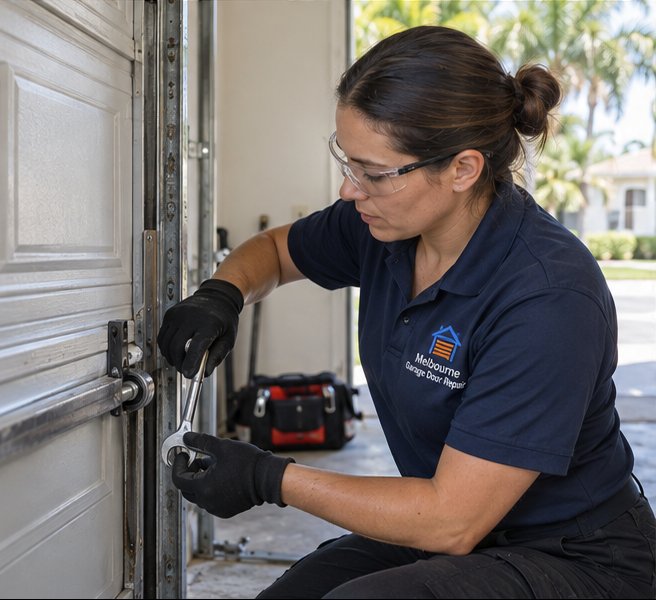
Replacing rollers involves working near the hinges and the track, and on many doors the lowest rollers are connected to the bottom bracket, which is under spring tension through the cable. That is why we advise against replacing the bottom rollers yourself. A technician has the tools and knowledge to do it safely.
The door is secured, the old rollers are removed, and the new ones are fitted into the hinges and set in the track. The hinges are checked, the track is wiped clean, and the door is moved through its range to make sure it travels smoothly.
You should notice a difference in sound and feel right away. If you do not, say so, since the technician can look at other possible sources of noise such as dry hinges or an unbalanced door.
Afterward, keep up the habit of listening. A new set starts with a clean slate, so any rumble, squeal or rattle that appears later is a fresh clue. Mention it early, and the cause can be found while it is still small and the repair is simple.
Questions and answers
Steel rollers have a metal wheel that is sturdy but louder and can rust in damp air. Nylon rollers have a plastic wheel that runs more quietly and does not rust, though quality varies and the plastic can wear. The bearing inside the wheel also affects smoothness and how long the roller lasts.
They can be, especially for a door used often or in a humid, salty area. The sealed bearing keeps out dust and moisture and holds its lubricant in. A technician can look at your door and how you use it and recommend a suitable type.
Common signs are rumbling or squealing from the sides, rattling or popping at the same spot each cycle, juddering at the curve of the track, or rollers that wobble or show flat spots. Observe from the floor and avoid touching the hardware while the door moves.
We advise against it. On many doors the lowest rollers are tied to a bottom bracket that is under tension through the cable, and a mistake can cause serious injury. A trained technician has the tools and the procedure to replace rollers safely and check the hinges and tracks.
Usually yes. They have all done the same work, so the ones that look fine are probably close to worn. A full set gives the door an even feel, avoids another visit soon and lets the technician examine the hinges and track while the hardware is exposed.
Often they do, particularly if the old ones were worn steel with flat spots or rough bearings. Nylon wheels and sealed bearings tend to reduce noise. Other sources of sound, such as dry hinges, loose hardware or poor balance, may also need attention to quiet the door fully.
Some do. A technician applies suitable lubricant to the appropriate parts, such as stems and open bearings, and keeps the track faces clean. Sealed bearings need less attention. Avoid spraying near springs, cables or the opener, and ask a technician what is right for your door.