
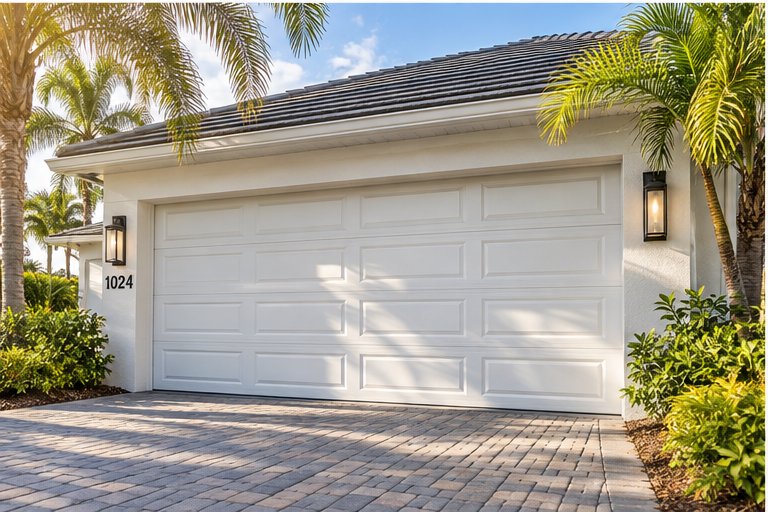
What an insulation kit is
A typical kit is a set of rigid foam or reflective panels cut to fit inside the recessed sections of an existing garage door, along with clips or tape to hold them in place. The idea is to add a layer of material behind the thin steel skin, which reduces how much heat passes through the door.
Kits are made for doors that are not already insulated. They fit most easily on steel sectional doors with the typical recessed panel shape on the inside. Doors with flat inner surfaces, or doors that already have foam bonded to the steel, are a different situation, and we look at the door before saying whether a kit makes sense.
Material matters a little. Rigid foam boards are firm and hold their shape in the recess, while reflective foil-faced products are thinner and rely on trapping a layer of air. Whichever you choose, read the maker's instructions about door types and weight, and keep the packaging in case you need to check them later.
Why people in Brevard consider insulation
The long, hot summers here turn a garage into a heat trap. The door faces the sun, absorbs heat and radiates it into the space. Homeowners who use the garage as a workshop, gym, laundry room or storage area for things sensitive to heat often wonder whether the door is part of the problem.
The door is one source of heat among several. The roof, the walls shared with the house and the slab all matter. Insulating the door can take the edge off, but it will not make a garage feel like an air-conditioned room. Our guide to garage door heat and garage temperature explains how the pieces fit together.
Humidity adds another reason. On muggy days, cool surfaces inside a garage can collect moisture, and a layer behind the steel can reduce how much the inside face of the door sweats. It will not dry out the garage, but it can make a damp-feeling space a little less clammy.
What insulation can change
A layer of foam behind a thin steel skin does a few useful things. It slows heat moving through the door, it softens the tinny sound a bare steel door makes, and it can make the door feel more solid when you knock on it. Some owners also find that condensation on the inside face of the door is reduced.
These are modest improvements, not dramatic ones. We do not quote numbers for temperature drops or savings, because they depend on the sun, the door color, the rest of the building and how often the door is opened. What you can reasonably expect is a gentler difference, noticed most on the hottest afternoons.
Appearance inside the garage also changes. Bare ribbed steel looks industrial, while a panel kit with a finished facing looks tidier, which matters if the garage is a workshop or a hobby space. That is a matter of taste, and it should not be the only reason to add weight to the door.
- Less heat conducted through the steel on sunny days
- A quieter, less hollow sound when the door moves
- A stiffer feel to flexible single-layer panels in some cases
- A tidier look inside the garage
What insulation does not change
Insulation panels do not seal gaps. If air and water are getting in at the sides, top or bottom of the door, a foam panel will not stop them. That is the job of weather seals, and a worn seal will undo much of what insulation tries to do.
Panels also do not repair damaged sections, make the door stronger against wind, or turn a standard door into a different class of door. A kit is a finishing upgrade for a door that is already working properly. Our weather seal replacement page describes what to do about gaps.
It also does not cut the risk from a failing spring or cable. A door that is already making loud sounds, hanging crooked or moving unevenly needs repair first. Adding foam to a door in poor mechanical shape only hides problems and loads the parts that are already struggling.
Heat from other sources
An uninsulated attic space above the garage, a west-facing wall and a dark driveway all send heat into the space. A door treatment will not solve those. If the garage stays hot even with the door closed on a cool morning, look at the other surfaces before spending money on the door.
Weight and balance: the important part
Foam panels add weight to the door. Each panel is light, but a kit adds up across a whole door, and a garage door's spring system is set up for a specific weight. If the door becomes heavier and the springs are not matched to it, the door can feel heavy, pull the opener harder or drift when you stop it partway.
This is why we tell homeowners to treat insulation as a job that includes a balance check. After a kit goes in, the door should be tested for balance with the opener disconnected. If it does not stay put near the halfway mark, the springs may need to be looked at by a technician. Never adjust springs yourself. Our page on balance and adjustment covers what a technician does.
- Test the door's balance before installing a kit and again afterward
- A door that drifts down or flies up when stopped needs professional attention
- Opener strain, noise or reversing after a kit goes in are warning signs
- Spring changes belong to a trained technician only
How a balance test works in simple terms
With the door closed, pull the red release cord to disconnect the opener, then lift the door by hand to about waist height and let go slowly. A well-balanced door stays roughly where you put it. If it slams down, the springs are too weak for the load. If it rises by itself, they are too strong.
Only do this if you can do it safely. If the door feels extremely heavy, binds, makes a loud noise or looks uneven, stop. The guide to garage door weights and balance explains the test in detail and shows why a door that fails it should be inspected.
Where window inserts fit
Many sectional doors have a row of windows in the top panel. Over time, the plastic or glazing can crack, cloud or pop out of the frame. A window insert is a replacement piece that fits into the frame opening, restoring the look and closing the gap.
Inserts come in different styles, such as clear, frosted or decorative designs. The choice affects privacy, light and appearance. We look at the frame to see if it is in good shape, because a bent frame or a cracked panel around the opening is a bigger repair than the window itself.
Older doors may use a thin plastic pane held by a rubber gasket. When the gasket dries out, the pane can slip, rattle or let water in along the edge. A replacement insert with a fresh gasket usually fixes this, as long as the frame itself is still square and solid.
Clear versus frosted
Clear inserts let light in and also let people see in. Frosted or patterned ones let light through while keeping the contents of the garage private. Many owners choose based on what they store and whether the garage faces the street.
Light and heat through glazing
A window brings in daylight, which is helpful, but a sunny window also lets heat in. If you are trying to reduce heat, it is worth thinking about which windows you really need.
Window frames and panel strength
A cutout for windows removes part of the panel's skin, and the frame around it restores some of the stiffness. If the frame is cracked or the surrounding steel is rusting, the panel can flex more than it should. Wind and repeated movement can then make the damage worse.
When a window insert is loose or missing, check the panel around it. Rust at the corners, cracks radiating from the opening and sagging in the panel are signs that more than the insert needs attention. We describe what we see and what the options are, including section repair or replacement.
Doing a kit yourself or having it installed
Kits are designed with the homeowner in mind, and many people install them without help. The work usually involves measuring, cutting panels to size with a utility knife and pressing them into the recesses. It does not require touching the springs, cables or brackets, and you should leave those alone.
A few cautions apply. Work with the door fully closed so it cannot move, and consider disconnecting power to the opener. Keep your hands out of the gaps between sections. If you would rather not do it, we can install the kit and test the balance afterward, which is useful because the balance check is where homeowners most often need support.
Take your time with cutting. Panels that are too tight can bow and press against the rollers, while ones that are too loose can fall out and land in the track. A snug, flat fit, with space around hinges and the bottom edge, is what you are aiming for.
- Measure each recessed area before cutting
- Keep the door closed and the opener powered off while working
- Do not cover hinges, rollers or any moving part
- Do not touch springs, cables or bottom brackets
Doors that should not get a kit
Some doors are poor candidates. A door with weak sections, heavy rust or damaged hinges will not benefit from extra weight. A door with a flat interior skin gives the panels nothing to sit in. A door that is already insulated does not need another layer, and adding one may only make it heavier.
When a door is old, worn and not holding up well, the money is usually better spent on repair or replacement. The comparison between insulated and non-insulated doors explains what a factory-built insulated door offers compared with an add-on kit.
Replacing the door instead
A new insulated door has foam bonded or fitted into the sections during manufacture. It is built to carry that weight with the right springs from the start. That is a different thing from retrofitting a kit onto a lightweight door, and it often includes new seals, rollers and hardware.
If your door is dented, faded or showing its age, a kit on top of those problems makes little sense. Our new garage door installation page explains the process, and the materials guide describes how steel, aluminum, wood and composite doors differ.
Budget and timing also shape this choice. Some owners prefer to keep a working door for a few more years and add a kit now, then replace the door later. That is a sensible plan when the door is sound, and we can tell you roughly how much life we think the existing hardware has left.
| Question | Insulation kit | New insulated door |
|---|---|---|
| Works on a sound existing door | Yes | Not needed |
| Adds weight that may need a balance check | Yes | Door is built and fitted for its weight |
| Fixes damaged sections | No | Replaces them |
| Changes the look of the door | Barely | Can change style and color |
| Involves the springs | May need adjustment afterward | Springs matched to the new door |
Common mistakes to avoid
One frequent error is ignoring the seals. Insulation panels in a door with a gap along the bottom are like a coat with the zipper open. Another is forgetting about balance and then wondering why the opener sounds strained a week later.
A third mistake is blocking hardware with panels or tape. Anything covering a hinge, a roller or a lock mechanism can cause trouble later. Keep panels inside the recesses and away from moving parts, and check the door's travel by hand afterward.
Finally, avoid judging the result on a single day. Compare how the garage feels on a few similar afternoons, and compare the sound and feel of the door before and after. A modest change that you notice over a season is a realistic outcome, and it is better to know that before you start.
- Skipping the seal check
- Skipping the balance check
- Blocking the path of hinges or rollers
- Using adhesives that damage the finish or add uneven weight
Looking after the upgrade
Once installed, an insulation kit needs very little. Check once or twice a year that the panels are still in place, particularly after storms or heavy use. Clips can loosen and tape can fail in heat, so a loose piece is worth fixing before it drops into the track.
Windows and inserts should be cleaned gently with a soft cloth and mild soap, not harsh solvents. If an insert starts to rattle, it may have worked loose in the frame or the frame may have shifted. Bring it up at your next service so we can check the panel as well.
Dust and spider webs gather behind panels, and in a humid climate small insects like to hide in foam edges. A short look with a flashlight during your monthly door check is enough. If you see crumbling foam or moisture trapped behind a panel, take it out and let the area dry.
Getting a straight answer about your door
The right choice depends on the door you have, how you use the garage and what bothers you most. We start by looking at the door, testing the balance and checking the seals. Then we tell you what an upgrade is likely to do, what it will not do and whether a different step comes first.
If you are weighing an upgrade, you can read our insulation guide first. When you are ready to talk about your own door, get in touch and describe what you want to change.
Questions and answers
It can take some of the heat off, mainly on sunny afternoons, but it will not make a garage feel air-conditioned. The roof, walls and slab also contribute heat. Think of a kit as a modest improvement rather than a cure, and check your seals at the same time.
A kit does not touch the springs, but its added weight can leave a door out of balance and make the opener work harder. Test the balance afterward. If the door drifts or the opener strains, have a technician look at it and never adjust springs yourself.
Not every door. Kits are meant for sectional steel doors with recessed panels on the inside. Flat inner skins, damaged sections and doors that are already insulated are poor candidates. We can look at your door and say honestly whether a kit makes sense.
A sound frame with a proper insert should not weaken the panel. A cracked frame, rusted corner or sagging panel around the opening is different. In that case the window is a symptom, and the panel may need repair or replacement.
It depends on privacy and light. Clear inserts show the garage contents and let in the most light. Frosted or patterned ones keep things private while still letting daylight in. Think about what you store and whether the door faces the street.
For a door that is worn or damaged, often yes, because a new door includes matched springs and hardware. For a sound, lightweight door that you want to keep, a kit can be reasonable. We can describe both paths and help you weigh them.
It can soften the hollow, tinny sound of a bare steel door, though noise often comes from worn rollers, loose hardware or a dry track. If the door is loud, have it inspected before assuming insulation will change that.
We can look at the door, fit a kit where it suits the door and test the balance afterward. If you prefer to install it yourself, we can check the balance and seals once the panels are in. Get in touch and tell us which you would like.