
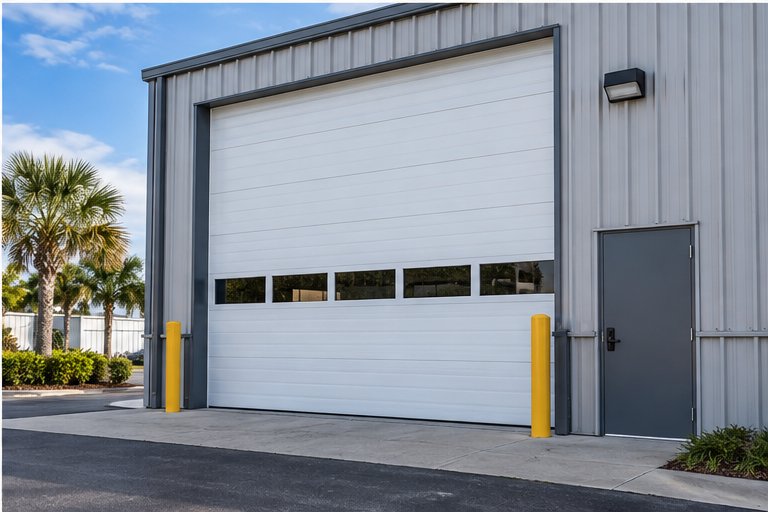
How a business door differs from a home door
A home garage door might cycle a few times a day. A door at a delivery bay, a repair shop or a storage unit may cycle dozens of times, which is why springs, rollers, hinges and operators wear on a different schedule. Parts are often larger and heavier, and the openings are taller or wider than a typical house garage.
The consequences also differ. A stuck door at a home is an inconvenience. At a business it can block deliveries, leave a building unsecured overnight or hold up vehicles. That is why commercial doors deserve a routine of their own rather than being treated as an oversized residential door.
Usage patterns matter too. A door at a restaurant kitchen entrance, a self-storage unit and a boat yard all age differently, and a technician who knows how your door is actually used can spot the wear that matters. Tell us about the traffic through the opening, not only about the fault you noticed.
Types of doors we work on
Businesses on the Space Coast use a mix of door styles. Sectional doors rise on tracks and curl overhead, much like a home garage door but built heavier. Rolling steel doors wind around a drum above the opening and take up very little space inside the building.
Some properties also have service doors, roll-up gates and older doors that were installed long ago and are still in use. We start by finding out what you have, because the right approach depends on the door type, how it is operated and how the opening is used. Our guide on sectional versus rolling doors explains the main differences.
Door size changes the work. A wide opening carries more weight on each spring and cable, and a tall one needs longer track and more careful support. We note the size and the style when we first look at the door, because they shape what a sensible repair looks like.
- Insulated and non-insulated sectional doors
- Rolling steel doors, whether manual, chain-operated or motor-driven
- Doors with windows or vents for light and airflow
- Large openings with wide spans and extra track support
Common problems at loading areas and shops
Delivery bays take a beating. Forklifts clip the lower panels, pallets knock into the jambs, and trucks back in at slight angles. The result is dented sections, bent track and loose brackets. Over time these small impacts add up to a door that rubs or jams.
Auto shops, workshops and storage facilities have their own patterns. Dust and grease collect in the track, the door is held open for long periods, and operators run hot when they are cycled repeatedly. We look for wear in the right places instead of assuming every site is the same.
Another pattern is the door that works but is slowly getting worse. A little more noise each week, a slight lean to one side, or an operator that hesitates at the top of travel are all early signs. Reporting them promptly usually keeps a repair simple and keeps the opening in service.
Impact damage
When a vehicle or equipment strikes a door, the visible dent is only part of the story. Hinges, rollers and track may have shifted. We check the whole assembly before telling you whether a section can be repaired or needs replacing.
Spring and cable fatigue
High-cycle doors wear springs and cables on a shorter timeline. Springs hold dangerous tension, so when we see signs of wear we explain what they mean and what the replacement process involves. Never try to adjust or replace them yourself. Our torsion spring repair page explains the repair itself.
Rolling steel doors
Rolling doors use a curtain of interlocking slats wound onto a barrel. They are common in storage buildings, shopping centers and older commercial buildings. Their wear points are the guides on either side, the barrel brackets, the springs inside the barrel and the operator or hand chain.
A rolling door that sticks, jumps or rubs usually has something wrong with the guides or the barrel alignment. We look at how the curtain travels, listen for scraping and check that the lock bars and handles work. If the door is operated with a chain hoist, we inspect the chain and the sprocket for wear.
Rolling doors in older buildings may have been installed decades ago and modified since. We take time to understand what is there before recommending anything, including how the curtain is secured when closed, what holds the barrel in place and how the door is released if the operator fails.
- Curtain slats, checking for bends, cracks and missing end locks
- Side guides, checking for rust, bending and debris
- Barrel, brackets and spring tension observed visually only
- Operator, hand chain and lock hardware
Sectional doors at commercial openings
Commercial sectional doors resemble residential ones, but the panels are heavier, the hinges are often multi-point and the track is sized for a larger load. Many have windows or vents, and some are insulated for climate-controlled space. Large sectional doors may use more than one spring, and cables see greater force.
We examine the same elements as on a home door and add checks for side loading, wear from heavy use and the operator type. If your door is out of balance, we explain what that does to the operator and the door. Our balance and adjustment page covers the idea in more detail.
Operators and controls
Business operators come in several forms: trolley models similar to residential openers, jackshaft units mounted at the side of the door, and hoist operators for rolling doors. Each has its own controls, limit settings and safety devices. Some sites use keypads, fobs, push buttons, loop detectors or remote access.
When an operator malfunctions, we look at power supply, limit settings, wiring and safety edges before suggesting a repair or replacement. If safety sensors or edges are involved, we make sure they are working because they protect people and vehicles. Our page on safety sensor repair describes the basics.
Wiring deserves attention as well. Vehicles, forklifts and pressure washers damage low-voltage wires and junction boxes, and a door that behaves strangely may simply have a pinched or corroded connection. Checking the simple things first often explains a puzzling fault without replacing the operator.
Safety edges and sensors
A door that closes on a person or vehicle is a serious hazard. Sensors across the opening and sensing edges along the bottom stop or reverse the door when something is in the way. These devices should be tested regularly, and a door that ignores them should be taken out of service until it is checked.
A maintenance routine for busy doors
A regular schedule keeps small issues from becoming stoppages. How often depends on how many times the door cycles and what the environment is like. Doors near salt air, dust, chemicals or heavy vehicle traffic benefit from more frequent attention.
A maintenance visit typically includes inspection, lubrication of the moving parts that need it, tightening of hardware that is safe to adjust, and testing of the operator and safety devices. We note anything that is wearing and tell you roughly how it is trending, so repairs can be planned instead of forced on you.
Keep a short record of each visit and each fault. Over a year, it shows which doors cause trouble, which parts wear first and how your usage pattern affects the equipment. That record is useful when you decide whether to repair, replace or change how the opening is used.
- Visual inspection of panels, hinges, rollers and track
- Lubrication of rollers, hinges and bearings with a suitable product
- Testing of reversing, sensors, edges and emergency release
- Notes on parts showing wear, shared with your site contact
Planning around downtime
No business wants a door down at the wrong time. We cannot promise how long any repair will take, because it depends on what we find and whether the parts are on hand. What we can do is talk through the situation, explain what a given repair involves and help you plan around it.
If you operate on a tight schedule, let us know which doors matter most and when the building is busiest. For a site with several doors, it can make sense to deal with the most critical opening first while the others are inspected. A secured opening, even a temporary one, matters more than speed.
Whenever possible, choose a time for non-urgent work when the opening is least needed, such as the quietest part of the week. Clear the area around the door beforehand so the technician has room to work, and make sure someone with authority on site can approve decisions after we explain what we found.
Securing an opening that cannot close
If a door is stuck open, you may need a temporary plan to protect the building and its contents. Discuss this with us when you get in touch. Do not stand under a stuck door, and do not try to force it.
Safety around heavy doors
A commercial door can weigh several hundred pounds or more, and the stored energy in the springs is considerable. Employees should know never to touch springs, cables or the brackets that hold them. Only trained technicians should work on them.
Train staff on a few things: how to use the controls, what to do if a door stops partway, who to tell, and how to keep forklifts and pedestrians clear of the opening. Keep the area beneath the door clear of stacked goods. If anyone is hurt, call 911 first.
- Keep people and equipment out from under a moving door
- Report any strange noise, jerking or drifting right away
- Take a damaged door out of use until it has been checked
- Never use a vehicle or other equipment to push or pull a stuck door
Coastal conditions and business doors
Salt air, humidity and summer heat take a toll on any exposed metal. Steel doors that are not well finished develop rust at the lower edges, and fasteners corrode. Aluminum fares better against rust but can dent easily. Moisture also gets into the tracks and bearings, which makes lubrication more important.
Sites near the water, or on streets that flood during heavy rain, should watch the bottom panel and seal. We look for early rust and failing seals during inspections. Our coastal climate guide explains the broader picture.
Pressure washing and cleaning chemicals add to the problem, because they strip lubricant and push water into bearings. After washing a door or the surrounding floor, wipe the track and let it dry. If you notice rust bleeding from hinges or screws, tell us at the next visit.
Security and lock hardware
For a business, the door is part of the security plan. Rolling doors often use slide bolts or cylinder locks, while sectional doors may have side locks or an operator that locks the door when closed. Keys, codes and fobs should be controlled, and old credentials should be removed when employees leave.
We can look at the locking hardware on your doors and tell you what condition it is in. For ideas about practical habits, see our guide to garage door security tips, which applies to many commercial doors as well as homes.
Repair or replacement for a business door
Sometimes the right call is to repair, sometimes to replace. A door with a single damaged section, worn rollers or a failed spring can often be repaired. A door with widespread damage, discontinued parts or a style that no longer suits the building may call for replacement.
We describe the options and what each one involves, then leave the decision with you. Consider how often the door is used, how much downtime you can accept and what condition the rest of the opening is in. Our residential versus commercial doors guide explains why the two categories are built differently.
Appearance can matter too. A customer-facing storefront door that is dented or faded sends a message about the business, while a back-of-building bay door may only need to work reliably. Tell us how important the look is and we will keep that in mind when we describe the choices.
| Situation | Typical direction |
|---|---|
| Single dented section on a sectional door | Inspect and discuss section repair or replacement |
| Door cycling heavily with worn rollers | Roller and hinge replacement with maintenance schedule |
| Rolling door sticking in the guides | Guide and barrel inspection |
| Operator stops or reverses randomly | Check limits, sensors, edges and wiring |
| Old door with widespread wear | Discuss replacement options |
Property managers and multi-door sites
Managers of strip centers, warehouses and mixed-use buildings often look after many doors. Keeping a simple log of each door, its location, its type and the problems it has had makes service smoother. Tenants should know whom to contact when something goes wrong.
We can look at several doors in one trip, report on the condition of each and let you plan repairs in order of importance. For owners who inherit a building with unknown history, a first walk-through gives a baseline to work from.
When tenants change, door use changes with them. A bay that used to hold light storage may become a busy loading dock, and a door that coped well before may begin to struggle. A fresh look at the door when a new tenant moves in is a sensible habit.
What to tell us when you call
A few details help us understand the situation before we arrive. Describe the door type, how it is operated, what it did when it failed and whether anything hit it. Mention whether there is a time of day when the opening must be usable.
If you can safely take photos of the door and any visible damage, include them. We will not ask you to go near springs or cables. Once we see the door, we explain what we find and what the options are.
- Door type and approximate size
- How it is operated: hand chain, hoist, trolley or jackshaft
- What happened and when the problem began
- Any impact, power loss or recent repairs
Questions and answers
Yes, our service covers business doors of several kinds, including sectional doors and rolling steel doors. When you contact us, describe what you have and how it is operated. We inspect the door when we arrive and explain what we find before any repair is started.
It depends on how often the door cycles and where the building is. Heavy use, salt air and dusty conditions all suggest more frequent attention. A technician can look at the door and suggest a sensible schedule for your site once they see how it is used.
Staff can do simple things such as keeping the track area clear, wiping sensor lenses and reporting noises. They should never adjust springs, cables or bracket hardware. Those parts hold dangerous tension and are for trained technicians only.
Keep people clear of it, do not force it, and arrange a way to protect the building while you wait for service. Get in touch and describe what happened. We will talk you through what to do next and explain what we find when we see the door.
Yes. Door and operator work together, so we look at both. That includes limit settings, safety devices, wiring and controls. If the operator is the problem, we explain whether repair or replacement makes more sense for your door.
In many cases yes. For sites with multiple bays or units, we can inspect each door and report on its condition so you can plan repairs in order. Let us know how many doors there are and which ones matter most when you get in touch.
Not always. Minor dents can sometimes be dealt with, while creased or cracked sections often need replacement. We check the track and hinges as well, since an impact can move them out of line. Then we explain which option makes sense for the damage.
That can happen with older doors. We tell you what we find and what the options are, which may include modifying the repair, using a compatible part where it is safe or planning a replacement door. The choice stays with you.