
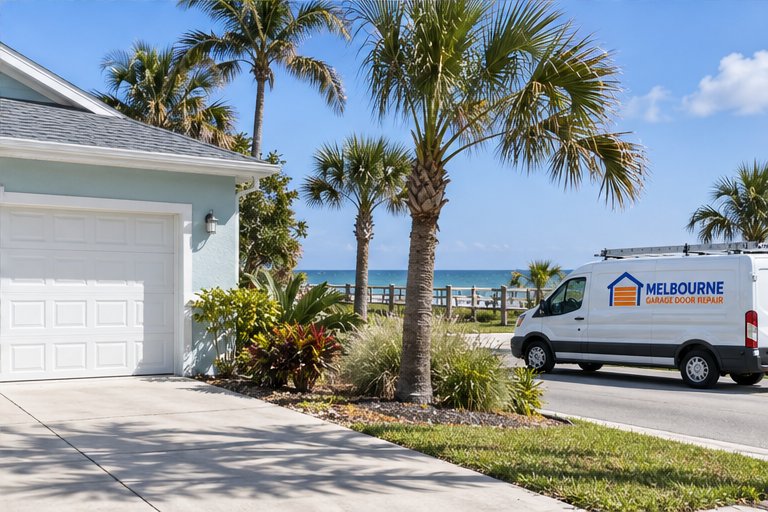
A garage door that has a different guest every week
Most garage doors are used by the same few people, who learn how the door behaves. A vacation rental garage is used by people who have never seen it before. They do not know that the door sticks a little at the end, that the keypad needs a firm press or that the sensors are set low.
Every one of those guests treats the door in their own way. Some pull the release cord to see what it does. Some back a rental car into the door. Some leave the door open overnight, or close it on a beach cart, a bike or a pile of towels. The door is used harder and with less care than a door at an owner occupied home.
This page is written for that situation: owners, managers and residents in Cocoa Beach who want a door that works for whoever is using it, and who want to understand what wears and why. We start with the people and the year, then move on to the salt, the sand and the storms.
The turnover day checklist for a rental garage
The time between one set of guests and the next is the right moment to notice a problem. A cleaner or manager who goes through the property anyway can spend a minute on the garage, and that minute can save a call during a stay.
The checklist below is simple and does not involve touching springs, cables or brackets. It covers what a non technical person can safely see, hear and test. If any check fails, make a note, tell the owner and ask us to look at the door before the next guests arrive.
- Open and close the door with the wall button and watch the full travel. It should move smoothly and stop at both ends without a bang.
- Listen for new scraping, popping or grinding noises.
- Look at both sides of the door for gaps, uneven edges or a sagging corner.
- Test every remote and the keypad, and replace weak batteries.
- Wipe the sensor lenses and check that the small lights on both units are steady.
- Look at the bottom seal for tears, flattening or sand packed into it.
- Check that the manual release cord is hanging normally and not tangled or stuck on anything.
- Remove loose items from the door path and from near the tracks.
A simple reversal check
Once a month, lay a roll of paper towels on the floor under the door and close it. The door should touch the roll and reverse. If it crushes the roll, or ignores it, stop using the opener and contact us.
Salt air and what it does to a garage door
Cocoa Beach is on a barrier island, and the air carries fine salt from the ocean. Salt settles on every exposed surface, and when it mixes with humidity it speeds up rust and corrosion. Steel hinges, track fasteners, roller stems, springs and cables are all affected, and the effect is strongest on the side of the building that faces the water.
Rust is not only a looks problem. A rusted hinge can seize, a rusted cable strand can break, and a rusted spring loses strength and snaps earlier than it should. The parts that are under the most tension are the ones where corrosion matters most.
Our guide on garage doors in a coastal climate explains the effects in detail. In short, wipe down exposed surfaces, ask for a look at the hardware every year, and replace rusted parts before they fail.
Sand: the quiet cause of rough doors
Sand arrives on the island in shoes, on towels, in beach chairs, in strollers and on the wheels of every cart. It collects on the garage floor and works its way into the door. It packs into the bottom seal, wears the seal edge and gets into the lower part of each track.
Gritty tracks make rollers drag and wear, and the door begins to sound rough. The opener works harder to compensate. Sand also sits in the seal between the door and the floor and holds moisture against the bottom panel, which then rusts from below.
A weekly sweep of the garage floor in front of the door and a short wipe of the lower tracks helps more than people expect. If the door is already noisy or rough, see our page on noisy garage door service]]|noisy garage door service]] for what a technician checks and what is left alone for safety.
Beach gear, bikes and the crowded garage
Garages in a beach city are crowded. They hold paddle boards, bikes, coolers, chairs, umbrellas, kayaks and wagons, usually piled where it is convenient. That crowding creates a hazard for the door.
A kayak or board resting against the tracks can push them out of line. Gear hung from the door or from the springs can unbalance it. An object left in the path of the door can trigger the safety reversal, or if it sits above the beam, be crushed by the door as it closes.
Give the door a clear path: nothing within the tracks, nothing leaning on the springs, nothing hanging from the door, and a clear floor under the sensor beam. If you manage a rental, put a short note in the guest guide asking guests to keep the door path clear.
Keypad codes, remotes and guest access
Access is one of the biggest questions for a rental garage. Owners want guests to be able to use the garage but not to keep access afterward. Managers need a simple way to hand over entry without giving a physical remote to every guest.
A wall or outside keypad lets you set and change a code for each stay. Remotes, on the other hand, are easy to take home by accident. If guests get remotes, count them in and out, and clear the opener memory when you are unsure who still has one.
Our guide on programming garage remotes and keypads explains the steps for changing codes and clearing old remotes. Check the opener manual for your model, and contact us if you cannot find the learn button or the keypad will not accept a new code.
Outside keypads and salt
A keypad outside the garage gets rain, salt and sun. The buttons wear, the cover cracks and the battery can corrode. If a keypad works only on some presses or not at all, change the battery first, then wipe it. If it still fails, we can test the receiver and the keypad separately.
Managing the door from far away
Many Cocoa Beach owners do not live in the property. They may be in another state, and they rely on a manager, a cleaner or a neighbor. When something goes wrong, they need clear information from someone on site.
A short description helps: what the door does, what sounds it makes, whether the opener light blinks, whether the door is stuck open or closed. A phone photo of the springs and the opener label is better still. We can arrange a visit with a manager or a guest on site and give the owner a plain account afterward.
Smart openers can also help. They allow the owner to see whether the door is open and, in some cases, to let in a service technician remotely. Read our guide on smart garage door opener basics to see what those features do and what they need, such as a stable wifi connection in the garage.
Storms, evacuations and the long absence
The Space Coast sits in a hurricane region, and barrier islands face the weather first. For a rental or second home, this brings two questions. How well does the garage door stand up to a storm? And what happens when the property is left alone for days or weeks afterward?
Before a storm, ask someone to check the door, tracks and hardware, and secure anything loose in the garage. Check that the door is closed and, if you evacuate, that the opener is set the way the manual advises. After a storm, do not open a door that looks bent or sits unevenly in its tracks. Take pictures, keep clear and call us.
Our guide on garage door hurricane preparation sets out the steps. We cannot promise a door will survive a particular storm, but we can tell you the condition of yours and what could be strengthened.
Power cuts and doors that will not open
After a storm or a power cut, a guest or owner may arrive to find the garage door will not open. The opener has no power, the battery backup may be flat or absent, and the car is outside.
The manual release is meant for this. It lets you disconnect the door from the opener so that you can lift it by hand. It is safe only when the door is fully closed and the springs are in good condition. If the door is partly open, or you hear or see anything wrong with the springs or cables, do not use it.
Read our guide to the manual release during a power outage before you need it, and add the steps to the property guide. A battery backup on the opener can keep the door working through a short outage, and we explain the choice on our page about battery backup for garage door openers]]|battery backup for garage door openers]].
Wind, rain and the shape of the door
A garage door faces the wind head on or side on, depending on the way the house is built. Cocoa Beach gets strong gusts, sea breezes and heavy summer downpours. A door with weak panels, loose hardware or worn seals takes more punishment.
Wind pushes on the flat face of the panels and tries to bend them inward. Wind driven rain finds the gaps along the sides and under the door. The result can be wet floors, stained walls and damaged stored goods.
Replacing worn seals is one of the most useful small jobs you can do. Our page on weather seal replacement explains the parts and what to expect. For a door that has been damaged in wind or by flying debris, read about a garage door damaged after a storm]]|a garage door damaged after a storm]] before using it again.
Which part suffers from what
It is easy to say that a beach garage door wears faster. It is more useful to know which part is hit by which condition, so you can see what to watch. The table pairs each main part with the island conditions that affect it most.
None of these is a task for you to fix by hand. They are a guide for what to look at and what to describe when you call. Springs, cables and brackets in particular are for a trained technician only.
| Part | Main enemy | What you may notice |
|---|---|---|
| Bottom seal | Sand and sun | Flattened, torn or brittle rubber, light under the door |
| Hinges and roller stems | Salt and humidity | Rust stains, stiff movement, squeaks |
| Tracks | Sand and grit | Rough rumble, dragging rollers, scuffed metal |
| Springs and cables | Salt and heavy use | Rust, uneven wear, a door that feels heavier |
| Keypad and wall button | Rain, salt and many hands | Sticky or dead buttons, a cracked cover |
| Opener and sensors | Humidity, lightning and dust | Blinking lights, random behavior, a door that reverses |
The busy season and the quiet season
A tourist city has a rhythm. Some weeks every property is full, and others are empty. A garage door lives through both. In busy weeks it is cycled many times a day by people who are rushing, loading and unloading. In quiet weeks it sits closed, collecting damp and salt.
Both patterns cause wear. Heavy use tires the springs, rollers and opener. Long rest lets seals harden and parts stiffen. The first use after a long rest is often the moment a worn part finally gives out, so it is worth watching and listening to the door when it wakes up.
If you notice that the door is slower, noisier or more uneven after a quiet spell, do not push it. Write down what you hear and see, and arrange a visit before the next set of guests arrives.
Planning maintenance around the rental calendar
The right time to service a rental garage door is when no guests are in the house. Owners and managers usually know the low points in the calendar, such as the weeks between bookings or the quieter months, and a service visit fits neatly into them.
A yearly look by a technician covers the points that matter most in this setting: corrosion on the hardware, wear in the rollers and hinges, the condition of the seals, the balance of the door and the behavior of the safety sensors. It is better to find a problem on a quiet day than on a Saturday check in.
Our maintenance and tune up service is built for that. We look at the whole door, explain what we see and leave you with a clear picture of what to do next.
Arranging a visit in Cocoa Beach
When you contact us, tell us the address, whether the property is a rental, and what the door has been doing. Mention anything guests have reported. Tell us how to get access, and whether anyone will be on site to meet the technician.
Make sure the door path is clear and any vehicles are moved. If there are children or pets in the property, keep them away from the door and the hardware during the visit. Take photos of the springs and the opener label if you can do so safely from a distance.
The technician will examine the door, test the safety systems and explain what they find. You choose what to go ahead with. If you have questions before the visit, contact us and ask.
Questions and answers
Yes, most openers can use a keypad with a code you can change between stays. That avoids remotes going home with guests. If your keypad will not accept a new code, or your opener is older, we can check what it supports and explain the options. This keeps old access from lingering after a stay ends.
Salt in the air settles on metal and, with humidity, speeds up corrosion. Hinges, springs, cables and fasteners are most affected. Wiping exposed parts and having a technician inspect the hardware each year helps. Rusted springs and cables should be replaced by a professional before they fail. Replacing a worn part early is easier than facing a failed cable on a busy day.
Sweep the floor in front of the door often and wipe the lower tracks with a dry cloth. Do not spray grease into the tracks, because it traps more sand. If the door still sounds rough or the rollers drag, we can clean, inspect and replace worn rollers. We will explain the repair and what to watch afterward.
Check the safety sensors near the floor on each side. Clear anything in front of them, wipe the lenses with a soft dry cloth and see that the small lights are steady. If the door still reverses or will not close, stop and contact us so we can look at the sensors and wiring. Never reach into the track area while the door is moving.
Only when the door is fully closed and you see no sign of broken springs or cables. Pull the release carefully and lift slowly. If the door is partly open, feels very heavy or drops, stop and keep clear. Never touch the springs, and contact us if anything seems wrong. Take pictures of the spring area from a distance if you can.
Start by checking your documents or asking the association manager who is responsible for the door and the opener. Then contact us with the details, including the address and any access instructions. We can look at the door and explain our findings to whichever party needs them. Having the details to hand makes the visit more useful.
Choose a gap between bookings so the technician can work without guests present and the door can be tested through its full travel. A yearly visit is a sensible pattern for a door in salt air. We look at the hardware, seals, balance and sensors and explain what we find. We will explain what we find and what the options are.