
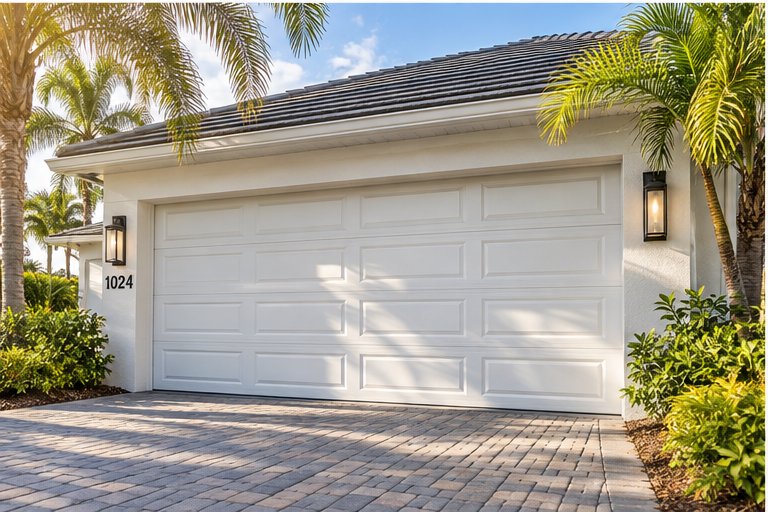
Established neighborhoods, established doors
Some communities are brand new and some have decades of living behind them. Florida Ridge belongs to the second group. Its subdivisions are settled, with mature trees, familiar streets and houses that have been through many owners and many seasons.
Garage doors in a place like this tell a story. One may be the original door from when the house was built. Another may have been replaced once or twice. Others carry a mix of old panels, newer rollers and a modern opener bolted to a very old track.
We like working in established neighborhoods because the questions are practical: what can be saved, what should be replaced, and what is worth spending effort on. We start from the door you have, not from a catalog.
Streets here also have their own habits. Some blocks have a run of identical houses from one builder, so a problem on one door is a hint for the next. Others have been added to and altered so much that no two garages match. Knowing which kind of street we are on tells us what parts to expect.
Reading the age of a door
You can learn a lot from a door by looking at it. Thin steel sections with shallow embossing, single-layer panels, extension springs along the tracks and a chain-drive opener with a metal rail all suggest an older setup. Insulated panels, torsion springs above the door, belt-drive openers and plastic or nylon rollers suggest something newer.
Age is not the same as condition. A well-kept older door can outlast a neglected newer one. What we assess is wear: how thin the metal has become, how much play there is in the rollers, how straight the track is, and whether the sections still line up.
If you are unsure how old your door is, look for a label on the inside of the end panel or on the opener housing. Do not stand beside the springs to read it, and do not move anything. A photograph from a safe distance is plenty. Our guide to reading your garage door label explains what the numbers and letters usually mean.
Signs of an original door
Faded paint, hairline cracks at hinge locations, rust along the bottom edge and a manufacturer's label that is hard to read. The opener may be a much later addition.
Signs of a mixed-age door
New rollers on dull old hinges, a replaced bottom panel that does not match the others, or a modern opener bracket fastened to the original header. These doors work, but unevenly.
Extension springs and why they matter
Many older doors use extension springs, which run along both horizontal tracks and stretch as the door closes. They work well when in good condition but carry a particular risk when one breaks, because the spring can whip across the garage. A properly installed safety cable through each spring is meant to contain this.
If you can see extension springs on your door and there is no cable running through them, treat the door with caution. Do not stand beside the tracks while the door is moving, and do not try to adjust or replace anything yourself.
Our guide to torsion and extension springs explains the differences and why some owners choose to convert, and our page on extension spring replacement describes how we handle the work safely.
When we replace extension springs, we also check the pulleys, the cables and the safety cables, because these wear along with the springs. Replacing only the spring on a worn system can leave the next failure waiting a short distance away.
Parts that wear on an older door
Over many years, certain parts wear in a predictable order. Rollers go first, often with flat spots or cracked nylon. Hinges loosen and the pins wear. Cables fray where they wrap the drums. Bottom seals harden and tear. Tracks bend slightly at the corner where a door was once bumped.
Each of these is repairable on its own. The question is how many are failing at once, and whether the sections underneath are still sound enough to be worth the effort.
The order of repair matters. A door with a frayed cable and loose hinges should have the cable dealt with first, because a cable failure can drop one side of the door. Cosmetic matters can wait. We tell you which items are safety related and which are comfort or appearance.
- Noisy rollers and loose hinges are low-risk repairs that often transform how a door feels.
- Frayed cables should not be ignored, since a cable failure can drop one side of the door.
- A cracked or buckled section affects strength, and several damaged sections point toward replacement.
- A bent track corner is worth fixing early, before the rollers wear it further.
Repair, replace or live with it
This is the question every owner of an older door asks. The honest answer depends on what is wrong and what you want from the door. A single failed part on an otherwise solid door is usually worth repairing. A door that needs several repairs, has thin or damaged panels, and is noisy and heavy may be a better candidate for replacement.
We do not push replacement. We explain what we see, show you the worn parts, and lay out the choices. You may decide to repair now and replace later, or to replace now because you plan to sell, or to leave the door alone for a season.
Our guide on repairing or replacing a garage door explains the factors in more detail so you can think it through before we visit.
It also helps to think about how long you plan to stay in the home. A door you will use for another twenty years deserves a different level of investment than one you plan to leave in a year. Be honest with us about your plans and we will fit our advice to them.
Older openers and their quirks
An opener that has served for many years may still run, but it can show its age. Plastic gears wear, circuit boards fail, and older safety systems may lack the sensors and reversal features that current openers include. Remotes from earlier generations may use fixed codes that are easier to copy than modern rolling codes.
Replacing the opener on an older door is a common upgrade. It brings better safety, quieter operation and modern remotes. It does not fix a door that is out of balance, so we check the door first.
If your opener still works but you wonder whether it is worth keeping, our page on opener replacement describes what we look at and what we recommend.
When an older opener is kept, we adjust travel limits and force settings so the door stops cleanly and reverses on contact. Those settings drift with time, and a door that slams or stops short has often just lost its adjustment.
Safety features older doors may lack
Garage doors have come a long way in safety. Photo-eye sensors near the floor, reversal when the door meets an obstruction, and safety cables on extension springs are all standard on current installations. Older setups may be missing one or more of these.
We test the safety reversal on every visit. The door should reverse when it meets an obstruction, and the sensors should stop it if something crosses the beam. If the door does not do this reliably, it should not be used until it is fixed.
Our guide on garage door safety tests describes simple checks you can do, with clear stop points, so you know what a healthy door does.
Garages that have become something else
In an older community, a garage often stops being just a garage. It becomes a laundry room, a workshop, a place for a second refrigerator, a gym or a hobby space. The door may stay closed for long periods or be opened only for deliveries.
This shifts what the door needs. A door used mainly for ventilation and occasional access benefits from sturdy, simple hardware and good seals. A door that stays shut tends to be forgotten until it refuses to open, so a short inspection now and then is a good idea.
Heat is another concern. Garages that hold appliances or living space benefit from an insulated door and tight seals, which also help control noise.
If the garage is now living space, think about how the door looks from inside as well as outside. Window inserts, a clean interior finish and a quiet opener make the room more pleasant. We can talk through options that suit the way you use the room.
Rental homes and absentee owners
A good share of older homes are rentals, and rental garages see unpredictable use. Tenants change, remotes go missing, and small problems go unreported until something breaks. For an owner, the aim is to keep the door safe, working and unremarkable.
If you manage a rental, a periodic check of every door is easier on your time and your nerves than an emergency call. Replace batteries, test the reversal, look for damaged sections and confirm the lock works. Keep a list of what you have found.
Our guide on garage doors for rental properties describes the points that matter most for landlords and property managers.
Between tenants is a good moment for a check. The house is empty, access is simple, and any repair can be done without interrupting anyone. Clear old remotes from the opener's memory at the same time so former occupants cannot open the door.
Retirees, accessibility and ease of use
Many households in established communities include older residents who value a door that is simple to use. A wall button at the right height, a remote with large buttons, bright lights and a reliable safety reversal make a real difference.
A door that is difficult to lift by hand when the opener is disconnected is a concern in a power outage. If you or a family member cannot raise the door manually, talk to us about balance and about backup options so the garage is not a trap.
We can also look at keypad placement and lighting so the door is easy to use in the dark.
Safety around the door matters even more when someone may be slower to move out of its way. Make sure the reversal and sensors are working, keep the floor beneath clear, and place the wall button where it can be reached without stretching. These small changes make daily use calmer.
Humidity, heat and the Florida climate
Warm, humid weather affects every garage door in the area. Wood swells and sticks. Steel rusts at the edges. Seals soften and tear. Insects build nests in hollow tracks. Afternoon storms push water under doors with worn bottom seals.
None of this is dramatic, but it adds up over time. A door that is cleaned, lubricated and sealed will last noticeably longer than one that is left alone. Look at the bottom edge and the lower corners of the door in particular, since water collects there.
Our page on a gap under the garage door explains what a worn seal looks like and why it matters.
Cleaning is simple. Wipe the door with mild soap and water, rinse it, and let it dry. Do not spray lubricant on painted panels or on the springs. Our lubrication guide shows which parts need oil and which should stay dry.
Storm preparation for older doors
Older doors are often less resistant to wind than newer ones, particularly if they have thin panels or old hinges. In strong winds, a weak door can bow inward, and a failure can be damaging.
Look over the door before the season, tighten visible hardware, and replace torn seals. Know where your manual release is. If you are considering a replacement, ask about wind ratings and building requirements for your property.
After a storm, avoid running a door that looks damaged. Disconnect the opener if you can do so safely and call us to have a look.
Debris is another storm risk. Flying branches and loose objects can dent panels and bend the lower edge of the door, and standing water can soak the bottom seal. Walk around the door once conditions are safe and photograph anything unusual before it is cleaned up, since it helps when we explain what happened and what should be repaired.
A table to help you decide
The table below pairs common conditions on older doors with the direction we usually lean. It is a guide for thinking, not a verdict, because we always look at the actual door.
| What we find | Usual direction |
|---|---|
| Worn rollers, loose hinges, dry tracks | Repair and lubricate |
| One broken spring on a sound door | Repair and rebalance |
| Several damaged or thin sections | Consider replacing the door |
| Opener old, slow and without modern safety features | Consider a new opener |
| Rusted bottom panel only | Repair or replace one section if available |
| Door heavy by hand with opener disconnected | Check balance before anything else |
What a visit to a Florida Ridge home looks like
We listen to what has been happening, then look at the whole door from a safe distance before touching anything. We check the balance, the springs and cables, the track and rollers, the opener and the sensors.
We explain what we found in plain words and show you any worn or damaged parts. We lay out the repair options and, where it is relevant, the replacement options. You choose, and we do the work that you approve, then test the door and its safety reversal.
If you have other doors on the property, tell us. It is easier to look at everything on one visit than to return later for a door you forgot to mention, and a brief look at the second door often turns up something small that is easy to put right.
Getting in touch about your Florida Ridge door
Describe what the door is doing, roughly how old it is and whether it has been repaired before. If you have a label on the door, a photo from a safe distance helps. You can reach us through the contact page, and we will arrange a time to look at the door in person.
Questions and answers
Age alone does not decide it. We look at the condition of the sections, the track, the springs and the hardware. A single failed part on a sound door is usually worth repairing. Several damaged sections and widespread rust tilt things toward replacement, and we will explain the reasoning before you decide.
Extension springs are common on older doors and work well when maintained. The concern is when one breaks, since it can whip loose. A safety cable through each spring is meant to contain it. Keep clear of the tracks while the door moves, and do not adjust anything yourself.
Often, yes, because newer openers add safety sensors, quieter operation and better remotes. But the door must be balanced first, since a new opener cannot fix a heavy or drifting door. We check the door by hand with the opener disconnected and then advise on the opener.
Ask the tenant to stop using the door and keep everyone clear. If there is a loud bang or the door looks off its track, treat it as a safety matter. We can inspect the door, explain what is wrong and what the options are so you can decide how to proceed.
Usually the safety features can be brought up to a good standard. We test the reversal and the sensors, check cables and springs, and replace worn parts. If the door cannot be made reliable, we say so and explain the alternatives. The goal is a door you can trust every day.
Noise usually comes from worn rollers, dry hinges, loose hardware or a rough opener drive. Older doors often have all of these. A service visit can clean and lubricate the right parts, replace worn rollers and tighten hardware. Sometimes the noise is a balance issue, so we check that as well.
Keep the sensor lenses clean, watch and listen to the door for changes, replace remote batteries, and make sure nothing blocks the beam or the path of the door. Do not touch springs, cables or the brackets that hold them. If something looks wrong, stop using the door and contact us.