
When a new door makes sense
Most garage doors can be repaired for a long time, so a new door is usually a considered choice. There are a few situations where replacing the door is clearly the better route. A door with several damaged panels, a door whose style or parts are no longer made, a door that has been hit hard and bent out of shape, and a door that has simply worn out from decades of use are all common reasons.
Appearance is another. The garage door is often the largest single feature on the front of a house. An old, faded or mismatched door can drag down the look of the whole facade, and a new one can change how the home presents itself to the street.
Comfort and function matter too. A noisy, heavy, drafty door may be improved by repair, but a modern insulated and well balanced door can feel very different to use. If you are not sure whether to repair or replace, our guide on repairing or replacing a garage door sets out the questions to ask.
Start with the opening: measuring
Everything about a new door begins with accurate measurement, and it is the step most often rushed. A door that is a little too narrow leaves gaps, and one that is a little too wide will not fit at all. We measure the width and height of the opening, the headroom above the door, the side room on each side, and the depth of the garage from the opening to the back wall.
Headroom is often the limiting factor. The tracks and springs need space above the opening, and some garages have less than the standard amount because of beams, ducts or a low ceiling. Side room matters because the vertical tracks must be mounted at each side. The back room determines how long the tracks can run and what type of opener can be fitted.
We also look at the condition of the framing around the opening. The wood must be sound and straight to support the door, the tracks and the weather seals. Rot, termite damage or a bowed jamb needs attention before a new door goes in. Our guide on measuring for a new garage door explains what we look for.
Why not simply order by the old door's size?
The existing door may not have been installed square, the opening may have shifted over the years, or the old door may have been fitted with trim that hides the true dimensions. Measuring the actual opening avoids ordering a door that almost fits.
Single, double and other sizes
Garage doors for houses typically come as single doors for one car, wide doors for two cars, or separate doors side by side with a column between them. Which suits your garage depends on the opening, the layout and how you use the space.
A wide double door is convenient and gives a clean look, but it is heavier and puts more strain on the hardware. Two single doors can be easier to balance and allow one door to be open while the other stays closed. Some garages have an oversize or tall opening for a truck, boat or workshop, and those need doors made to special dimensions.
Our comparison page on single versus double garage doors looks at the trade-offs in detail, and we can talk through what works for your opening when we visit.
Choosing materials
Garage doors are made from several materials, each with different strengths. Steel is the most common choice because it is strong, comes in many styles and handles the weather well when properly finished. Aluminum is lighter and resists rust, which appeals in coastal areas, though it dents more easily. Wood has a warm, traditional look but needs more upkeep. Composite and wood look doors imitate the grain of wood with less maintenance.
Humidity and salt air make material choice more important on the Space Coast than in a dry climate. A door that is going to face salt spray, frequent rain and strong sun must be finished carefully, and the choice of hardware matters as much as the panels.
Our comparison of steel, aluminum, wood and composite doors and our guide on garage door materials cover the differences. We explain which options suit your property and how each wears over time.
Insulation and temperature
An uninsulated garage door is a single layer of metal or wood. An insulated door sandwiches foam or another insulating material between layers, which can make the garage less hot in summer, quieter and stiffer. The difference is most noticeable in garages that are attached to living space, double as a workshop or a gym, or sit on the sunny side of the house.
Insulation is described by its construction and by a rating that expresses how well it resists heat flow, but numbers alone do not tell the whole story. Air leaks around the edges can matter as much as the panels, which is why weather seals are part of the discussion.
Not everyone needs an insulated door. A detached garage used only for parking may do well without it. We explain the options without pushing you toward more than you need. Our guide on garage door insulation describes how the layers work, and our comparison of insulated and non-insulated doors places them side by side.
Style, windows and curb appeal
Garage door styles range from simple flat panels to raised panels, carriage house designs, modern full view glass and many others. The right choice usually echoes something in the house: the roofline, the windows, the front door or the trim.
Windows add light and character. They can be placed across the top panel, in a row, or as decorative inserts. Windows also affect privacy, security, insulation and wind rating, so they need thought. A row of windows on a door that faces the street lets in daylight but also lets people see inside.
Color and finish deserve attention too. Light colors reflect heat, dark colors absorb it, and finishes that look excellent on day one may fade in strong sun. If you live in a community with rules about exterior colors and styles, check them first. Our guides on styles and curb appeal and colors and finishes cover the options in more depth.
Homeowners association approval
Many Space Coast neighborhoods require approval for exterior changes, including the garage door. It is wise to ask your association for its rules and submit your choice before ordering, since an unapproved door can lead to a request to change it.
Wind and Florida building considerations
Florida has building rules that address wind, and garage doors are one of the weakest points in a home during a major storm. A large door can bow inward under wind pressure, and once the garage is breached, pressure inside the house can rise sharply. That is why wind resistance is part of the conversation here in a way it may not be elsewhere.
In general terms, doors can be built and installed with extra reinforcement, heavier tracks and stronger fastening to resist wind. Some are tested and rated for particular wind loads, and local building codes and permitting rules may apply to your installation. Requirements can vary by location and change over time, so we do not offer a blanket statement here.
What we can do is explain what features add strength, talk through what your area expects, and encourage you to confirm requirements with your local building authority or your insurer. Our guide on wind and building rules basics gives an overview, and our page on hurricane season garage door service is useful background.
Choosing the opener at the same time
A new door is a natural moment to review the opener. An old opener may not suit a new, heavier insulated door, may be noisy, or may lack safety and convenience features that are standard today. Matching the opener to the door's weight and size helps the system work smoothly and last longer.
Openers differ in how they move the door, in how much power they have and in extras such as battery backup, smartphone connection and quiet operation. If the existing opener is relatively new and works well, it may be reused after we check it. If it is old, worn or underpowered, replacing it along with the door is often sensible.
Our guide on choosing a garage door opener explains the main differences, and our page on opener replacement describes how that part of the work is done.
Hardware that goes with the door
A door is only as good as the hardware that carries it. The springs, cables, drums, tracks, hinges and rollers all have to be matched to the weight and height of the door. A heavier door requires different springs than a lighter one, and the wrong spring can make a door difficult to lift, hard on the opener or unsafe.
Tracks and rollers also matter. Rollers vary in material and quality, and the choice affects noise and wear. Hinges, brackets and fasteners should be fitted to the right positions on each panel. Corrosion resistant hardware is worth discussing for homes close to the water.
We explain what hardware comes with the door and what we recommend, so you know what is being installed. Please never attempt to adjust or replace springs or cables on your own, because they hold dangerous tension. If someone is injured, call 911.
How the installation is carried out
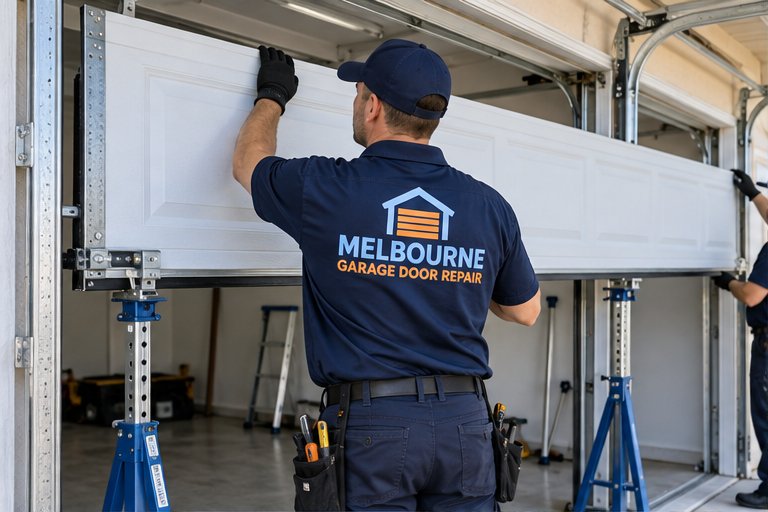
Installation is a structured job with a sequence of steps. The old door is first disconnected from the opener and safely released from the tension of its springs by a trained technician. The panels are then unbolted section by section and lowered, and the old tracks, springs and hardware are removed.
Once the opening is clear, the technician checks the framing, fits any needed trim or repairs, and mounts the new vertical tracks and the horizontal tracks overhead. The new panels are stacked and connected with hinges, starting at the bottom. Rollers go into the tracks as the sections go up. The springs and cables are then fitted and the tension set to match the door's weight.
The opener is connected and adjusted, the safety sensors are set and tested, and the weather seals are fitted around the door. Finally the door is cycled through its full travel, balance is checked, and the technician explains how the door works and how to use the manual release.
Why this is not a do it yourself job
Springs under tension, heavy panels and overhead hardware create a real injury risk. Even experienced handymen are hurt by garage door work every year. We strongly recommend leaving new door installation to trained technicians.
Removing the old door
Taking the old door away is part of the job. Old panels are bulky and sharp edged, and the springs and cables must be handled properly. Many owners prefer not to have a used door sitting in the driveway for weeks.
When we plan your installation, we talk through what happens to the old door and its hardware, including haul-away. Make sure that this is discussed and understood before work begins, so there are no surprises on the day. If you plan to keep any part of the old door, such as windows or decorative hardware, tell us beforehand.
Clearing the garage in advance also helps, because technicians need room to lay out panels, tracks and tools without stepping around stored belongings, and a clear floor reduces the chance of anything being scratched or knocked over. Moving cars, bicycles, shelves and stored items away from the door and the ceiling area lets the technicians work safely and efficiently.
Preparing your garage and home
A little preparation helps the day go smoothly. Park vehicles outside, clear the area near the door and the ceiling above it, and move anything fragile or valuable out of the way. Secure pets and keep children away from the work area throughout.
Think about access. The door will be open for a stretch of time during installation, so plan around deliveries, security and weather. If it is the rainy season, discuss the schedule and how the opening will be protected.
It also helps to check that the opener's power outlet works, that the lighting is adequate, and that the technicians have somewhere to set down panels. Our guide on what happens during a service visit explains how we work, and the same courtesy applies on installation day.
After the new door is in
A new door should operate smoothly, quietly and evenly. After installation, it is worth learning a few basics: how to use the manual release, how the safety sensors work, how to program remotes and keypads, and how to recognize problems early.
Regular care extends a door's life. Light cleaning, lubrication of the right parts and occasional checks go a long way, especially in a humid, salty climate. Our page on maintenance and tune-ups describes what a periodic visit includes, and our monthly checklist shows what an owner can do safely.
If anything seems wrong after installation, such as unusual noises, uneven movement or gaps, tell us. A new door should be checked early so any adjustment can be made while the work is fresh.
Starting the conversation
If you are thinking about a new garage door, get in touch and tell us what you have now, what you would like to change, and anything that is bothering you about the existing door. We serve Melbourne and the wider Space Coast and will come to your property to measure, look at the opening and talk through the options.
We will explain what we find and what the options are, in plain language and without pressure. The decision is yours, and we want it to be an informed one.
Questions and answers
A single damaged section or a worn part on an otherwise sound door can often be repaired. Several damaged panels, an older door, discontinued parts, or damage from an impact usually points toward replacement. We look at the whole system and explain the options so you can weigh repair against replacement.
We measure the opening width and height, the headroom above the door, the side room on each side and the depth of the garage. We also check the framing for rot or bowing. These measurements decide which doors and track layouts will fit, so accuracy matters.
Not always. An insulated door helps with heat, noise and stiffness, which matters most when the garage is attached to living space or used as a workshop. A detached garage used only for parking may not need it. We explain the choices so you can decide what is worth having.
Florida building rules address wind, and some doors are tested and rated for particular wind loads. Requirements depend on your location and can change, so we explain the general features that add strength and suggest confirming local requirements with your building authority or insurer.
Often yes, if it is in good condition and suited to the new door's weight and size. An older or underpowered opener may be better replaced at the same time. We check it and explain the reasoning before you decide.
Removal of the old door and hardware is part of planning the job. We talk through haul-away with you beforehand so you know what to expect. If you want to keep any parts, let us know before work begins.
We strongly advise against it. The springs and cables hold dangerous tension, and the panels are heavy and awkward. Garage door work injures people every year. Trained technicians have the tools and experience to do it safely, and we recommend leaving it to them.