
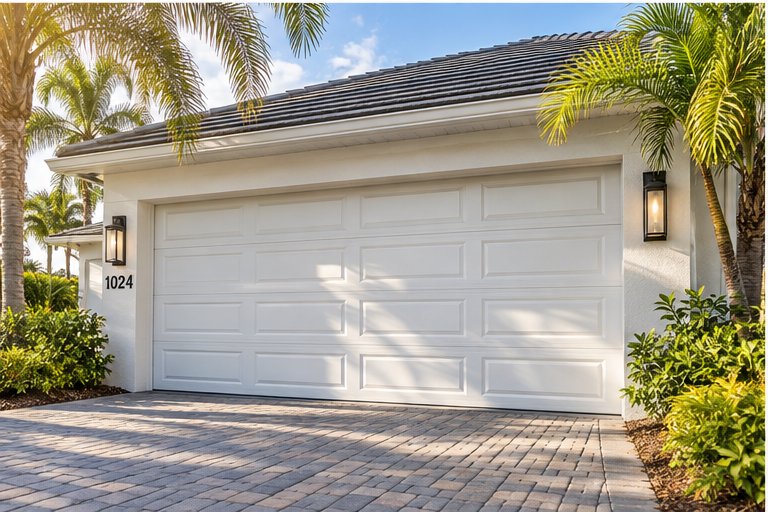
A community with more than one era of building
White City is not a place where every house was built in the same year by the same crew. Walk or drive through it and you notice older homes, newer homes and the occasional property that has been added to over the decades. For a garage door technician, that variety is the first thing that stands out.
In a neighborhood built all at once, the doors tend to match. Here they often do not. One driveway may end at a modern sectional door on an automatic opener, and the next may have a much older door that has been patched, repainted and kept going. Each one needs a different conversation.
We start every visit by asking what the door has been through, because the history of an older door is often written in its parts.
The older door and what it was built from
Older garage doors may be solid wood, thick sections of plywood in a frame, or early steel. They are frequently heavier than doors installed today, and the hardware may be a mix of original parts and later replacements.
Wood swells in humid weather and shrinks when it dries. A wooden door that sticks in the track in August and moves freely in January is behaving normally, but it is also putting extra strain on the springs and opener. Repainting the edges and bottom helps keep moisture out.
If your door is wood, mention it when you call. The weight and the way it is built affect which springs, hinges and fasteners are right, and a repair that suits a light modern panel may not suit a heavy old one.
- Heavy wood sections that have absorbed moisture
- Hinges with elongated holes where screws have worked loose
- Tracks that have bent slightly after years of use
- Springs that were replaced once, with no record of the size
- Panels with soft spots near the bottom edge
Soft spots and rot
Press gently along the bottom edge of a wooden panel with your thumb. If it feels spongy, the wood has absorbed water, and the section may be weaker than it looks. Rot tends to start at the lowest edge, where water sits, and in the corners where joints open up.
A panel with early rot can sometimes be dried, sealed and repainted. Once the wood has crumbled, it holds fasteners poorly and the hinges can pull loose. We tell you honestly which stage your door is at.
Hinges that no longer hold
On older doors the screw holes in the hinges often become oversized as the wood compresses. A hinge that is loose lets the section shift, which pulls the door out of line. Tightening a screw that has no wood left to bite into does not help, and a larger fastener or a different mounting approach may be needed.
When nobody knows what spring is on the door
One of the most common situations in an older home is an unknown spring. The previous owner replaced it, or a handyman did, and nobody wrote down the size. A spring that is too light leaves the door heavy and hard on the opener. One that is too strong can make the door fly up and then slam down.
The spring must match the door's weight and height. That is a calculation and a measurement, not a guess. We weigh the door, check the drum or the pulley arrangement, and choose the right spring for that specific door.
If you want the background, our page on torsion versus extension springs explains the two main systems and how they differ. Remember that neither type is a do-it-yourself job; they hold dangerous tension.
Manual doors and the first opener
Some older garages have no opener at all, or have one so old that spare parts are hard to find. A manual door is perfectly workable as long as it is balanced, but it is easy to take for granted until your hands are full of groceries.
If you are adding an opener for the first time, the door needs to be in good condition first. An opener is not meant to lift a heavy, poorly balanced door; it is meant to move a balanced one. Adding power to a bad door usually ends with a burned-out motor or a broken part.
We check the door, the track and the springs before suggesting an opener, and we explain what you would be getting. Our page on garage door opener replacement covers the usual choices.
Garages that became workshops
Many homes in an area like this have a garage that does double duty. It might hold a woodworking bench, a motorcycle, tools for a small business or a second refrigerator that hums away in a corner. When a garage is used as a workshop, the door is opened and closed often during the day.
Spring life is counted in cycles. A door that opens twenty times a day wears its springs out much sooner than one that opens twice. If your garage is a working space, tell us, and we can talk about higher-cycle spring options when the time comes.
Keep your tools and materials away from the track and sensors. Anything leaning against the door frame can interfere with a safe reversal.
A workshop garage also tends to collect dust and sawdust. Fine dust settles on the sensor lenses and on the opener's circuit board, and it works into rollers and hinges. A soft brush on the sensor lenses and a wipe of the track now and then keep things running more smoothly. Avoid compressed air near the opener housing, and never open the opener casing yourself.
Alignment and the slow slide out of true
Over the years a door slides slightly out of true. The house settles, the slab shifts a little, the jamb moves with moisture, and a track that was perfect in the day begins to bind. You may not see it at first, only hear it: a little rubbing, a rattle at the same point, a squeal near the top.
A track that is out of alignment makes rollers wear faster and can eventually push the door off the track. Watch the door move and look for a place where it seems to hesitate or lean.
If it comes off the track, do not try to force it back. Read our page about a door that is off its track and call us. A door that is partially off its track can drop or twist without warning.
It helps to take a few photos of the door when it is working well, from inside and outside. Months later, a comparison shows whether a gap has opened at the top corner or the door has started to lean. Photos are also useful when you describe a problem to us, because they let us arrive with the right parts and tools.
Rural-feeling lots and long runs
Parts of White City have more space between homes than a dense subdivision does. Longer driveways, open yards and detached buildings are not unusual. That affects the opener, the remote and even the wiring that powers the garage.
A remote that works only when the car is almost at the door often has a weak battery or a poorly placed antenna on the opener. Wiring to a detached garage can be long, and a wall control at the end of a long run may behave oddly if the wire has been damaged by moisture or pests.
We diagnose those items in person. If the issue is the remote, the keypad or the wall button, our page on remote and keypad programming explains what is involved.
Overgrown shrubs and tall grass near the garage can also hide a sensor, a wire or the bottom of the door. Keep a clear path along the sides of the opening and trim plants back from the track and the wall control. It takes a minute and prevents many small faults that are blamed on the opener.
Pests, critters and the damaged seal
In a yard with grass, trees and nearby fields, small creatures look for dry shelter. A worn or torn bottom seal is an open door to them. Mice, lizards, snakes and large insects all find their way in through gaps that people overlook.
A new seal does not cure every problem, but it removes the easiest way in. It also helps keep out blown rain and leaf litter. The seal is held in a channel at the base of the door and slides out when it has aged.
Check yours by closing the door and looking at the base from outside. If you see daylight, or if the rubber is cracked, flattened or hanging, it is time for a replacement.
Heat, rain and ordinary Florida wear
Summer here means heat, humidity and afternoon thunderstorms. The sun heats a dark door and the air inside the garage, and the daily swing in temperature makes metal expand and contract. Fasteners slowly loosen and lubricants dry out.
Rain finds weak spots. Water running down the face of the door ends up on the bottom panel and the seal. If the door has been repainted poorly or the paint is peeling, moisture reaches bare metal and rust begins.
Spend a few minutes each month tightening loose hardware that is safe to touch, wiping the track and looking at the door's bottom edge. The monthly garage door checklist lists the safe checks and tells you where to stop.
Storms, wind and securing the opening
Florida's storm season is a fact of life across St. Lucie County. A garage door is a large opening in the front of the house, and when wind pushes against it, the door, the track and the fasteners all share the load.
Old doors are less likely to be built to current wind-load standards, and some are simply too light for severe weather. If you are thinking about a replacement door, ask about wind rating and what the label says. A rated door comes with specific hardware and installation requirements, so the whole assembly matters, not just the panels.
Our guide to garage door hurricane preparation sets out the sensible steps to take before and after a storm.
Power loss and getting the car out
When the power goes out, an opener cannot lift the door. The red cord hanging from the trolley disconnects the door from the opener so you can lift it by hand. If the door moves smoothly with the cord pulled, the springs are doing their job.
If the door is very heavy, stuck or uneven, stop. A broken spring or cable can make it dangerous to lift. In that case, leave it closed and contact us.
Once power returns, re-engage the opener carefully, following the instructions for your model, and run the door through a full cycle.
Security on a door that has aged
An older garage door may not have a proper lock, or the lock may be loose and rusted. Some owners rely on the opener alone, but the opener is not a deadbolt. A manual door should have a working lock, and an automatic door benefits from a tight, well-aligned fit.
The emergency release cord is another point to think about. On some openers, a thin tool pushed through a gap at the top of the door can catch the cord and release the door. Tidying up the gap, or fitting a protective shield, reduces the risk.
Our page on lock and security hardware describes the options.
A door that has been forced or has suffered a break-in attempt needs a careful look. Bent track, damaged panels or a bent lock bar will affect how the door seals and moves, and the damage may be hidden until the door is next run.
Small businesses and shop doors
White City has small businesses, work yards and storage buildings, and those places often have overhead doors in constant use. A commercial door is bigger, heavier and more likely to be opened by several people in a single day.
The same principles hold: balanced door, healthy springs, clean tracks, working safety devices. The difference is the scale. A neglected door in a shop is a risk to staff, stock and equipment.
If you manage a business, we are glad to look at your doors and explain what we find. Many problems are visible long before they cause a failure.
What a visit to a White City property involves
We arrive, look at the door, and talk with you about what you have noticed. We then inspect the springs, cables, rollers, hinges, track, balance, opener and safety reversal. We take our time with older doors, because the parts can be a mixture of ages.
After the inspection we tell you what we found. If something needs replacing, we say which part and why. If something can wait, we say so. If a part is unsafe to use, we explain what to avoid until it is fixed.
Nothing is done before you understand the options. For more on how a visit runs, see our page on what happens during a service visit.
Questions worth asking before any work starts
Whether you call us or anyone else, a few questions are worth asking before a technician starts work on your garage door. Ask what was found, what exactly needs to be replaced, and why. Ask whether the springs are being matched to the door's actual weight. Ask what happens if you decide to wait.
A reliable technician will answer these in plain terms and will not push you towards replacing something that works. You should come away knowing which parts are old, which are new and what to watch for in future.
Our page of questions to ask a garage door technician collects more of these, and you are welcome to use it with anyone you hire.
Repair or replace an older door
Many owners of older doors face the same question: keep fixing it or put in something new. The answer depends on the condition of the panels, the cost of repeated repairs and what you want from the door in the years ahead.
A sound door with a worn spring or a few rollers is usually worth repairing. A door with rotted wood, badly bent sections or a weak frame is a candidate for replacement. A new door also changes how the garage looks and performs.
We lay out the options and let you decide. Our page repair or replace your garage door explains the factors in more detail.
There is no shame in a door that has served for decades. Many owners choose to keep the character of an older wooden door by renewing its parts, while others prefer an insulated steel door for easier upkeep. Both are reasonable choices. What matters is that the finished door is balanced, safe, and suits the way you use the garage.
Questions and answers
Yes. We inspect older doors with extra care, because the weight, the build and the hardware can all differ from a modern door. We explain what we find, say whether repair makes sense or replacement is the better route, and describe the options so that you can decide with the facts in front of you. Tell us what you have noticed when you get in touch.
Often yes, as long as the door is in good condition and properly balanced. An opener is meant to move a balanced door, not to lift a heavy or stuck one. We check the door, springs and track first, then explain which opener types suit the garage and what each would involve. Tell us what you have noticed when you get in touch.
The right spring depends on the door's weight, height and the type of spring system. It is a measurement and a calculation, not a guess. If a previous owner fitted a spring without records, we weigh and measure the door to select the correct one. Please do not adjust or replace springs yourself. Tell us what you have noticed when you get in touch.
Wood absorbs moisture in humid weather and swells slightly, which can cause rubbing in the track and extra strain on the opener. Sealing the edges and bottom with paint helps. If the door is stuck, binding or sagging, it is worth having it looked at so the springs and opener are not strained. Tell us what you have noticed when you get in touch.
Yes. Detached garages and workshops often have longer wiring runs, different power arrangements and heavier use. We check the door and opener, look at the controls and remote reception, and explain what is needed. Let us know in advance if the building is separate from the house so we can plan for it. Tell us what you have noticed when you get in touch.
Start with the bottom seal, since a torn or flattened seal leaves a gap along the floor. Look at the corners of the door and any worn weather stripping at the sides. We can replace seals and explain where other gaps might be. We do not provide pest control, only the door-related fixes. Tell us what you have noticed when you get in touch.
Only if the door moves smoothly after you pull the red release cord. If it feels very heavy, jams or sits crooked, stop, because a spring or cable may be damaged. Lifting such a door can be dangerous. Leave it closed and contact us so that we can look at it safely. Tell us what you have noticed when you get in touch.