
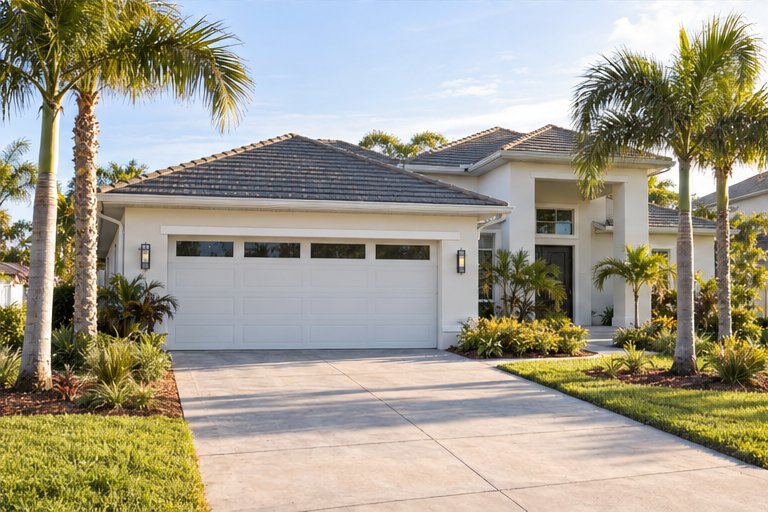
The door buyers meet first
On many streets across Melbourne and the Space Coast, the garage door fills a large share of what a buyer sees from the curb. It is wide, it faces the street, and it sits right beside the entry. A door that is faded, dented or crooked can pull attention away from everything you have done to the house.
Buyers also touch it. An agent will usually press the wall button, or a visitor will hear the door while walking the garage. If it shudders, groans or stops halfway, that moment is remembered long after the tour ends.
None of this means you must spend a lot. It means the door deserves the same attention you would give a stained ceiling or a sticky lock: look at it honestly, fix what is small, and decide what is big.
Walk the door the way a buyer would
Before you decide anything, go through the garage the way a stranger would. Stand across the street and look at the door as a whole. Then come inside, run the door several times from the wall control, and listen.
Take notes on what you see and hear. It helps to ask a friend or neighbor to do the same, because owners get used to quirks they no longer notice. A door that has needed a second press for months can feel normal to you and alarming to a buyer.
- Does the door open and close in one smooth motion?
- Do both sides look level, with even gaps at the edges?
- Is the paint or finish clean and consistent across all panels?
- Do the remotes, keypad and wall button all work?
- Does the door reverse when something is in its path?
- Is the opener light working, and are the sensor lights steady?
Three questions that guide the decision
When a seller asks us whether to repair or replace, we start with three questions. Is the door safe? Does it work reliably? Does it look acceptable for the home? Most answers fall out of those.
If the answer to the first is no, the door needs attention before anyone else walks under it, and that is true whether or not you are selling. If the answers to the second and third are yes, you may not need to do anything beyond cleaning. The cases in between are where planning helps.
Safe
Springs, cables, brackets and safety reversal all matter. A technician can check them and tell you plainly what condition they are in.
Reliable
A door that works nearly every time is different from one that works every time. Buyers and their inspectors will run it more than once.
Presentable
Appearance is a judgment call. Clean, straight panels with a consistent finish read as well kept. Dents, rust streaks and peeling paint read as neglect.
Small repairs that change the impression
Many of the things that make a door feel tired are small. Worn rollers make it noisy. Dry hinges squeal. A hardened bottom seal lets daylight show along the floor. A remote with a dead battery makes the opener seem broken when it is not.
Addressing these before listing is usually modest in effort compared with how much they improve the way the door runs and sounds. Our garage door maintenance and tune-up service looks at the whole system, and our guide to types of garage door rollers explains why rollers change the sound of a door so much.
- Replace worn or noisy rollers.
- Lubricate hinges, rollers and the opener rail with a product made for garage doors.
- Replace a cracked or hardened bottom seal.
- Refresh remote and keypad batteries and make sure all remotes work.
- Wipe the sensor lenses and tighten loose hardware where it is safe to do so.
Things you should leave to a technician
Some items look like simple fixes, and they are not. Springs, cables and the brackets at the bottom corners carry dangerous tension, and they are never a job for an owner preparing to sell. A slip can cause serious injury.
If you notice a gap in a spring, a frayed cable, a door that drops when released, or a door that sits off the track, stop using it and have a technician look. If someone is hurt, call 911. Our guide to garage door cable safety explains why those parts are treated so carefully.
Dents, cracks and damaged panels
Panel damage is the most visible problem. A shallow dent in a steel panel may be acceptable. A deep crease, a cracked panel or a section pushed in from an impact looks worse and can weaken the door's structure.
Sometimes a single panel can be replaced, if a matching one can be found. Sometimes the sections have aged and faded enough that a new panel would stand out. We explain how that decision usually goes in our page on garage door panel repair.
When one panel can be swapped
If the door model is still available and the other panels are in good shape, replacing a section can restore the look and the strength. Color match is the main question.
When the whole door is the better path
If several panels are damaged, or the door is old and parts are hard to find, a complete door can make more sense than chasing individual sections.
Is a new door worth it before you list?
There is no formula, and we will not promise how a new door affects a sale. What we can say is that a door in poor condition is hard to hide, and a door in good condition rarely draws any comment at all.
A new door makes sense when the old one is beyond sensible repair, when parts are no longer available, or when it simply does not suit the house any longer. It makes less sense when the door is sound and the issues are minor. Your real estate agent can tell you how buyers in your neighborhood tend to react, and a technician can tell you the condition of what you have.
Our guide on when to repair and when to replace walks through age, damage and parts in more detail.
Choosing a replacement with buyers in mind
If you do replace, think like a buyer, not like someone who will live with the door for twenty years. A clean, classic style in a neutral color tends to suit more tastes than something bold. It should look right with the roof, the trim and the front door.
Consider the material for our climate. Salt air, sun and humidity affect finishes and hardware differently. See garage door materials compared for the general trade-offs, and garage door styles and curb appeal for how style choices change the look of a house.
- Match the style to the age and architecture of the house.
- Choose a color that sits well with the trim and the front door.
- Think about wind-rated options if your area requires them.
- Check any association rules before ordering.
- Ask about opener compatibility so the new door runs smoothly.
Associations, permits and rules to check first
If your home is in an association, there may be rules about door style, color and the process for approving changes. Approval can take time, so check early, before you pick a door or schedule an installation. Our page on HOA rules and garage doors describes the general picture.
In Florida, some replacements also involve building rules, especially around wind loads. We are not able to give legal advice or tell you what applies to your address, so confirm with your association, your city or county building department, and your agent.
Preparing the garage for showings
A garage packed to the ceiling hides the door and makes it hard to demonstrate. Clear the area around the door tracks and the wall control so agents can run it freely. Make sure the floor beneath the door is clear and dry.
Replace any burned-out opener light bulb so the garage looks bright. Keep the manual release cord tucked and unobstructed, and make sure nothing hangs from the door or its hardware. Leave the remotes together in a visible place, labeled for the agent.
- Clear storage away from the door path and the tracks.
- Sweep the floor and wipe the door's lower edge.
- Leave a working remote and the keypad code for showings.
- Replace a dim or burned-out opener bulb.
- Keep pets and children away from the door during showings.
When the buyer's inspection mentions the door
Sometimes an inspector's report mentions the garage door, perhaps a sensor that did not respond or a door that looked out of balance. This is common, and it is not a disaster. It is a list item to be dealt with.
A technician can look at the door, explain what is wrong, and describe the options. With that in hand you can respond to the buyer's request with clear information rather than guesses. We do not provide legal or financial advice, so questions about how to handle a request in a contract should go to your agent or attorney.
Getting a clear explanation
A written note or a clear conversation about what was found helps both sides. Ask the technician to explain what the issue is, why it matters, and what the choices are.
Keeping paperwork
Keep receipts for any work done. Passing them on to the buyer shows the door has been looked after.
Opener and remote details buyers care about
The opener is part of the sale, and buyers care about how it works day to day. Make sure every remote is programmed and labeled. If there is a keypad, confirm that it works and that you can share the code for showings and then reset it for the new owners.
A battery backup unit is a bonus in a state with hurricane season. If you have one, test it and note the date of its last battery. Our page on battery backup for garage door openers explains what the unit does. If the opener is very old or has stopped responding reliably, compare it with the options on our opener replacement page.
Handing the garage over at closing
At the end of the sale, hand over everything that belongs with the door. That means all remotes, the keypad instructions, any manuals and the receipts for work you have done. Buyers appreciate clear notes about quirks, such as which button operates which door.
Remove your own codes and let the buyer know the keypad should be reset. If a remote has been lost, mention it. The new owner can then begin using the garage without surprises, and you leave on a good note.
A simple timeline for sellers
Start early. Even small repairs are easier to schedule well before photos and open houses. A rough order of work helps keep things calm.
First, look the door over and note what you see. Second, ask a technician to look at anything that concerns you. Third, complete repairs or decide on replacement. Fourth, clean and clear the garage. Fifth, test everything once more before photos.
When you are ready to have someone look at the door, our contact page is the place to start.
Photos, listing day and the first online impression
Most buyers meet your home online first. In the main exterior photo the garage door is often right in the frame, so its condition is part of the listing whether you intended it or not. Dull, streaked or dented panels show up clearly on a phone screen.
Wash the door before the photographer arrives. A soft brush, mild soap and clean water remove salt film, pollen and dirt that build up in our climate. Rinse well, dry the edges, and avoid harsh solvents that can mar a painted finish. Close the door for exterior shots, and park vehicles off the driveway so the door and the house are the subject.
- Wash the panels and the trim around the door.
- Check that the bottom seal sits flat and clean.
- Close the door fully for exterior photos.
- Remove cars, bins and clutter from the apron in front of the door.
- If interior photos include the garage, open the door once and check that it moves smoothly.
Vacant homes, seasonal owners and absentee sellers
Many sellers on the Space Coast do not live in the home year round. Some are seasonal residents who have returned north, and some own a house that has stood empty since a move. A garage door that sits unused for months can develop dry seals, stiff rollers, and a drained remote battery, and a dead opener circuit can surprise the first showing.
If you are away, ask your agent to run the door during a visit and report back. If anything seems off, schedule a technician before the listing goes live rather than after a buyer has tripped over the problem. Power should stay on to the opener, since a door that cannot be run by motor is harder to show.
Vacant homes also raise security questions. Reset the keypad code, collect spare remotes, and make sure the only people with access are the ones you intend. Our garage door security tips cover the general steps that apply to any home.
Before you leave town, also test the manual release with the door closed and the opener powered down, so you know the cord is reachable and not tangled. Tell your agent where it is and what it does, and ask them not to pull it with the door open. If a storm threatens while the house is listed, review our note on hurricane readiness for the door so a showing is never made through a door that has not been checked.
It is also worth asking the agent to keep a short log of every time the door is run, noting any hesitation, noise or failure to respond. A pattern across several visits is far more useful to a technician than a single remark, and it lets you fix an issue before the next buyer meets it.
Questions and answers
Rules and expectations vary, and we cannot give legal advice, so ask your agent about your situation. In practical terms, a door that runs safely and looks reasonable rarely needs work. A door that is unsafe, noisy or visibly damaged is worth addressing, because buyers and inspectors notice it and may ask about it.
It depends on the condition of your current door and the neighborhood. If the door is damaged beyond sensible repair, or parts are no longer available, replacement can make sense. If it is sound and only needs maintenance, repairs are often enough. Your agent can speak to buyer expectations, and a technician can assess the door.
Replacing worn rollers, lubricating moving parts, renewing a hardened bottom seal and refreshing remote batteries often make the door quieter and smoother. They are common maintenance items rather than major projects. A technician can look at the whole system and tell you which of them would matter for your door.
No. Springs and cables hold dangerous tension, and injuries from owner attempts are serious. If a spring has broken or a cable looks damaged, stop using the door and have a technician handle it. You can still show the house; just tell your agent the door should not be run until it has been repaired.
Fresh paint can help a faded door look tidier, provided the surface is sound and the finish suits the material. Dents, rust and rotted wood need repair first, since paint will not hide them for long. Check any association color rules before you start, as some communities set limits.
Ask what exactly was noted, then have a technician look at the door and explain the issue and the options. With a clear explanation you can respond with facts. For questions about contract terms or how to handle a request, speak with your agent or attorney, since we do not give legal advice.
Yes, leave everything that belongs with the door and opener: all remotes, any manuals, and receipts for work you had done. Mention any quirks and let the buyer know the keypad should be reset to a new code. It is a small courtesy that makes the handover smooth.