
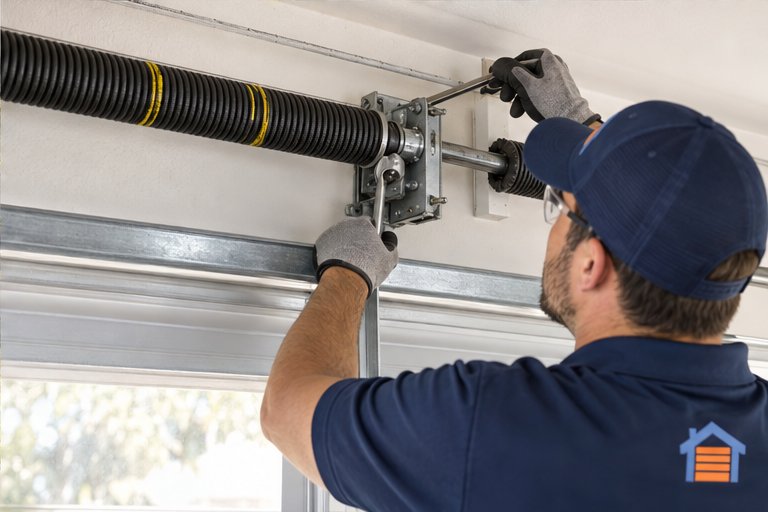
What a safety inspection is for
Most garage door problems arrive without much warning. A spring that has been fatiguing for years lets go on an ordinary morning. A cable frays a strand at a time until one day it parts. A pair of sensors drifts out of line and stops doing their job. A safety inspection exists to catch these things before they become events.
It is also a way of knowing where you stand. Many owners have no idea whether their door is in good order or approaching trouble, because it still opens when they press the button. A thorough look turns that unknown into a clear picture.
We carry out inspections for homes and businesses around Melbourne and the Space Coast. The aim is not to find reasons to replace things. It is to tell you honestly what we see, so you can decide what to do and when.
Why the hazards are real
A garage door is very heavy. It is held up by springs that store a great deal of energy and by cables that carry the load. If either fails, the door can drop or move unpredictably, and people, pets and vehicles can be hurt.
The opener is another source of risk. It pushes a heavy door with real force, and it relies on sensors and a reversal to stop when something is in the way. When those features stop working, a closing door can trap someone without any warning.
None of this is a reason for fear. Garage doors are safe when they are in good order and used sensibly. It is a reason not to ignore them, and never to attempt repairs on the springs and cables yourself. Those jobs belong to a trained technician.
What we look at: the whole door in order
We work through the door in a set sequence so that nothing is missed. We begin with the door at rest, then watch it move, and then examine the parts that carry its weight. We finish with the opener and its safety functions.
The list below shows the main areas. Each is looked at closely, and each has its own section in this page. The inspection is visual and functional, and we use hands-on checks only where they can be done safely.
- The door's overall condition, including panels, edges and finish
- Hinges and their fasteners at every panel joint
- Rollers, their stems and how they sit in the tracks
- The tracks and their brackets, including alignment and any dents
- Springs, shaft, bearings and drums
- Lift cables, their ends and the bottom brackets
- Balance of the door
- The opener, its mounting, drive and settings
- Safety sensors, auto-reverse and force response
- The manual release, wall control, remotes and keypad
Springs, shaft and drums
The spring system does most of the lifting. On a torsion door, one or two springs sit on a shaft above the opening, and the shaft turns drums that wind and unwind the cables. On an extension door, long springs run along the sides of the tracks.
We look at the spring for signs of wear: gaps, stretching, rust, winding that looks irregular, or a spring that is clearly a different size from its neighbor. We look at the shaft for bending, at the bearings for rust and wobble, and at the drums for cracks or damage.
We do not ask you to touch any of this, and we do not touch it casually. Springs hold dangerous tension. Our guide on how long garage door springs last explains why they wear out and why replacement is a job for a technician.
Cables and bottom brackets
Lift cables take the door's weight, and they run through a part of the door, the bottom corners, that sees plenty of moisture and wear. We check each cable along its length and at both ends for broken strands, rust, kinking and fraying.
We examine the bottom brackets where the cables attach, because those fittings carry heavy load and can corrode. A cable that looks slightly worn from a distance may look very different close up.
A frayed cable can fail without warning, and when it does the door can drop on one side. Our guide to garage door cable safety explains the risks. If you see a frayed cable at home, stop using the door and do not touch the cable or the bracket.
Rollers, hinges and tracks
Rollers guide the door in its tracks, and hinges join the panels. These are the parts that wear from sheer use, since they move every time the door runs. Worn rollers wobble, flat-spot or crack, and worn hinges loosen, bend or crack at the joints.
We check that each roller turns freely and seats properly in the track, that the hinges are tight and unbroken, and that the tracks are straight, clean and firmly mounted. A bent or loose track can let the door drift, bind or jump out of line.
Worn rollers and hinges are among the most common findings, and they are often straightforward to put right compared with the damage they cause if left. Our pages on roller replacement and on hinge and track service describe that work.
Testing the balance of the door
A properly balanced door is easy to move by hand when it is disconnected from the opener, and it stays roughly where you leave it. A door that is out of balance tends to fall or climb, and that puts extra strain on the opener, the cables and the springs.
We test balance as part of the inspection. The test involves the manual release and a door that may be under spring tension, so it is carried out by a technician with the right care. It is not a test for homeowners to attempt.
What the test tells us is how well the springs are doing their job. A door that is out of balance may need the spring system adjusted or replaced, and that is work for a trained person. Our page on balance and adjustment explains the idea.
The opener and its safety features
We check how the opener is mounted, how the drive is wearing and how the door travels between its limits. We watch the start, the stop and the sounds of the opener, and we look at the wiring, the wall control and the light.
Then we test the safety functions. First are the safety sensors, the pair of small lenses near the floor. We confirm that they are mounted, aligned, clean and working, by passing an object through the beam while the door closes. The door should stop and reverse.
Second is the force response. The door should reverse if it meets resistance as it closes. Third is the manual release, which must work and be easy to reach from inside. Our guide on garage door sensor basics explains the sensors in more detail.
Auto-reverse in plain words
Auto-reverse means that a closing door that touches something will stop and go back up. It protects people, pets and objects. If the door ignores an obstacle, or presses on it before reversing, that is a problem to fix before the door is used again.
Remotes, keypads and wall controls
We try each remote, the keypad and the wall control. A control that works only at close range, or that sometimes fails, suggests a weak battery or a signal problem. We also look at whether any lock or vacation mode has been left on.
What you can do before a technician arrives
You can help by doing a few simple, safe things. They give us useful information and they might spot an issue early. None of them involves the springs, cables or brackets.
Keep your hands, hair and clothing clear of the door and tracks while it moves, and stand to the side.
- Watch and listen as the door runs, and note anything that has changed
- Wipe the sensor lenses with a soft dry cloth
- Clear stored items away from the door, tracks and opener
- Write down any odd sounds, delays or times the door reversed
- Take photographs of anything that looks worn, bent or frayed from a safe distance
- Replace the batteries in remotes and keypads if they seem weak
How findings are explained
After the inspection, we sit down, or stand in the garage, and go through what we found. We talk in plain terms, point to the parts concerned and say what the condition means in practice.
We separate findings into groups. Some are fine and need nothing. Some are worn but still serviceable, and we say what to watch. Some are safety concerns that should be addressed before the door is used again. The idea is for you to make an informed decision and not to feel pressed.
You can ask us anything. If a part is worn, we explain why and what the options are. If it is fine, we say so. Our guide on what happens during a service visit describes the general approach.
Weather seals, panels and the rest of the door
A safety inspection is mostly about moving parts, but the door's body matters too. We look at the panels for cracks, bulges, rust and impact damage, since a weakened panel can flex or separate where the hinges attach.
We check the weather seals along the bottom and sides, and the threshold, because gaps let in water, insects and humid air. A seal that has flattened or split does not threaten anyone's safety, but it affects the garage and the door's finish.
If the door has windows, we look at their frames and glazing. A cracked pane is a hazard when the door moves. Our page on garage door window and glass panel repair explains how those are handled.
Inspections for rentals, businesses and older doors
Some doors deserve more careful attention than others. A door in a rental may have been used by several households and maintained by none. A door in a business cycles many times a day. An older door has simply done more work.
For rental owners, an inspection between tenancies gives a documented picture of the door's condition. For business owners, regular inspections help avoid a failure during working hours. For owners of older doors, they show how much life remains in the springs, cables and opener.
We adapt the inspection to the door in front of us. A heavy commercial door has different hardware and duty from a light residential one, and we explain what each finding means for your situation.
Doors that have not been serviced in years
If you cannot remember the last time anyone looked at the door, an inspection is a good place to start. We note what is worn, what is sound and what to watch, and suggest a sensible order for any work, so you can plan instead of react.
Doors after an impact or storm
A bump from a vehicle or a hard storm can leave damage that is not obvious, such as a bent track, a displaced roller or a stretched cable. If the door seems different afterward, stop using it and have it inspected before anyone relies on it.
Things that can make a door unsafe to use
Some findings mean a door should not be used until it has been put right. We tell you clearly when this applies. The table lists the most common, with what each suggests and what we would advise.
If any of these appears at home between inspections, stop using the door, keep people and vehicles clear and get in touch. If anyone is hurt, call 911.
| Finding | What it suggests | What we advise |
|---|---|---|
| Frayed or broken cable | A cable may fail and drop the door on one side | Stop using the door and do not touch the cable |
| Gap or break in a spring | The spring has failed or is close to it | Stop using the door and arrange professional repair |
| Door off its track | Tracks, rollers or cables have been disturbed | Do not operate it; keep people clear |
| Sensors ignore an obstacle | Safety reversal is not protecting people | Do not rely on the door until corrected |
| Door falls when released | Balance or spring problem | Do not release it by hand; arrange an inspection |
| Cracked or loose hinge | A panel joint may separate | Limit use and arrange repair |
| Opener strains or hums only | Door may be too heavy or opener faulty | Switch the opener off and describe the symptoms |
Climate and the Space Coast: what shortens a door's life
Melbourne's warm, humid air and salt carried from the coast are hard on garage door hardware. Rust on springs, cables, hinges and tracks develops sooner than it would in a drier place, and seals dry out in the sun.
Storms add their own stress. Strong wind can twist a door in its tracks, flying debris can dent panels, and power outages leave households using the manual release more often than usual. All of these are good reasons for a periodic inspection.
Ahead of the storm season, we find that many owners want the door looked at. Our hurricane preparation guide describes what else is worth thinking about.
When to schedule an inspection
A yearly inspection is a sensible rhythm for most homes. Doors in heavy use, near the water or in a business may benefit from more frequent attention. It is also worth an inspection when you move into a home, before storm season, after a storm or vehicle bump, and whenever something seems different.
If you rent out a property, inspecting the door between tenants prevents surprises. If you manage a business, a regular check helps avoid a door failing in the middle of the working day.
An inspection does not replace routine care. Our monthly garage door checklist describes the simple checks you can do yourself between visits.
Inspection, maintenance and repair: how they differ
An inspection looks and tests. It tells you what condition the door is in and what it needs. A maintenance visit goes further and cleans, lubricates and adjusts what is appropriate. A repair replaces or fixes a part that has failed or worn out.
Often the three flow into each other. An inspection may show a worn roller, which is then replaced, and the visit may include lubrication of the right parts. We always tell you what we find first and what we propose, so you decide what happens.
If you would like us to look your garage door over, you are welcome to contact us. We will explain what we find and what the options are.
Questions and answers
We look at the door's panels, hinges, rollers and tracks, then the springs, shaft, bearings, drums and cables. We test the balance, check the opener and its mounting, and test the safety sensors, auto-reverse and manual release. We then explain what we found and what the options are.
You can do simple checks: watching and listening, cleaning sensor lenses, testing remotes and looking for obvious wear from a safe distance. You should not touch the springs, cables, drums or bottom brackets, because they hold dangerous tension. Those parts need a trained technician.
Once a year is a sensible baseline for most homes. Doors used heavily, near the water or in a business may need more frequent attention. Inspect after a storm or an impact, when you move into a home, and whenever the door sounds or behaves differently.
We tell you plainly and say whether the door should be left alone until repaired. We explain the options and you decide. Problems such as frayed cables, failed springs or a door off its track are safety matters, and we advise against using the door until they are dealt with.
It means that a closing door stops and goes back up when it meets an obstacle or when the sensor beam is broken. It protects people, pets and objects. We test it during every inspection, because an opener that does not reverse properly is a hazard.
Yes. Commercial doors are larger and cycle more often, so wear shows sooner. We apply the same sequence, looking at springs, cables, rollers, tracks, the operator and the safety devices, and explain the findings in plain terms so you can plan repairs around your working day.
It helps, because we can explain what we find and answer questions. If you cannot be there, someone you trust can attend, or we can discuss the findings afterward. Please make sure the garage is accessible and that vehicles and stored items are moved away from the door.