
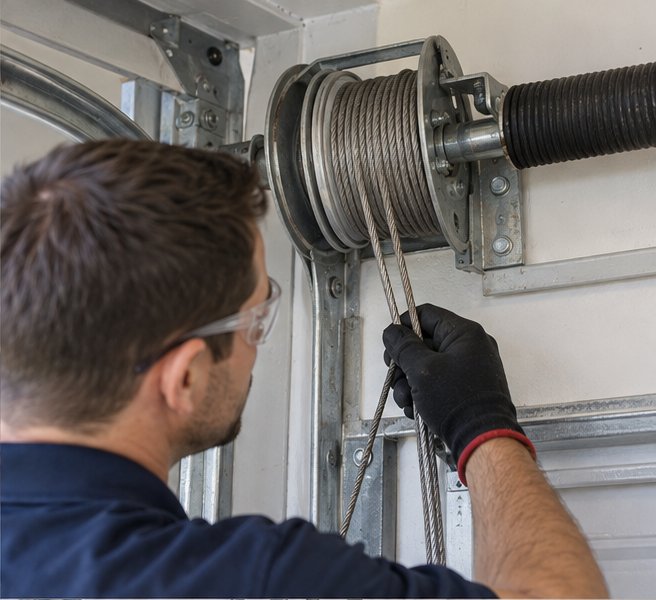
What the drums, bearings and shaft actually do
On a door with torsion springs, a steel shaft runs across the top of the opening, just above the header. The springs sit on that shaft. At each end of the shaft, a cable drum holds the lift cable that runs down to the bottom corner of the door. When the door travels, the shaft turns and the drums wind or unwind the cables.
Bearings let that shaft rotate smoothly. A center bearing plate holds the middle of the shaft to the wall, and an end bearing plate at each side supports the shaft where the drums sit. Every one of these parts carries the full weight of the door through the lifting cycle, so they wear in a predictable way over thousands of openings.
Because the whole system works together, a worn bearing or a loose drum rarely announces itself with a single dramatic failure. It usually shows up as a change in sound, a slightly crooked door or a cable that no longer sits where it used to.
Why this hardware matters more than it looks
Homeowners tend to focus on the springs, which are the parts that fail loudly. The drums and bearings are the parts that quietly decide whether the springs and cables can do their jobs. A drum that has shifted on the shaft changes how the cable winds. A dry bearing adds friction that the opener or the spring has to overcome every cycle.
Left alone, small problems here spread. A cable that winds unevenly frays sooner. A bearing that grinds can score the shaft. A door that lifts one side before the other puts twisting stress on the panels and the track. Finding the cause early is usually simpler than repairing the damage that follows.
That is why we look at the shaft assembly as a whole during a visit, even when the original complaint was only a noise.
Signs that a drum, bearing or shaft needs attention
You do not need to know the parts by name to notice the symptoms. Most people describe them in everyday terms, and those descriptions are enough for us to know where to start looking.
- A grinding, squealing or rumbling sound that seems to come from above the door rather than from the track.
- A door that rises or lowers with one side slightly ahead of the other.
- A lift cable that looks slack, kinked or sitting outside its groove on the drum.
- A visible wobble or shimmy in the shaft when the door moves.
- A center bearing plate that appears bent, cracked or pulled away from the wall.
- Rust streaks or flaking around the bearing plates, common in coastal air.
- A door that feels heavier or lighter than it used to on the manual release test.
Sound is often the first clue
A dry bearing tends to produce a steady rotating noise that follows the speed of the door. A loose drum can click or knock once per revolution. A shaft that is slightly out of line may groan near the middle of its travel. We listen to the door run before we touch anything, because the character of the sound narrows the search.
Watch for a crooked door
If one corner of the door lags behind the other, look at the gap between the door and the jamb. A visible difference between the left and right sides can point to a drum that has slipped or a cable that has stretched. Do not try to correct it yourself. Stop using the door and call us so the system can be checked safely.
How a bearing wears out
Most residential garage doors use small steel or nylon bearings that sit in a stamped plate. Over time the grease inside dries out, dust and humidity work their way in, and the rolling surfaces develop tiny flat spots or rust. The bearing still turns, but it turns roughly.
Florida conditions speed this up. Warm, humid air and salt in the atmosphere near the coast encourage corrosion on bare steel, and a garage that is not sealed from the weather exposes the shaft hardware to that moisture every day. The result is a bearing that looks fine from the floor and sounds tired when the door runs.
Plastic or nylon bearings have their own failure pattern. They can crack with age and heat, and a cracked race lets the shaft sit off center. We check the material and condition of each bearing instead of assuming that a lubricated bearing is a healthy one.
Cable drums: what goes wrong
A cable drum has a spiral groove that guides the cable as it winds. The cable end is anchored in the drum, and the drum is fixed to the shaft so they turn together. Two things commonly go wrong: the drum loosens on the shaft, or the groove and cable wear against each other.
When a drum shifts, the cable can wind onto the wrong part of the surface, ride up the side or leave the groove altogether. That is one of the ways a cable ends up off the drum. If you want to understand that failure in detail, read our page on a cable that snapped or came off the drum.
Drums also wear where the cable repeatedly presses into the groove. A worn groove may not guide the cable cleanly, which can lead to fraying. Because cables and drums wear as a pair, we usually look at both before recommending a repair, and you can read more about the cable side on our cable repair and replacement page.
What a technician checks during a shaft assembly inspection
We start with a visual look from the floor, then move closer with proper equipment. The goal is to understand the condition of the whole assembly before recommending work.
Shaft condition
We look for bends, rust pitting and scoring where the shaft passes through the bearings. A shaft that has taken a bend, for example after a vehicle bumped the door, will not turn evenly and cannot be made right by replacing a bearing alone.
Bearing plates and mounting
We check that the center plate and end plates are secure, square to the wall and not cracked. Plates that have pulled loose from the header or jamb are a structural concern, and the wood behind them matters too. Soft or damaged framing needs to be addressed before hardware goes back on it.
Drums and cables
We examine the grooves, the cable seating and the set screws or fasteners that secure each drum. We also compare the left and right sides so we can tell whether the door is lifting evenly.
Springs and balance
Since the springs sit on the same shaft, we also check their condition and how the door balances. Adjusting or replacing a spring involves dangerous stored energy, so this work is always done by a trained technician with the right tools and never as a homeowner project.
Repair or replace: how we think about it
Some bearing noise is the result of dry hardware and responds to proper lubrication and tightening. Other noise means the bearing has worn past the point where lubrication helps. We do not replace parts just because they are old, and we do not leave failing parts in place just because the door still moves.
When replacement makes sense, the usual options are a single bearing or plate, a pair of drums, or a larger set of parts that wear together. Because the drums, cables and springs interact, there are times when replacing one component while leaving a tired neighbor in place only brings the next visit closer. We explain that trade-off in plain terms so you can decide with the full picture.
- Light wear and dry hardware may call for cleaning and the right lubricant.
- A cracked or rough bearing generally calls for replacement of that bearing and often its plate.
- A loose or worn drum calls for replacement of the drum and a check of the matching cable.
- A bent or heavily scored shaft calls for shaft replacement, which is a larger job.
- Damaged framing around a plate calls for repair of the mounting surface first.
Why we do not recommend doing this work yourself
The shaft assembly is directly tied to the torsion springs, and the springs hold a great deal of energy. Loosening a drum set screw or removing a bearing plate without the springs properly managed can cause the shaft to turn suddenly or the door to move unexpectedly. People are seriously hurt this way every year.
Please do not adjust, loosen or remove springs, cables, drums or brackets. What you can safely do is observe: note the sound, note which side lags, and look at the door from the floor. Share those notes with us. If a cable has come off or the door is hanging crooked, keep people and vehicles clear of the door and call us.
If anyone is injured, call 911 first.
Torsion systems versus extension systems
Not every door has a drum and a shaft. Doors with extension springs run springs along the horizontal tracks, and the cables travel over pulleys rather than around drums. If you are not sure which system you have, look above the door. A long steel tube with a spring or two on it means torsion. Springs running alongside the side tracks means extension.
Our guide on torsion springs and extension springs explains how to tell the difference, and our comparison page sets the two designs side by side. Drum and bearing service applies to torsion doors only, though a door with extension springs has its own wear items, including pulleys and safety cables, that we check during any visit.
| Feature | Torsion system | Extension system |
|---|---|---|
| Cable guide | Grooved drums on the shaft | Pulleys at the track and door |
| Shaft above the door | Yes, with bearings | No |
| Bearing plates | Center and end plates | Not applicable |
| Main wear points | Bearings, drums, cables, springs | Pulleys, cables, springs, brackets |
| Who should service it | A trained technician | A trained technician |
Coastal air, humidity and shaft hardware
Melbourne and the surrounding Space Coast communities sit between the Atlantic and the Indian River Lagoon. Humid air is part of daily life here, and for homes closer to the water, salt carried on the breeze settles on exposed steel. Bare shaft ends, bearing plates and fasteners are among the first places corrosion appears.
Rust on a bearing plate is not just cosmetic. It can seize a bearing, weaken a mounting point and leave a gritty film on the shaft. If you have noticed orange streaks or flaking around the hardware above your door, mention it when you call.
Our guide to garage doors in a coastal climate covers the wider picture, including seals, hinges and finishes. For a closer look at the problem on its own, see rust on the garage door and track.
What to expect during a visit
A technician arrives at the property, looks at the door and listens to it run. We ask what you have noticed, then inspect the shaft, bearings, drums, cables and springs. We tell you what we see, show you the worn or damaged parts where that is practical and walk through the options.
If work is needed, we explain what it involves and what is being replaced. If the door is safe to leave as it is for now, we say so. We will explain what we find and what the options are, and the decision stays with you.
For an overview of how a typical appointment runs, read what happens during a service visit.
Keeping bearings and drums healthy longer
Routine care will not make a worn part new again, but it slows the wear on parts that are still in good shape. A few habits make a real difference.
- Listen to the door once a month and note any change in sound.
- Look at the cables and drums from the floor for fraying, slack or rust.
- Keep the opening and the shaft area clear of stored items and debris.
- Have a technician lubricate and inspect the shaft hardware as part of a regular visit.
- Mention rust, drips or leaks near the header, since moisture speeds up wear.
Lubricant matters
Use of the wrong product can attract dust or leave residue that thickens over time. Technicians choose a lubricant suited to bearings and other moving parts. Our lubrication guide covers what to use on which parts and which parts should be left alone.
Schedule it, do not wait for noise
A planned inspection is usually calmer than an urgent call after a part has failed. Our maintenance and tune-up service includes a close look at this hardware along with the rest of the door.
Common questions about drum and bearing work
These are the questions we hear most often when a homeowner suspects something is wrong above the door. Each answer is general, and your own door may differ, which is why we look in person before recommending work.
Can I keep using the door if it is noisy?
Often a noisy door still works, but noise is a warning. If the door is also crooked, hesitating or showing a loose cable, stop using it and call. A door that is working harder than it should wears the opener and the springs faster.
Does a new opener fix a bearing noise?
No. An opener only pulls the door. If the noise comes from the shaft, a new opener will not remove it, and the added strain can shorten the life of the new unit.
Questions and answers
Look at the top of the door opening from the floor. If you see a long steel tube running across the wall with a spring coiled around it and a grooved wheel at each end, that is a torsion setup with drums. If the springs run alongside the horizontal tracks instead, your door uses extension springs and has pulleys rather than drums.
It can. A rough bearing adds friction, which makes the springs and the opener work harder. A badly worn bearing can also score the shaft or let it sit off center, which affects the drums and the way the cables wind. Catching the wear early usually keeps the repair limited to the bearing itself.
Spraying a light product on the visible outer surface of a bearing is generally a low risk if you stay on the floor or use a stable step, keep the door closed and never touch the springs, cables or brackets. Because the area is close to high tension parts, many homeowners prefer to leave it to us during a regular visit.
A drum that has slipped on the shaft, a cable that has stretched or come loose, or uneven spring tension can all cause a door to travel crooked. Stop using it and keep people clear. A technician needs to find the cause and correct it safely, since the hardware involved holds dangerous tension.
Not always, but the two wear together. A new drum paired with an old, frayed cable can lead to another failure soon after. We inspect the cable when we assess the drum and tell you whether it is worth replacing at the same time, so you can decide with the facts in front of you.
Yes. Moisture and salt air encourage rust on bare steel, and rust roughens bearings and plates. Garages that are well sealed and ventilated tend to hold up better, and regular lubrication helps. If you see orange staining near the header, let us know so we can look at the hardware.
Keep everyone away from the door, do not try to lift or lower it and do not touch the springs or cables. A sudden bang or a door that hangs at an angle can mean a broken spring or a cable that has let go. Contact us so a technician can make the area safe and explain the next steps.