
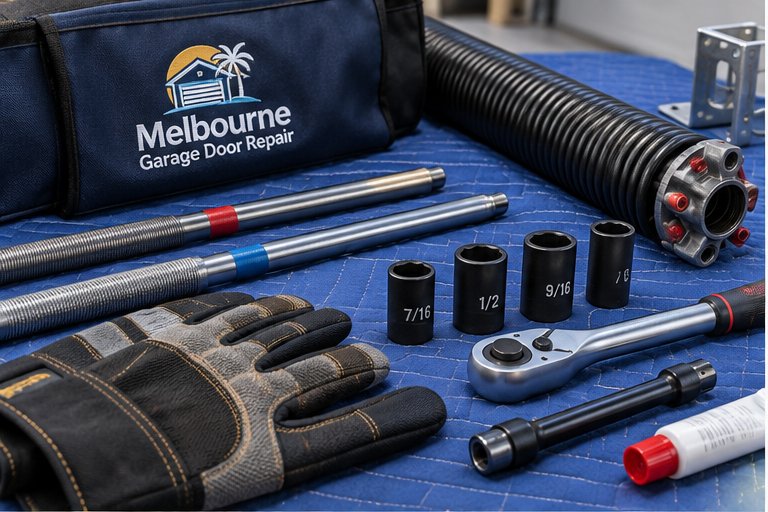
What a spring upgrade means
When people ask about a spring upgrade, they usually mean one of three things. They want springs that are rated for more open and close cycles, they want to change from one spring style to another, or they want the springs matched properly to a heavier door after an addition such as insulation or a window kit.
All three are decisions made around one question: what does this door weigh, how is it used, and what is the current spring system doing about it? We start there, not with a part number.
Because the springs are the heart of the counterbalance system, any change to them affects how the door feels, how hard the opener works and how long the cables, drums and hinges last. That is why we treat an upgrade as a small design decision and not a parts swap.
- Higher cycle springs of the same general type
- A change in spring style, such as extension to torsion
- Re-matching springs after the door has gained weight
- Replacing a mismatched or worn-out pair with a better fit
A short explanation of cycle life
One cycle is one trip up and one trip back down. A garage door that is opened in the morning, closed when the family leaves, opened on return and closed for the night has used two cycles in a day. Households with several drivers, a home business, or a garage used as the main entrance can pass that easily.
A spring is a steel coil that is wound under tension and then released again every cycle. Steel gets tired. After enough cycles the spring weakens and eventually breaks. Cycle life is the number of those cycles a spring is built to handle, and it varies with the wire size, coil length and design. Ask your technician what rating your springs carry rather than trusting a general figure.
There is also a practical side. A spring that is close to the end of its cycle life gives little warning. It can feel normal on Monday and break on Tuesday, usually with a loud bang from the garage. Knowing your household usage helps decide whether to replace springs on your own schedule or wait for them to fail at an inconvenient moment.
Why springs wear out sooner in some garages
Two identical doors can have very different spring lives. Use is the big factor, but not the only one. In Melbourne, humidity and salt in the air encourage corrosion on the coils, and corrosion creates tiny flaws where cracks begin.
Other factors include a door that is out of balance so the springs work harder, a lack of lubrication, and springs that were chosen to be as small as possible when the door was installed. Our page on how long garage door springs last goes into this more broadly.
Seasonal residents deserve a mention. A home that sits closed for months will have fewer cycles but more time for moisture and salt to work on the metal. Cycle count is therefore not the only clock running on a spring.
Heavy use
A door used many times a day will consume its spring cycles sooner. Homes with teenagers, multiple vehicles or a workshop in the garage often fall into this group.
Coastal moisture
Salt and damp air attack bare steel. A spring that looks orange or flaky at the coils has been losing strength for some time.
Poor matching
If a door was fitted with the smallest suitable spring pair, it may simply have a short life in your household. A longer life option can make sense where the door is used often.
Standard and higher cycle springs compared
Many original springs are built for a modest cycle count, enough for a typical lightly used door. Higher cycle springs are made with heavier wire, longer coils or both, so each cycle puts less stress on the steel. The door still lifts the same way, but the spring does it with more reserve.
The table below keeps this general on purpose. Actual ratings depend on the product, and we will go through the specific springs for your door during a visit.
| Aspect | Standard cycle spring | Higher cycle spring |
|---|---|---|
| Wire and coil | Lighter, shorter | Heavier or longer |
| Suited to | Light, occasional use | Frequent daily use |
| Wear pattern | Reaches end of life sooner | Lasts through more openings |
| What changes | Nothing special | Spring size, sometimes drum or bearing match |
| Questions to ask | What is the rating? | What is the rating and what else is affected? |
Torsion and extension springs
Torsion springs sit on a metal shaft above the door opening and twist to store energy. Extension springs run along the horizontal tracks and stretch as the door closes. Each has its own safety features and its own typical wear patterns.
Our torsion versus extension spring guide explains the difference. In brief, torsion systems generally give smoother, more controlled lift and are common on heavier doors, while extension systems are common on lighter, older installations and need safety cables to catch a broken spring.
Converting from extension to torsion
Some owners with older extension spring doors ask whether they can change to torsion. Sometimes this is possible and sensible, and sometimes it is not. The door must be strong enough, the header must allow for the shaft and brackets, and there must be enough headroom for the drums and cable path.
A conversion is a bigger job than replacing one spring. It involves a shaft, bearings, drums and a new cable route, and the door needs to be balanced to match. We assess each door individually and tell you honestly if a conversion makes sense or if replacing like for like is the better choice.
A conversion also changes the look and sound of the headroom area, since the shaft, drums and springs now sit across the top of the opening. Some owners find this a welcome tidy-up and others simply prefer to keep what they have. Either view is reasonable.
- Is there enough room above the door opening?
- Is the header solid enough to carry the brackets?
- Are the panels and struts strong enough for the new load path?
- Will the opener work well with the new balance?
- Is the door worth the investment, or is replacement the better route?
When the door has gained weight
A door is balanced for its weight at the time the springs were chosen. If you add insulation, glass inserts, heavier hardware or a new overlay, the weight changes. The springs may still lift it, but they are doing it with less margin than before.
If the door now feels heavy, the opener strains, or the door drifts down from a half-open position, the springs may need re-matching. Read about insulation and window inserts before adding weight, and ask us to check the spring match afterward.
What changes along with the springs
Springs do not live alone. A higher cycle torsion spring may be longer or thicker, and that can affect the space on the shaft, the center bracket, the drums and the bearings. Cables carry the load and wear too. A set of fresh springs on tired cables only moves the weak point.
A proper job considers the whole counterbalance system, which is why we look at the drums and bearings and cables when springs are discussed. If they are worn, we say so and give you the options.
Cables
Frayed or kinked cables should be addressed at the same time as the springs, because they carry the same tension.
Drums and bearings
Rough bearings or cracked drums make a new spring work harder. They are worth inspecting.
Balance
After any spring work, the door should lift evenly and stay where it is left. That is the real test of the match.
Safety is why this is a technician's job
Garage door springs hold a great deal of stored energy. A wrong move can cause serious injury, which is why we do not give do-it-yourself instructions for adjusting, loosening or replacing springs, cables or brackets. Garage springs have caused injuries to experienced handymen, and we would rather you not become a case.
What you can do safely is look, listen and ask. Look for gaps in the coil, rust, a lopsided door or a bent shaft. Listen for loud bangs, which can signal a break. Then step back and call us. If someone is hurt, call 911.
Ask to be shown any worn parts that were removed, if you are curious. Seeing a rusted cable strand or a flattened bearing tells you more than a description does.
Questions to ask about any spring quote
Whether the work is done by us or someone else, a few questions help you compare options fairly. A good technician will welcome them.
The answers tell you whether the springs are matched to your door or simply chosen from what was on the truck.
- What are the cycle ratings of the springs you propose?
- How did you determine the weight of my door?
- Will you replace both springs if there are two?
- Are the cables, drums and bearings in good shape?
- How will the door be balanced and tested afterward?
- What is covered if something fails, in writing?
Replacing springs in pairs
When a door has two springs and one breaks, the other has seen the same number of cycles and is usually near the end of its life too. Replacing only the failed one can lead to another call soon after, and it can leave the door out of balance.
This is a general rule and not an absolute one. We examine the surviving spring and explain what we see before recommending anything. See broken torsion spring repair for how a failed spring is handled.
Planning an upgrade around the rest of the door
A spring change is a good moment to look at the whole door. Technicians are already working at the top of the opening, the springs and cables are exposed to inspection, and the balance is being reset. Tired rollers, dry hinges and a worn center bearing are easy to see at that point.
Many owners use the visit to decide on related work in one go instead of making three separate calls. That might be fresh rollers, a lubrication pass, or a look at the weather seal along the bottom. Our pages on maintenance and tune-ups describe what a general look-over covers.
There is no obligation to do more than the springs. We simply think you should know what we see while we are there, and you should be able to decide with the full picture in front of you.
If the door is old enough that replacing it is a serious question, we say so. Putting an expensive, long-life spring on a panel set that is cracking or rusting through does not make sense, and our guide on repairing or replacing your garage door helps you weigh the choice.
Timing matters too. If a storm is forecast, it is wiser to sort out worn springs beforehand than to find a broken one with a car inside and the power out. Calm weeks give everyone room to plan the work properly, and they let you choose parts instead of taking whatever is possible on the day.
Finally, keep a note of what was installed and when. A simple record of the date, the spring type and the rating helps the next technician, and it helps you judge how long the springs are really lasting in your household.
Is an upgrade worth it for you?
Not every household needs a spring upgrade. A lightly used door with correct springs may serve for years without any change. An upgrade pays off most clearly where the door is cycled constantly, where the same spring keeps failing, or where the door is heavier than the original design.
We would rather tell you your springs are fine than sell you something you do not need. Where an upgrade does make sense, we explain what the benefit is, what else is affected, and what the alternative would be.
Commercial and heavy-use doors
Business doors may cycle dozens of times a day, and warehouse or shop doors often have heavier sections. For these, cycle life is a main purchase factor, not an afterthought. Higher cycle torsion springs are a common request for loading doors and busy workshops.
If you run a business in Melbourne or nearby, tell us how often the door is used. That figure shapes the recommendation more than any other.
Noise, drift and other clues
Your door often tells you when the spring system is tiring. It may become noisy, jerk on the way up, drop faster than it used to, or stay open only part of the way. These are symptoms, not diagnoses.
Our pages on a door that is heavy to lift and a door that drifts or falls describe what to notice. Do not try to fix the cause yourself.
What a visit looks like
A technician looks at the door, checks balance with the door disconnected where it is safe to do so, examines springs, cables, drums and the opener, and talks through what is found. We ask how the door is used, how old it is, and what has changed.
Then we explain the options in plain English: leave things as they are, replace like for like, or move to a higher cycle or different setup. You decide. Use our contact page to arrange a look at your door.
Questions and answers
A cycle is one full open and close of the door. Cycle life is the number of those cycles a spring is designed to handle before the steel tires and breaks. Springs with a higher rating use heavier wire or longer coils, so each cycle is easier on the metal. Your technician can tell you the rating of your springs.
Think about how often the door is used and how long the last springs lasted. If you open the door many times a day, or springs have failed earlier than expected, a higher cycle option is worth discussing. A visit lets us look at your door and give an informed opinion.
Often it is possible, but not always. The door needs enough strength, the header must hold the brackets, and there must be room above the opening. A conversion also involves a shaft, drums and cables. We assess your door and tell you plainly if it makes sense.
No, the opener sets the travel pace. A well-matched spring system makes the door feel lighter and more balanced, and it reduces strain on the opener. The benefit is smoother, steadier operation and a longer working life, not speed.
Usually yes. If one fails, the other has worked the same number of cycles and is near the end of its life too. Replacing both keeps the door balanced and reduces repeat visits. We check the second spring and explain what we see.
We do not recommend it, and we do not give instructions for it. Springs hold dangerous stored energy and can cause serious injury. Look and listen, then call a technician. If anyone is hurt, call 911.
It can. Insulation, glass or heavier hardware adds weight, and the springs were matched to the original weight. If the door feels heavier or drifts after changes, have the spring match checked.
Ask for the cycle rating of the proposed springs, how the door weight was determined, whether cables, drums and bearings were inspected, and how balance will be tested. Clear answers show the job is planned around your actual door.