
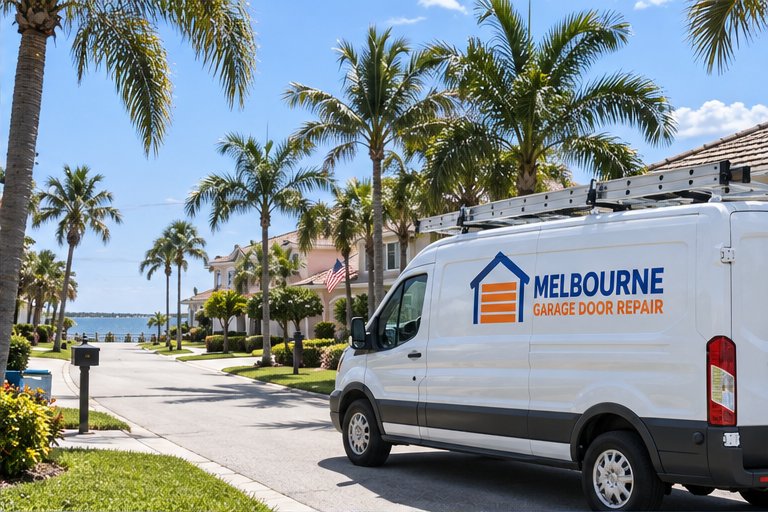
A city with many kinds of garage
Fort Pierce is not one type of neighborhood. It is a city on the Indian River Lagoon with an older core, a historic downtown, residential streets of several eras, and commercial and working areas as well. A garage door repair company that treats every property the same will miss what makes each one different.
In one day you might see a narrow single door on a house that is much older than the opener attached to it, a pair of doors on a duplex, a roll-up door on a small shop, and a modern double door on a newer home. Each has different hardware, different problems and different expectations.
We start every visit by working out which kind of door we are dealing with. That sets the plan for what we check and what we recommend.
Because the city has grown in layers, a single street can include a home from one era, a rebuilt house from another and a small business tucked between them. We do not assume anything from the address alone. The door in front of us decides the plan.
Older houses and narrow openings
Homes built decades ago were designed around smaller cars. Garage openings can be narrower and lower than modern standards, and the garage may sit at the back of the lot, reached by a driveway beside the house. Some are detached and some were attached later by an addition.
Narrow and low openings limit what can replace an old door. Standard sizes may not fit, and a custom size may be needed. Headroom above the door can be tight, which matters for the track and the opener.
Measuring carefully is the first step. Our page on measuring for a new garage door explains what we record and why an opening that looks square often is not.
Detached garages at the back of the lot deserve their own mention. They are often forgotten, with no light, no outlet nearby and a door that has not been touched in years. They may use a simple hinged or swing-out arrangement, a tilt-up door, or a sectional door that was added later. Each one needs a slightly different approach, and we will tell you plainly if a part is no longer made and what the sensible alternative is.
Old wooden doors add another wrinkle. They are heavy, and their weight changes with moisture. A wooden door that swelled in a wet season can bind in the track, and the same door in a dry spell can feel light. The springs have to cope with both, which is one reason balance checks matter on older wood.
Character and the historic downtown
The area around the historic downtown has buildings that people care about. Owners often want a door that respects the look of the property rather than a plain modern panel. That might mean a wood-look door, carriage-style detailing, or a color that suits the trim.
We can talk about appearance as well as function. Style, panel layout, window placement and color all change how a door sits against an older façade. If your property sits in a district with rules about exterior changes, check with the city or the relevant board before ordering a new door.
Our guide on garage door styles and curb appeal gives a sense of what suits different house styles.
Matching an older look does not mean giving up modern safety. A door styled like a classic carriage door can still have insulated sections, a quiet opener and working sensors behind the pretty exterior. We can talk about how to get the appearance you want without losing the features that make daily use easier.
Waterfront air and what it does
Properties near the lagoon and the coast experience humidity and salt in the air. Steel parts corrode faster, paint dulls, and seals soften. The lower edges of doors, the bottom brackets and the track ends are usually first to show it.
Rust is not always a crisis. Surface rust on a track can often be cleaned and protected. Rust that flakes the metal or attacks springs, cable ends and brackets needs attention because those parts carry load.
Our page on garage doors in a coastal climate explains what salt air does and how routine care helps.
Bottom seals take a beating too. Standing water, sand and sun harden the rubber until it cracks or lifts away from the door, and water, leaves and insects get in. A new seal is a modest job, but it makes a visible difference to how a garage feels and smells. Our page on bottom seal service explains the options.
Small shops, workshops and light commercial bays
Fort Pierce has working areas where garage-style doors serve small businesses: roll-up doors on shop fronts, sectional doors on service bays, and wide doors on storage units. Commercial doors are used harder than residential ones and are often larger, heavier and more exposed.
Downtime matters to a business. A door that will not open can keep staff and customers out, and a door that will not close leaves the building open overnight. We look at the door, explain the problem and advise on whether a repair will hold or the door needs more.
Our page on commercial garage door service describes how we approach business doors, and our notes on maintenance for business owners suggest routines that suit busy sites.
Daily use is the main factor. A door that is opened and closed dozens of times in a day wears springs, rollers and operators far faster than a household door. We often suggest that the owner note how many times the door runs on a typical day, since that figure helps us explain what to expect.
Roll-up doors and sectional doors are different
Many people use the word garage door for everything, but a rolling steel door wraps around a barrel at the top, while a sectional door slides up on tracks in panels. The wear points, the safety concerns and the repairs are different.
A sectional door uses springs, cables, rollers and hinges. A rolling door uses a spring assembly in the barrel, guides at the sides and often a chain hoist or motor operator. Neither is a do-it-yourself job when springs are involved.
When you call, tell us what kind of door you have and, if you can, send a photo. It saves time at the visit and helps us bring the right parts.
Rolling doors in particular can be fitted with locks, bars or hasps that interact with the operator. If a lock is engaged when the motor runs, the door can be damaged. Make sure everyone who uses the door knows how the lock works and that it is disengaged before the door moves.
Boats, trailers and equipment storage
Living near the water often means storing boats, trailers, kayaks and fishing gear. Garages become storage for tall and long items, and doors get bumped on the way in and out.
A door struck by a trailer or a mast can bend a panel, move a track and loosen the brackets. It may still run, but it is no longer safe. If your door has been hit, do not run it repeatedly to see what happens. Our page on a garage door hit by a vehicle explains what to look for and what to leave to a technician.
Tall items need clear headroom. Before you load a mast or a ladder, know exactly how much space you have under the open door and the opener rail, and remember that a door never opens quite as high as the opening suggests. A few measurements saved in a notebook prevent a very expensive mistake.
Storm season in St. Lucie County
Coastal Florida cities plan for storms every year. For garage doors, that means checking the hardware, the seals and the door's rating, and knowing how to open the door manually if the power fails. A garage door is one of the largest openings in a house, so a failure can let wind into the whole structure.
Park vehicles with the door's condition in mind. Do not rely on an opener during an outage unless you have a working backup. After a storm, look at the door from a safe distance before touching it.
Our hurricane preparation guide sets out the checks that make sense for homeowners and the points where a professional inspection helps.
Secure loose items in the garage as well. Anything stored near the door can become a missile if wind lifts a section, and anything on the floor can be damaged by water pushing under the seal. A short walk-through before the season starts is time well spent.
Openers, power cuts and the manual release
Storms and heavy afternoon rain cause brief outages, and brief outages leave a door stuck. The manual release is a red cord or handle that disconnects the door from the opener so you can lift it by hand. It is useful, but it must be used carefully.
Only use the release when the door is fully closed, or with the door resting on the floor, if you can. Releasing a door while it is partly open and a spring is weak or broken can let it drop. If the door feels very heavy or moves oddly, stop and call for help.
Our guide to the manual release during a power outage explains the steps and the stop points.
If you rely on a battery backup, test it. Batteries age even when unused, and a backup that has not been checked may give out in the first power cut. Our page on battery backup for garage door openers describes how backup systems work.
A table of what we see across the city
The table below groups common property types in the area and the issue we most often discuss. It is general, and your property may differ.
| Property type | Main concern |
|---|---|
| Older bungalow with narrow single door | Worn hardware and unusual opening size |
| Duplex or small apartment building | Shared access, lost remotes and regular safety checks |
| Waterfront home | Corrosion, seals and finish |
| Small shop with roll-up door | Heavy daily use and security overnight |
| Newer double door | Spring wear and opener age |
| Boat or equipment garage | Impact damage and tall openings |
Security for homes and businesses
A garage door is a large door that often leads straight into a house or storeroom. Make sure the lock works, that old remotes are cleared, and that the emergency release cannot be pulled from outside through a gap at the top of the door. Do not leave remotes in parked cars.
For businesses, think about who holds a key or code and how that changes when staff leave. A door that is easy to open from outside is a risk. Our garage door security tips page offers sensible habits for any property.
Lighting helps as well. A bright light over the door and a working opener light discourage casual visitors and help you see what you are doing at night.
Deciding between repair and replacement
Older doors often present a tough choice. The door still works, but it is noisy, heavy and tired. A repair may solve the immediate problem but not the underlying age.
We look at the whole door, explain the condition and give you the options. If the sections are sound and only a part has failed, repair makes sense. If there are widespread problems, replacement may be the better path. It is your decision, and we aim to give you what you need to make it.
Whichever way you lean, ask what the work will include and what it will not. A repair to a spring does not renew worn rollers. A new opener does not straighten a bent track. Understanding the limits of each job lets you plan spending sensibly over a few years rather than being surprised by the next failure.
What a visit to a Fort Pierce property looks like
We arrive, ask what the door has been doing, and then look at everything before we start: the sections, the track, the springs and cables, the rollers, the opener and the sensors. We test balance and the safety reversal.
We explain what we find in plain language, show you worn parts and lay out the options. You decide what to do and we carry out the work you approve, then test the door again.
Getting in touch about your Fort Pierce door
Tell us what kind of property you have, what the door is doing, and roughly how old it is. If you manage several doors, let us know how many. You can reach us through the contact page, and we will arrange to look at the door.
Questions and answers
Yes. We look after homes, duplexes, small apartment buildings and businesses. Commercial doors are usually larger and used harder, so we plan accordingly. Tell us what type of door you have when you get in touch, and send a photo if you can, so we know what to expect.
Usually yes, though it may need a non-standard size. We measure width, height and headroom carefully, since older openings are rarely square. We then explain which doors fit, how the track will sit and what opener works, so you can choose with the details in front of you.
A sectional door has panels that slide up on tracks, using springs, cables and rollers. A rolling steel door wraps around a barrel at the top and uses a spring assembly inside. Repairs and risks differ, so tell us which you have. Neither should be adjusted by anyone untrained.
Not necessarily. Light surface rust can often be cleaned and protected. Rust that flakes the metal, or that appears on springs, cable ends and brackets, is more serious because those parts carry load. We look at where it is and how deep it goes, then explain whether repair or replacement makes sense.
Clear old remotes and codes whenever someone leaves, keep a list of who holds access, and consider changing keypad codes at set intervals. We can program new remotes and clear old ones from the opener's memory, and we can check that the lock and emergency release are secure.
Stop using it and keep people clear. A door that has been struck may have bent panels, a shifted track or loosened brackets, and it can fail suddenly. Do not force it open or closed. Photograph the damage from a safe distance and contact us so we can inspect it and explain the options.
Usually yes, by pulling the manual release when the door is closed or resting on the floor. A properly balanced door should lift with moderate effort. If it feels very heavy or moves oddly, stop, because a spring may be weak or broken. Call us rather than forcing it.