
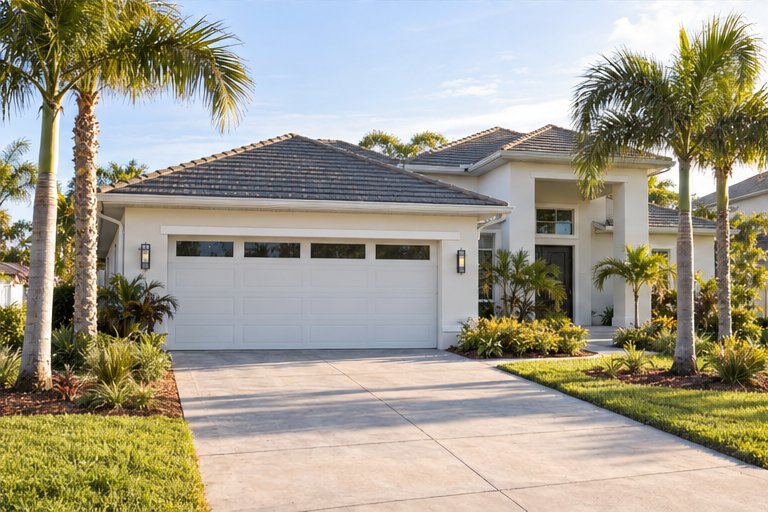
Why the garage door matters when storms approach
A garage door is a big, light-skinned panel hanging in an opening that can be sixteen feet wide. Wind pushes on that panel the way it pushes on a sail. If the door, its track and its fasteners are in poor shape, the opening becomes the weak point of the building envelope.
Living near the Indian River Lagoon and the Atlantic means every household here thinks about storm season at some point. A calm inspection months ahead is far better than a rushed look the day before a system arrives. We explain what we find, and you decide what to do about it.
Garages here also double as storage for boats, bikes, tools and paint, so a door that fails to hold can put more than a car at risk. Think about what lives near the door and whether anything should be moved higher or further back before heavy weather arrives. That is a household decision, but a technician can tell you how much clearance the door needs when it is open.
What a pre-season inspection looks at
We start by looking at the door as a whole, then work down to the small parts. A technician stands inside the garage, opens and closes the door by hand with the opener disconnected, and pays attention to how it moves, where it drags and what sounds it makes.
The goal is to find wear that has been building slowly. A roller that has flattened, a hinge with a cracked ear or a track that has shifted a little can all go unnoticed on a normal day. Under load from wind, those small faults matter more.
- Panels, looking for dents, cracks, rust at the bottom edge and loose or missing hardware
- Hinges and the brackets that hold them, checking for cracks and bent metal
- Rollers and tracks, checking for wear, flat spots, bends and loose track mounting
- Springs and cables, observed visually only, with any concern reported to you
- Opener, wall control, sensors and the emergency release
Track, bracket and fastener condition
The track holds the door in its opening. Vertical track is bolted to the framing, and the angle iron that supports the horizontal section is fixed to the ceiling or wall structure. If bolts have backed out or lag screws have loosened in old wood, the track can flex when the door is pushed from outside.
In a coastal climate, bolts and brackets also corrode. Surface rust is common and often harmless, but deep pitting or flaking at a load-bearing point is something we point out and explain. Tightening mounting hardware on the track and brackets that attach it to the building is routine work for us, but we leave spring and cable fittings alone for safety reasons unless a technician is handling that repair directly.
Why track straightness matters
A track that is slightly out of line puts uneven pressure on rollers and panel edges. Over time that can show up as a door that rubs, rattles or climbs unevenly. During a storm check we sight along the track and test the door's travel to see whether anything is out of alignment.
If we find a bend, we describe what caused it and whether the section can be corrected or should be replaced. You can read more about related repairs on our hinge and track service page.
Hinges, rollers and panel stiffness
Hinges join the panels, and they are what keep a long door acting as a single, stiff unit. A cracked hinge or a missing fastener lets two panels flex against each other. Single-layer steel and thin aluminum doors flex the most, so the hinges and any strut across the top of the door deserve a careful look.
Wind also tests the top of the door, where the header and the first panel meet the opening. A panel that has lost its stiffness bows inward in gusts, and repeated flexing eventually loosens hinges. We press gently on each panel from inside and watch for movement that looks excessive, then compare it with a section that is in good shape.
Rollers sit in the track and carry much of the sideways load when the door is pushed inward. Worn nylon or steel rollers with loose stems can wobble, which gives the door extra play. Replacing worn rollers is a plain maintenance job and usually makes a door quieter as well as more stable.
- Look for hinges with hairline cracks near the screw holes
- Check that every hinge screw is present and tight in the panel
- Notice rollers that wobble when you gently push the door side to side
- Listen for scraping that suggests a roller is dragging in the track
Weather seals and the perimeter of the door
Seals do two jobs. The bottom seal closes the gap against the slab, and the side and top stops press against the door face when it is closed. When they harden, split or pull loose, wind-driven rain finds its way in and so do insects and debris.
Heat and humidity age vinyl and rubber quicker than many owners expect. If you can see daylight along the bottom edge of a closed door, the seal or the floor surface needs attention. Our weather seal replacement page describes the options.
Water and the garage floor
Seals reduce the water that gets in, but they do not turn a garage into a sealed room. Heavy rain can still push water under or around the door if the slab slopes toward it. We can describe what we see, though drainage and grading are outside the scope of door service.
The opener and the power question
Storm season usually brings power interruptions. Many openers keep working on a short outage only if they have a battery backup unit. Otherwise the door must be lifted by hand, which is why you should know where the release is and how to use it before it matters.
During a visit we confirm the opener travels the full distance, stops where it should, and reverses when it meets an obstruction. We look at the wall control, the safety sensors and the opener mounting. If the opener is old or struggling, we discuss whether repair or replacement makes more sense, and our battery backup page explains what that option does.
Learning the manual release before you need it
The red emergency cord with a handle hangs from the opener trolley. Pulling it disconnects the door from the opener so that it can be moved by hand. The door should only be released when it is fully closed, or when you are certain it is not under strain, because a door with a weak spring or a broken cable can drop suddenly.
Practice with a technician standing beside you if you are unsure. We can show you how the release feels and how to reconnect the opener afterward. Our guide to the manual release during a power outage walks through the same steps in more detail.
- Know where the release handle is and that you can reach it without a ladder if possible
- Release only with the door closed, unless a professional has told you otherwise
- Never stand under a door that is partway open
- If the door will not move by hand, stop and call for service rather than forcing it
What wind-rated doors are, and why they are a separate topic
Some garage doors are built and tested for higher wind loads. They typically have heavier gauge skins, reinforcing struts, stronger hinges and special track hardware. This is a different product from a standard door, not something that can be added to an existing one with a few accessories.
A routine service visit does not turn a standard door into a wind-rated one. If wind ratings matter to you, that is a conversation about a new door and about the requirements that apply to your property. Our new garage door installation page covers that path, and the wind and building rules basics guide gives background.
Local rules still apply
We do not make claims about codes or approvals on this page. Building requirements change, and they can depend on the address, the age of the house and whether a permit is involved. Check with your city or county building office and your insurance provider before you choose a door, and keep any product label or documentation they ask for.
Bracing kits and temporary measures
You may have seen add-on bracing systems sold for existing doors. Some are designed to be mounted before a storm and removed afterward. We can look at the door and tell you honestly whether it is sound enough to carry the extra hardware, since bracing a damaged panel does not repair it.
Temporary measures are not a substitute for a door in good condition. If an inspection shows that a door has bent panels, loose track or a failing spring, the sensible first step is repair or replacement, and bracing can be discussed afterward.
- Bracing works only when the panels and track are sound
- Products differ in how they attach, so follow the manufacturer's instructions exactly
- Do not drill into or alter spring components to mount anything
A simple checklist you can do yourself
There is a good deal you can check before anyone arrives. None of it involves tools near the springs or cables, and you should stop as soon as something looks wrong. Write down what you see so that you can tell the technician.
Do this in daylight with the door closed first, then opened with the opener, then moved by hand with the release pulled, standing clear of the door's path. If anything binds, sags or makes a new noise, stop there and call us.
- Look at the door from inside and outside for dents, cracks and gaps
- Check that the bottom seal touches the floor evenly
- Run the door and watch that it moves smoothly and level
- Test the wall button, remotes and keypad
- Wipe the sensor lenses and confirm the door reverses when you wave an object through the beam
- Find the release handle and make sure the cord is intact
Deciding between repair and replacement
Sometimes the honest finding is that a door is near the end of its useful life. Rust through the bottom panel, repeated section damage or an obsolete door that cannot be matched may point toward replacement. Other times a repair or two will keep a sound door working for years.
We lay out the options in plain terms so you can weigh them. Our repair or replace guide explains the common factors, such as panel condition, parts availability and how the door is used.
| What we find | What it usually means |
|---|---|
| Worn rollers and a dry hinge | Maintenance and part replacement |
| Cracked hinge or loose track bolts | Repair of the affected hardware |
| Split or hardened bottom seal | Seal replacement |
| Dented or creased panels | Panel repair or section replacement if available |
| Widespread rust and flexing panels | Discussion of a new door |
After a storm passes
Once conditions are safe, look at the door before you operate it. Debris can bend track, shift the door out of the opening or leave a panel cracked. If the door looks tilted, hangs unevenly or has any visible damage, do not run the opener, because motor force on a damaged door can make a bad situation worse.
We cover this situation on the page about a garage door damaged after a storm. If anyone is hurt, call 911 first and deal with the door afterward.
What to photograph for your records
Photos of the door, track and any broken parts help when you speak with your insurance company. Take wide shots and close ups before anything is moved, and keep damaged parts if it is safe to do so.
When to schedule a visit
The calmest time to arrange a check is before there is any storm in the forecast. Spring is a sensible moment, with the season ahead of you, and it also helps to arrange service after any year in which the door was hit, repaired or left without maintenance.
We do not promise specific appointment times on this page. When you get in touch, we talk through what the door has been doing and what you would like checked, then plan the visit. If you rent out the property or manage several garages, you can ask about checking each one during a single trip.
Who should be involved
If you rent the property or belong to an association, tell the owner or manager when a visit is planned, since some communities have rules about changes to garage doors. A repair that keeps the existing door and its appearance is usually simple, while a new door or a different style may need approval first. We are happy to explain what we find in terms you can pass along.
Seasonal residents can ask for a check before leaving for the summer, so that a door is not left for months with a worn part. A neighbor or property manager who can open the garage for the technician makes this easier.
What we will and will not tell you
We tell you what the door looks like today, which parts are worn and what the repair options are. We do not predict how a particular door will perform in a particular storm, because wind, debris and installation all play a part and no inspection can promise an outcome.
That honesty is part of the job. A homeowner who understands the actual condition of the door can decide whether to repair, replace, brace or simply keep an eye on it, and can do so with real information instead of guesses.
Questions and answers
No. A visit checks the condition of your existing door, tightens or replaces worn hardware and tells you what we see. It does not change the wind rating of the door. If you want a door built and tested for higher winds, that is a different product and a separate installation discussion.
In general you should keep it closed, and you should disconnect the opener from power or use the lock features only as the opener manual allows. Stay out of the path of the door. Details depend on your equipment, so check your manual and ask us if you are unsure what your model supports.
Only if you understand what it does and the door is fully closed. Releasing it disconnects the door from the opener, which prevents the motor from moving it, but it also means the door can be lifted by hand. Ask a technician to show you rather than guessing.
They can help in some cases, but only on a door that is sound. A kit does not repair bent panels or loose track. We can look at the door and say whether it appears suitable for the kit you have in mind, and you should follow the maker's instructions closely.
Check for daylight at the edges of a closed door, rubber that has hardened or split, and a seal that has pulled away from the panel. Water stains on the floor near the door also suggest a seal or slab issue. A short inspection will show whether replacement is worthwhile.
Stop using the opener and keep clear of the door's path. Take photos, then contact us so a technician can look at the track, panels and hardware. If anyone is injured, call 911 first. Do not try to adjust springs or cables yourself.
Yes, visually. We look for gaps, rust, stretching and signs of wear, and we tell you what we see. Springs hold dangerous tension, so any adjustment or replacement is work for a trained technician, and we advise homeowners never to attempt it.
Your city or county building office, along with your insurance provider, can tell you what applies to your address and your house. We do not make claims about codes. Bring any product labels or paperwork you have, and we can help you read what is printed on them.