
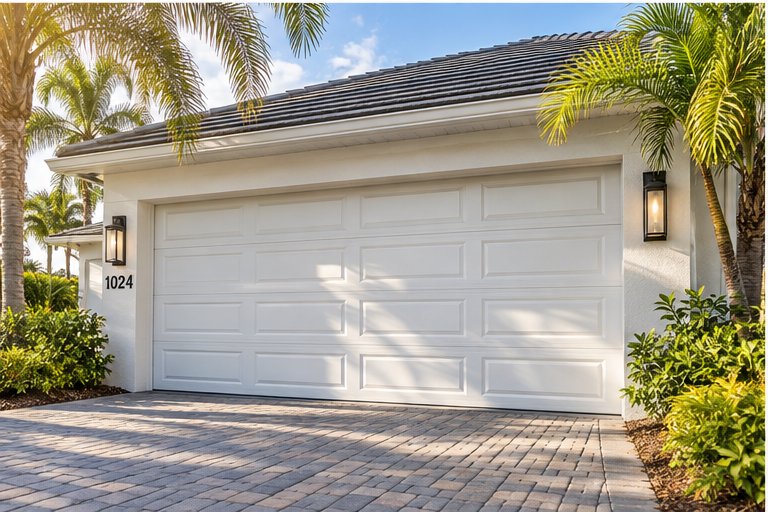
Why insulation is a Florida question, not just a northern one
Many people assume insulated garage doors are for cold climates. In Melbourne the problem runs the other way. A garage door is usually the largest single surface on the front of a house, and on a sunny afternoon its outer skin can become hot enough that you would not want to hold your hand against it. That heat does not stay outside. It soaks through the panels and warms the air in the garage.
If the garage is attached, some of that warmth reaches the rooms next to it and the ceiling above it. If the garage is a workshop, a gym or a place where someone sits to work on a project, the temperature matters even more. Insulation slows that transfer, which is the whole job of the material.
- A large door facing south or west receives the longest hours of direct sun.
- Dark finishes absorb more of that sun than light ones.
- Garages that share a wall or ceiling with living space pass heat along to it.
- Humid air that finds its way in can leave surfaces feeling sticky and warm even after sunset.
How heat actually moves through a garage door
Heat travels three ways, and a door deals with all of them. Conduction is heat passing straight through the material, the way a metal spoon warms in a hot cup. Radiation is heat arriving from the sun or from a hot driveway and warming whatever it lands on. Convection and air leakage is warm, humid air moving through gaps, around the edges and under the bottom.
Insulation in the panel mainly fights conduction. It does very little about air that slips past a worn seal, and it does nothing about a window that lets sunlight pour in. This is why a door with good foam and a tired bottom seal can still feel disappointing. The total result is the combination of the panel, the seals and the openings. Walk around your own garage on a hot afternoon and notice which surface feels warmest; that tells you where to look first. Often it is the door itself, followed by the ceiling, and then the walls that face the sun.
Conduction through the panel
A bare steel panel is a very good conductor. A layer of foam between two skins interrupts that path. The thicker and denser the layer, the harder it is for heat to cross.
Air movement at the edges
The perimeter of a sectional door is long. Between the sides, the top, the joints between sections and the bottom, there is a lot of edge where air can move. Weather stripping and the bottom seal and threshold are what close those paths.
R-value in plain English
R-value is a measure of resistance to heat flow. A higher number means the material resists heat better. You will see it printed on brochures and labels, and it is a fair way to compare two similar doors, but it is not the whole story.
The number is usually measured for the insulation material at a stated thickness, not always for the finished door as installed. The metal skins, the gaps at the joints between sections and the framing around the opening all change what you feel in the garage. Think of R-value as a useful clue rather than a final promise of how warm or cool the room will be.
- Compare doors by the same method. A figure for the foam alone is not the same as a figure for the whole assembly.
- A higher number on a thin door of poor build can still leak heat at the joints.
- Ask which figure the manufacturer is quoting and how the door was tested.
- Remember that the opening also includes windows, which usually insulate less than the panels around them.
The three basic ways a door is built
Garage doors are commonly described by how many layers they have. The differences are easy to see once you know what to look for, and a technician can usually tell by looking at the back of a section from inside the garage.
Single layer, no insulation
A single skin of steel, often with a pressed pattern for stiffness. It is the lightest type and the simplest to repair, but it offers almost no resistance to heat. These doors are common in older homes and in utility spaces.
Single layer with a backer
A skin with a thin sheet of foam or reflective material attached to the inside face. It gives some improvement and a more finished look from inside, but the insulating material is exposed to the garage and can be dented or torn.
Sandwich construction
Two skins with an insulating core between them. The core is protected by metal on both sides, and the section is stiffer as a result. This is the type most people mean when they say insulated door, and it is covered further in our comparison of insulated and non-insulated doors.
Polystyrene and polyurethane: the two common cores
Most sandwich doors use one of two foams. Polystyrene is a rigid board, cut to fit inside the section or placed against the back of the skin. Polyurethane is injected as a liquid and expands to fill the whole cavity, bonding to both skins as it cures.
Both do the job of slowing heat. The practical differences are in how they sit in the section, how much they stiffen it and how they handle the rough treatment a door gets over years of opening and closing.
| Feature | Polystyrene board | Injected polyurethane |
|---|---|---|
| How it is installed | Cut boards fitted into or onto the section | Expands to fill the cavity and bonds to the skins |
| Contact with the skins | Can leave small gaps at edges | Fills the space completely |
| Effect on stiffness | Adds some rigidity | Adds noticeable rigidity to the whole section |
| Typical weight | Usually lighter | Usually heavier because the cavity is full |
| Common placement | Mid-range and budget insulated doors | Higher-grade insulated doors |
Steel gauge, skin thickness and why they matter alongside the foam
The metal skin is part of the story. Thicker steel resists dents and holds its shape, which keeps the section straight and the joints tight. A thin skin on a foam core can still dent from a thrown ball or a bumped bicycle, and a dent that distorts a section can open a gap at the joint.
Gauge numbers run backwards from what people expect: a lower gauge number is thicker steel. Rather than memorizing numbers, ask what skin thickness is used on both faces and whether the sections are reinforced at the ends where the hinges and rollers attach. A strong core inside a flimsy frame does not last.
- Look for end stiles, the vertical pieces at the ends of each section, that are firmly attached.
- Check whether the door has horizontal struts for wide openings.
- Press on a section at the middle and see how much it flexes before you decide.
- A cracked or dented section is worth reading about in our guide to bent panels.
Weight, balance and the springs
Foam adds weight. A fully insulated door is heavier than a bare one of the same size, and the counterbalance system has to be matched to that weight. The springs and cables that lift the door are chosen for the actual door, not for a generic size.
This is one of the main reasons we do not recommend adding heavy material to an existing door without a technician looking at it. A door that becomes heavier than its springs were built for will feel hard to lift by hand, put more strain on the opener and wear parts sooner. Spring adjustment is dangerous work and is never something to try yourself. Even a modest change in weight, such as a few extra pounds spread across the sections, can shift how the door sits when it is half open.
A simple check you can do safely
With the door closed and the opener disconnected using the red release cord, lift the door by the handle a short way and see whether it feels balanced or heavy. If it feels heavy, or drops when you let go, stop and contact us. Do not touch the springs, cables or brackets at the top or sides.
What the technician looks at
A technician compares the door's weight with the spring set and checks that the drums, cables and bearings are in good shape. Our page on weights and balance explains the idea in more detail.
Seals and edges deserve as much attention as the foam
People spend a long time comparing core thickness and very little time on the seals. In practice the seals decide how much hot, humid air gets in. A rubber or vinyl bottom seal that has hardened, cracked or flattened leaves a gap along the whole width of the door.
Side and top weather stripping does the same job along the jambs and the header. If you can see daylight around a closed door from inside, air is moving through that same gap. Replacing worn seals is a modest job compared with a new door, and it often makes a bigger difference than people expect.
- Stand inside on a bright day with the garage lights off and look for light around the edges.
- Run a hand along the bottom seal to feel for stiff or cracked sections.
- Check that the seal meets the floor evenly across the whole width.
- Look at weather seal replacement if you find gaps.
Which garages gain the most from an insulated door
Not every garage needs the same level of insulation. The right choice depends on how the space is used and how much sun the door receives. Looking at the situation honestly saves money and avoids disappointment.
Attached garages with rooms above or beside
A bedroom over the garage or a shared wall with a living area is the strongest case. Reducing the heat load in the garage reduces what leaks into those rooms.
Workshops, studios and gyms
If someone spends hours in the garage, comfort and noise reduction both count. An insulated sandwich door with good seals makes a noticeable difference to how the space feels.
Detached or storage-only garages
If the garage only holds tools and boxes, an insulated door is less important. A well-sealed, sturdy single-skin door may be enough, and the money may go further on a better opener or new hardware.
Windows, glazing and the sunlight they let in
A row of window panels brings daylight into the garage and adds character to the front of the house. It also lets sunlight and heat in. Single-pane inserts conduct heat easily, while double-pane or insulated glazing resists it better.
If you want light without the full heat gain, consider placing windows in the top section only, choosing tinted or textured glass, or looking at our notes on insulation and window inserts. Windows are also a security consideration, which is covered in our security tips.
Noise, condensation and humidity
Insulated sandwich doors tend to be quieter. The foam damps vibration, and the stiffer sections rattle less in their tracks. If a loud door is the reason you are researching insulation, remember that rollers, hinges and the opener are often the real source, so see our guide to diagnosing garage door noises first.
Humidity is a Florida constant. Insulation does not stop moisture, but a door that stays closer to the air temperature inside the garage is less likely to collect droplets on its surfaces during a sudden change in weather. Poor ventilation, wet items stored in the garage and an unsealed floor edge all add moisture that insulation cannot fix. After a heavy summer storm, it is normal to see damp air linger for a while; opening the door on a dry, breezy day lets the space recover.
Retrofit insulation kits: what to know before buying one
Stick-in foam panels and reflective kits are sold for existing doors. They can reduce heat gain on a plain door, and they cost far less than a new door. They also add weight, and they only fit certain panel shapes.
Before using one, check that the door is still balanced afterward. Lift the door by hand with the opener disconnected, as described earlier, and be ready to stop if it feels heavy. A kit that makes the door heavy enough to strain the opener or drift downward is not worth keeping. Material that overhangs the section edges can also jam in the track or interfere with the rollers.
- Choose kits sized for your panel profile and width.
- Do not cover hinges, rollers or the area around the track.
- Avoid adding material to a door that already feels heavy or crooked.
- Have a technician check the balance if anything feels different afterward.
Questions to ask when choosing an insulated door
A short list of questions will save you from marketing language. Ask them of the salesperson, the technician or the manufacturer, and look for plain, specific answers.
- What is the core made of, and does it fill the whole section?
- Are both skins steel, and how thick are they?
- How is the R-value stated, for the foam or for the finished door?
- Does the door have a thermal break or a seal between sections?
- How does the bottom seal work, and can it be replaced?
- Is the door rated for the wind loads required where I live? See wind and building rule basics.
- What will the new weight mean for the springs and opener?
Looking after an insulated door over time
Insulated doors need the same care as any other. Wash the surface with mild soap and a soft cloth, rinse off salt residue, and check that the finish is not peeling. Salt air is rough on exposed edges, so keep an eye on the bottom of each section where moisture collects.
Test the balance each season, listen for new noises and keep the tracks clear. If you want a routine, our monthly checklist fits an insulated door as well as any other. If a section ever gets dented, creased or wet inside, ask us to look at it, because damaged foam can hold moisture and the section may need replacing rather than patching.
Questions and answers
It can reduce how much heat comes through the panels, which helps the space stay closer to the outside shade temperature. It will not make the garage air conditioned. Seals, windows, the roof and ventilation all affect the result, so an insulated door is most useful as one part of a larger effort to manage heat. Light colors, shade from trees and good ventilation help alongside the door.
A higher number means more resistance to heat flow, but it is not the only factor. Joints, seals, windows and skin thickness all change the result. Compare doors using the same method of testing, and ask whether the figure applies to the foam or to the finished door. Ask the supplier to explain the figure in plain words before you compare two doors.
Kits exist, and some work well on plain panels. They add weight, so the door must stay balanced afterward. Check by lifting the door by hand with the opener disconnected. If it feels heavy or drops, stop and ask a technician to look at the springs and balance before using the door again. If the opener sounds strained afterward, stop using it and contact us.
Usually yes. Foam and extra steel add weight, and the spring set has to match the new door. That is why a replacement door should be fitted with springs chosen for it, and why we never recommend adjusting springs yourself. A technician will check the balance when the door is installed. Matching the springs to the finished weight is part of any proper installation.
Often. The foam damps vibration and the stiffer sections rattle less. Still, a loud door is usually caused by worn rollers, loose hardware or an old opener, so it is worth having those checked. A new insulated door on a worn opener can still sound rough. Insulation is one part of a quieter door, not the whole answer.
Yes. Seals stop air from moving around the edges and under the bottom, which insulation inside the panel cannot do. A worn bottom seal can undo much of the benefit of a good core. Check yours each season and replace it when it hardens or cracks. Replacement seals are usually a smaller job than replacing the door.
Glass lets in more sunlight and heat than an insulated panel. Windows in the top section only, tinted glass or insulated glazing reduce the effect. If heat is your main concern, a solid insulated door with a few small windows may suit you better than a full row of clear ones. Ask for the glass type and frame details before you choose a window layout.