
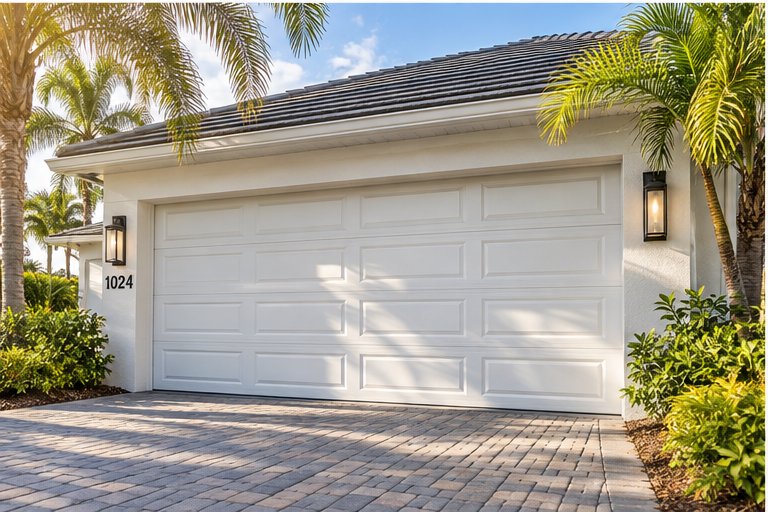
Why the garage gets so hot in the first place
On the Space Coast the sun sits high for much of the year, and a garage is a box with very little cooling. Unlike the living space, it usually has no air conditioning ducts, no ceiling fan, and often no real ventilation. Heat that enters during the day simply stays until evening, and then drifts out slowly.
The garage door is typically the biggest wall in the room. On many homes in Melbourne and Palm Bay it faces the street, which means it can face south or west and take direct afternoon sun for hours. A dark steel panel in that position absorbs a great deal of energy and passes it inward as radiant and conductive heat.
The door is not the only source, and it helps to be honest about that. The roof above the garage, the attached walls, the concrete slab and anything stored inside all contribute. A garage that holds a second refrigerator, a dryer or a hot water heater adds its own warmth on top of whatever the weather delivers.
The three ways heat reaches the inside
Heat moves in three ways, and each one points to a different fix. Radiation is the sun's energy hitting the outer skin of the door and the roof. Conduction is heat travelling through the panel material from the hot outside face to the inside face. Convection and air leakage is hot, humid outdoor air moving through gaps and being replaced as the garage breathes.
A garage door can influence all three. The color and finish of the outside face change how much radiation is absorbed. The core of the panel and its insulation change how much conduction occurs. The seals around the perimeter change how much hot air slips in around the edges.
Radiation from the sun
A light colored door reflects more of the sun's energy than a dark one. That is simple physics, not a product claim. If your door faces west and is painted a deep brown or black, it will run hotter on its surface than the same door in white or a pale sand tone.
Conduction through the panel
A single layer steel door has nothing to slow the passage of heat. The inner face warms nearly as readily as the outer face. A door with an insulated core slows this transfer, so the inside surface stays closer to the garage air temperature.
Air leakage around the edges
Gaps along the sides, the top and the bottom let outdoor air in. In summer that air is hot and damp. In the cooler months it carries dust, pollen and the occasional insect. Worn seals are one of the most common and most overlooked causes.
What the door's construction does and does not change
Doors are built in a few broad ways. A single layer door is one sheet of steel or aluminum formed into panels. A sandwich style door has a thin insulating layer, often foam board, fixed to the inside of the steel. A thicker, bonded design has insulation injected between two skins so the layers act as one unit.
The more insulated designs do make a difference to how the inside surface feels and how much heat is passed through. They also tend to be stiffer and quieter, which is a useful side benefit. What they cannot do is change the roof, the walls or the slab, so the garage will still warm up in July.
A realistic expectation is that an insulated door takes the edge off, particularly on the hottest part of the afternoon, and helps if you share a wall with a room that is air conditioned. It will not turn a garage into a cooled space on its own. Our guide to garage door insulation covers the construction types in more detail.
Seals are the first place to look
Before anyone talks about replacing a door, look at the seals. The bottom seal is a strip of flexible material that runs along the lower edge of the door and presses against the floor when the door is closed. Along the sides and the top, a stop molding with a vinyl or rubber flap closes the narrow gap between the door and the frame.
In Florida these materials live a hard life. Ultraviolet light dries and cracks rubber. Humidity encourages mildew. Salt air on the barrier islands and along the river accelerates the aging of vinyl. A seal that was flexible and tight when the door was new may be stiff, flattened or torn after some years.
A simple look will tell you a lot. Close the door, turn off the garage light, and have someone shine a flashlight along the outside edge in daylight, or look from inside on a bright day. Any line of light you can see is a gap that air, water and insects can use. When you are ready to deal with it, the work is described under weather seal replacement.
- Look for light along the bottom edge where the door meets the floor.
- Check the side and top flaps for cracks, flattening or missing sections.
- Press on the bottom seal. It should spring back rather than stay dented.
- Notice whether leaves, dust or water collect just inside the door after weather.
The bottom edge and the threshold
The floor under a garage door is rarely perfectly flat. Slabs settle, crack and slope toward the driveway to shed water. A seal designed for a flat floor will leave a wedge shaped gap wherever the concrete dips. That gap is invisible from a distance but quite noticeable to the heat and humidity that use it.
A threshold is a raised strip of rubber or vinyl fixed to the floor beneath the door. It fills low spots and gives the bottom seal something firm to press against. It also helps with the water that runs under a door during a heavy Florida rain. The tradeoff is that it must be low enough to be driven over and to avoid catching small wheels.
If you notice daylight under the door on one side only, that points to a floor that has settled or a door that is slightly out of level. The second possibility is worth separating from the first, and our page on bottom seal and threshold service explains how a technician sorts them out.
Windows, inserts and how they behave in the heat
Many garage doors have a row of small windows across the top section. They let in daylight and add visual interest, but glass is a thin barrier to heat. A door with a full row of single pane lites will pass more solar energy than the same door with solid panels.
Some owners replace the clear glazing with insulated inserts or with a frosted or tinted option that reduces both glare and heat. This is a reasonable improvement where the windows face the afternoon sun. It is also a matter of taste, since the lites affect how the door looks from the street.
If you are curious about the options, our page on insulation and window inserts describes what can be changed on an existing door and what would require a different door. Insert work depends entirely on the door's design, so it is something a technician looks at in person rather than something to order blindly.
Color and finish: what actually changes
People often ask whether painting the door a lighter color makes a difference. Generally yes, on the surface. A pale, reflective finish absorbs less solar energy, so the outside skin stays cooler and less heat is available to conduct inward. The effect is largest on a thin, uninsulated door and smallest on a thick insulated one.
There are limits. Many homeowners associations in the area specify permitted colors, and some require approval before any change to a door. A darker color that is already on the approved list may be your only choice. Your association's own rules explain what to check before you start.
Paint also does nothing about air leakage, and a poor quality paint job on a metal door can trap moisture and rust. If heat is the main concern, treat color as a minor adjustment and put your effort into the seals and, where it makes sense, the insulation.
Humidity is part of the story
Heat in Florida and humidity travel together. A garage that is both hot and damp feels worse than one that is only warm, and the moisture does its own damage to stored cardboard, tools, tires and the door hardware itself.
A tight door reduces the amount of humid outdoor air that enters, but it can also trap moisture that is generated indoors. Wet towels, a washing machine drain, a leaking hose bib or a damp slab will all raise the humidity of a sealed garage. If you tighten up the envelope, check for these sources so the air has less to carry.
Humidity affects the moving parts as well. Steel track and hinges can develop surface rust, wooden doors can swell, and rollers can stick. If your door has started to bind in damp weather, the page on a garage door that sticks in humidity lists the usual causes and the checks that are safe for an owner to make.
Heat and the opener, springs and electronics
Hot garages are hard on equipment. The opener's electronics, its capacitors and its plastic gears all live in that environment. Remote batteries lose strength faster in high temperatures, and a keypad left in the sun may fade or become unresponsive.
The door's moving parts are affected too. Lubricants thin out and run in extreme heat, then collect dust. Metal expands slightly, so a door that is perfectly adjusted on a cool morning may behave a little differently in the afternoon. That is usually not a problem, but it can reveal a door that is already close to the edge of its adjustment.
The opener is not meant to be the thing that carries the door. The springs do that. If the door feels heavy by hand, or the opener strains in hot weather, the underlying problem is usually balance, not the motor. Our guide to garage door weight and balance explains why, and why spring work is left to trained technicians.
Ventilation versus sealing: a decision to make
There are two schools of thought for a hot garage, and they pull in opposite directions. One says to seal everything tightly and insulate, so the space is buffered from the outdoors. The other says to let it breathe, using vents, fans or a partly open door to carry hot air out.
Neither is wrong, and the right answer depends on how you use the space. A garage that holds a vehicle, a few tools and some boxes benefits from a tight door that keeps out insects and rain. A workshop where people spend hours may need active ventilation regardless of how good the door is.
If you plan to run fans or an air conditioning unit in the garage, a well sealed and insulated door becomes much more valuable, because you are no longer fighting a constant stream of outdoor air. If you only want to keep the worst of the heat out, seal and color are enough.
Questions to ask yourself before you spend anything
It is easy to chase the wrong fix. Before you decide on a change, work through a few plain questions. They are meant to help you choose the step that fits your situation, not to sell you anything.
- Is the garage attached to the house, and does it share a wall with a living space or a bedroom?
- Which direction does the door face, and how many hours of direct sun does it get?
- Is the door single layer, or does it have an insulated core?
- Can you see light or feel air around the edges when the door is closed?
- Do you use the garage as a workshop, a gym, a laundry area or only as a place to park?
- Are there rules in your community about door color, windows or style?
Matching the fix to the problem
Once you have an answer to those questions, the next step is usually clear. The table below sets out common situations and the response that tends to make sense. It is a general guide and not a diagnosis, since every door and every garage is a little different.
Use it to focus the conversation when a technician visits. The more specific your description, the easier it is for us to explain what we find and what the options are.
| What you notice | Likely cause | Reasonable first step |
|---|---|---|
| Light visible along the bottom edge | Worn or flattened bottom seal, or an uneven floor | Have the bottom seal and threshold inspected |
| Hot air or dust around the sides | Cracked or missing stop molding flaps | Replace the side and top weather seal |
| Door face too hot to touch in the afternoon | Single layer panel in direct sun | Consider insulation or a lighter finish where permitted |
| Garage hot even with a good door | Roof, walls and stored items add heat | Add ventilation or a fan before changing the door |
| Glare and heat through the top windows | Clear single pane lites facing the sun | Look at tinted or insulated inserts |
| Damp smell and sticking in summer | Moisture trapped or entering under the door | Check seals, drainage and the source of dampness |
Insulating an existing door: what to expect
Some doors can be retrofitted with insulation panels cut to fit inside each section, held by clips or adhesive. This is a practical way to improve a thin, single layer door without replacing it. The added panels do add weight, though, and that matters.
A garage door is balanced by its springs for a specific weight. If you add material to the door, the balance changes. The springs may no longer match the load, which can make the door heavy to lift or cause the opener to work harder than it should. A technician should check balance after any retrofit, and sometimes the springs need to be matched to the new weight.
That is one reason to avoid treating insulation as a casual weekend project. The panel work itself is simple, but the consequences for the springs and cables are not, and those parts hold dangerous tension. Please leave any adjustment of springs, cables and brackets to a trained technician.
When replacing the door makes more sense
Sometimes the honest answer is that the existing door has reached the end of its useful life. Panels that are dented, cracked or delaminated cannot be sealed or insulated well, and hardware that is worn throughout may not be worth the continued repair. If the door is also noisy, out of balance and drafty, a replacement can solve several problems together.
A new door lets you choose the construction on purpose. You can pick an insulated core, a lighter finish that meets your community's rules, and a window layout that suits your garage. You can also choose a design that is built for the wind loads that apply to coastal Brevard and Indian River counties.
If you are weighing the decision, our guide to repairing or replacing your garage door walks through the signs that point in each direction. A technician can look at the door and explain what we find and what the options are.
Cooler garage habits worth trying
Not every improvement involves a door. A few habits reduce heat in a way that is easy to test. Close the door promptly on hot afternoons rather than leaving it open while you work. Open it in the evening, when the outdoor air is cooler than the garage air, and let the built up warmth leave.
Move heat producing items away from the door wall if you can. Keep stored paint, fuel and anything sensitive to temperature off the hottest side of the garage and away from the sun's path, and follow the label guidance on each product. Cardboard boxes against a hot door wall tend to warp and attract moisture.
A small fan that pushes air toward an open side can make a surprising difference during the evening cool down. It will not cool the space below the outdoor temperature, but it speeds the exit of heat that has built up.
Having your door looked at
If you are not sure where the heat is coming from, an in person look is the most reliable way to find out. A technician can see the condition of the seals, the fit of the door in its opening, the state of the panels and the balance of the springs, all in one visit. We will explain what we find and what the options are, and you can decide what makes sense for your garage.
For doors that need maintenance as well, the work on seals, rollers and hinges is often done together with a tune up. You can read about that under maintenance and tune-ups, or reach out through our contact page to describe what you are seeing.
Questions and answers
It can help, but it will not cool the garage on its own. A door with an insulated core and good seals reduces the heat passing through the panels and the air leaking around the edges. The roof, walls, slab and stored items still add warmth. Think of the door as one part of the picture, and treat ventilation as a separate decision.
Start with the seals. A worn bottom seal or cracked side flaps let hot, humid air and insects in, and replacing them is a modest job compared with a new door. After that, look at the color of the door and whether the garage has any ventilation. A technician can check the seals and tell you what condition they are in.
Yes, mainly at the surface. A lighter finish reflects more sunlight, so the outer skin stays cooler and passes less heat inward. The effect is smaller on a thick insulated door. Check your community rules before changing color, since many associations specify approved shades for garage doors.
Often yes, using panels fitted inside each section. The extra weight changes how the door balances, so the springs should be checked afterward and sometimes matched to the new load. Please do not adjust springs or cables yourself, because they hold dangerous tension. Have a technician look at the door before and after any retrofit.
Usually the bottom seal is worn or flattened, or the floor dips where the door lands. Less often, the door itself is slightly out of level. A threshold strip can fill an uneven floor. A technician can tell which cause applies by looking at the door closed and again as it travels, and then explain the options.
Clear single pane windows pass more solar energy than solid panels, especially when the door faces the afternoon sun. Tinted or insulated inserts reduce both glare and heat. Whether the change is worth it depends on how much sun reaches the door and how you feel about the look from the street.
Partly. Gaps around the door let humid outdoor air in, and standing water can run under a poorly sealed bottom edge. Moisture also comes from inside, such as damp laundry, drains and the slab itself. Tightening the door helps, but it is worth checking the other sources too.
Heat is hard on electronics, plastic gears and batteries, so a very hot garage can shorten their working life and make remotes less reliable. If the opener seems to struggle, the cause is often door balance rather than the motor. A technician can check both and explain what is worth repairing.